
A bathroom can look more spacious, elegant, and organized with the right vanity. One popular choice for contemporary homes is a wall-mounted design that keeps the floor visible and creates a clean, uncluttered appearance. It works well in small bathrooms, luxury master bathrooms, guest bathrooms, and minimalist interiors.
A modern floating vanity combines practical storage with a stylish design. Unlike traditional bathroom cabinets that rest directly on the floor, this type of vanity is attached to the wall, leaving open space underneath. The result is a lighter appearance that can make even a compact bathroom feel more open.
There are many ways to customize this design. You can choose warm wood finishes, glossy white cabinets, stone countertops, integrated sinks, or dramatic dark colors. The best option depends on your bathroom size, storage needs, budget, and personal style.
In this guide, you will discover attractive vanity designs, material choices, lighting tips, storage solutions, and practical advice to help you create a bathroom that looks beautiful and works well every day.
1. Choose a Minimalist White Floating Vanity
White is a timeless choice for bathroom furniture. It creates a clean appearance, reflects available light, and works with almost any wall or floor color.
A simple white vanity with flat cabinet doors is especially suitable for contemporary bathrooms. Without decorative handles or complicated details, the design feels neat and uncluttered.
Pair it with a white countertop, a large mirror, and chrome or brushed-nickel fixtures for a fresh look. If you want more contrast, choose dark floor tiles or black bathroom accessories.
Tips for Styling a White Vanity
- Choose a smooth finish that is easy to wipe clean.
- Use handleless drawers for a streamlined appearance.
- Add a large mirror to reflect light.
- Keep countertop accessories to a minimum.
- Include one natural element, such as a small plant.
White cabinets can show dirt and fingerprints, particularly around frequently used handles. Selecting a practical finish and cleaning the surface regularly will help maintain its appearance.
2. Add Warmth with a Natural Wood Vanity
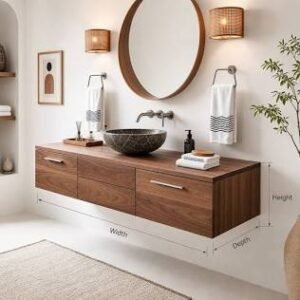
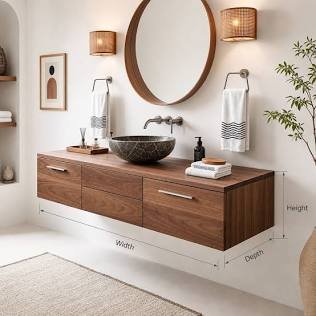
Natural wood finishes bring warmth and texture to modern bathrooms. They soften the appearance of stone, glass, and metal while creating a welcoming atmosphere.
Light oak, walnut, and natural ash are popular finishes for contemporary bathroom furniture. Light wood works beautifully with white walls and pale tiles, while darker walnut creates a richer, more dramatic look.
A wood vanity can suit Scandinavian, modern farmhouse, minimalist, and spa-inspired interiors.
How to Style Wood Bathroom Cabinets
Combine a natural wood cabinet with a white countertop and a simple rectangular mirror. Add warm lighting and neutral-colored tiles to create a relaxing atmosphere.
For a more dramatic design, use dark wood with charcoal tiles and brushed-brass fixtures.
Remember that bathrooms experience moisture and temperature changes. Choose cabinetry designed for bathroom use, ensure the finish protects exposed surfaces, and maintain good ventilation to help prevent swelling or damage.
3. Use a Floating Vanity to Make a Small Bathroom Feel Bigger
Small bathrooms benefit from designs that reduce visual clutter. Because a wall-mounted cabinet leaves the floor visible underneath, it can create an impression of extra space.
A compact vanity with two drawers can provide useful storage without taking up the entire wall. A narrow countertop may also leave more room for movement around the sink.
Space-Saving Ideas
- Choose a vanity that fits the available wall width.
- Install a wall-mounted faucet if the plumbing and sink design allow it.
- Use drawers with internal organizers.
- Select light-colored finishes for a brighter appearance.
- Keep the floor underneath the cabinet free from unnecessary items.
A floating cabinet does not automatically provide more storage than a floor-standing unit. Check the internal drawer space and plumbing arrangement before purchasing one.
For very small bathrooms, accurate measurements are essential. Make sure the vanity does not interfere with the bathroom door, shower entrance, or toilet.
4. Select a Double-Sink Floating Vanity
A double-sink design is useful for couples and families who share a bathroom. Two sinks allow more than one person to get ready at the same time, helping reduce morning congestion.
A longer wall-mounted cabinet can provide two basins, separate storage drawers, and a generous countertop. This arrangement is especially suitable for master bathrooms with enough wall space.
Design Tips for Double Vanities
Choose matching sinks and faucets to create a balanced appearance. Install a large mirror or two individual mirrors above the basins.
Use separate drawers for personal toiletries so everyone has a dedicated storage area. If the bathroom is large, add wall sconces beside the mirrors for balanced lighting.
Before choosing this layout, consider the plumbing costs, cabinet width, and clearance between the sinks and nearby walls. Two sinks are not always necessary in a small bathroom, particularly if the extra basin would reduce useful storage.
5. Create a Luxury Look with a Stone Countertop
A stone countertop can make a bathroom vanity feel more luxurious. Marble, granite, and quartz are common choices, although each material has different care requirements.
Marble offers natural patterns and a classic appearance. Granite provides a distinctive stone texture, while engineered quartz is available in many colors and patterns.
A simple cabinet paired with a beautiful countertop often creates a more sophisticated appearance than a design with too many decorative details.
How to Choose the Right Countertop
Consider your budget, cleaning preferences, and daily bathroom use before making a decision.
Natural marble can be sensitive to acids and may require sealing. Granite also benefits from suitable care, depending on the stone. Engineered quartz is generally easy to maintain, but product specifications should be checked because some varieties have limitations around heat and certain cleaning chemicals.
Choose a countertop with a suitable sink opening, enough space for everyday toiletries, and edges that complement the cabinet design.
6. Try a Dark Floating Vanity for a Bold Look
Dark bathroom cabinets can create a dramatic and sophisticated atmosphere. Black, charcoal, deep brown, and navy are popular choices for modern interiors.
A dark vanity looks especially attractive against white walls, pale stone tiles, or a light countertop. The contrast helps the cabinet become a focal point without requiring additional decoration.
Ways to Balance Dark Cabinets
- Use a large mirror to reflect available light.
- Add warm lighting around the vanity.
- Pair dark cabinets with a light countertop.
- Choose simple hardware in a matching or contrasting finish.
- Keep the surrounding walls visually uncluttered.
Dark finishes can work in small bathrooms too, but the overall lighting matters. In a room with limited natural light, consider a lighter wall color and well-planned artificial lighting to prevent the space from feeling too enclosed.
7. Choose Handleless Drawers for a Clean Design
Handleless drawers are a popular feature in contemporary bathroom furniture. They remove visual distractions and give the cabinet a smooth, continuous appearance.
Some designs use recessed grips, while others have push-to-open mechanisms. Both options can work well when the hardware is durable and suitable for bathroom conditions.
Handleless cabinets also pair naturally with simple mirrors, integrated sinks, and neutral color schemes.
However, not every handleless system is equally practical. Push-to-open drawers may require more frequent cleaning around the opening areas, while recessed grips can collect dust or residue.
When choosing a cabinet, open and close the drawers if possible. Check that they operate smoothly and provide enough room for the toiletries you use regularly.
8. Add a Modern Touch with an Integrated Sink
An integrated sink creates a continuous appearance between the basin and the countertop. Depending on the product, the sink and counter may be made from one material or designed to fit together seamlessly.
This style can reduce visible edges and make the vanity easier to clean. It is especially attractive in minimalist bathrooms where simple shapes are preferred.
Integrated sinks are available in white, gray, beige, and other finishes. Some feature a rectangular basin, while others use softer curves.
What to Consider Before Buying
Check the basin depth, water drainage, faucet placement, and countertop dimensions. A shallow basin may look elegant but can cause splashing if it does not suit the faucet and water pressure.
Also confirm that replacement parts and suitable cleaning products are available. Some integrated designs are more difficult to repair than a standard drop-in sink.
9. Improve the Vanity with Smart Storage
A beautiful bathroom should also be practical. Without proper storage, even an expensive vanity can quickly become cluttered.
Wall-mounted cabinets often use drawers instead of large cupboard doors. Drawers can make everyday items easier to reach, especially when the interior includes dividers or organizers.
Useful Storage Features
- Deep drawers for hair tools and larger toiletries.
- Shallow drawers for makeup and small accessories.
- Dividers for toothbrushes, skincare products, and grooming items.
- A dedicated space for cleaning supplies.
- Drawer cutouts designed to accommodate plumbing.
Some vanities also include side cabinets or matching wall-mounted storage units. These can provide additional room without making the bathroom feel crowded.
Before buying, compare the cabinet’s total dimensions with its actual usable storage space. Plumbing pipes and sink bowls can reduce the room available inside drawers.
10. Use Mirrors and Lighting to Complete the Design
Mirrors and lighting can significantly improve the appearance and function of a bathroom vanity.
A large mirror reflects light and can make a room feel more open. An illuminated mirror can provide convenient lighting for shaving, skincare, and applying makeup.
For a balanced design, consider wall sconces on either side of the mirror or a suitable fixture above it. Lighting placed around face level can reduce harsh shadows.
Lighting Ideas for Modern Bathrooms
- Use warm or neutral white light for a comfortable atmosphere.
- Choose suitable moisture-rated fixtures for the installation location.
- Add dimmable lighting where appropriate.
- Ensure the sink area has enough light for daily grooming.
- Combine mirror lighting with general ceiling lighting.
Electrical installations near water must meet local safety requirements. A qualified electrician can help select the correct fixtures and installation locations.
Modern Floating Vanity Ideas: Quick Comparison Table
The following table compares popular vanity styles to help you choose a design that matches your bathroom.
| Vanity style | Main benefit | Best suited for |
|---|---|---|
| White minimalist | Bright, clean appearance | Small and modern bathrooms |
| Natural wood | Adds warmth and texture | Spa-inspired and Scandinavian interiors |
| Compact single sink | Saves wall and floor space | Guest bathrooms and apartments |
| Double sink | Supports shared bathroom use | Spacious master bathrooms |
| Stone countertop | Creates a premium appearance | Contemporary and luxury interiors |
| Dark cabinet | Adds contrast and drama | Bathrooms with balanced lighting |
| Handleless drawers | Creates a streamlined look | Minimalist interiors |
| Integrated sink | Offers a continuous surface | Clean, modern designs |
| Drawer storage system | Organizes daily essentials | Busy family bathrooms |
The right design depends on your available space, plumbing, budget, and storage requirements. You can combine features, such as a natural wood cabinet with an integrated white sink, to create a personalized look.
11. How to Choose the Right Vanity Size
Choosing the correct size is essential for both comfort and appearance. A cabinet that is too wide can make the bathroom difficult to move around, while one that is too small may not provide enough storage.
Measure the wall, sink position, door openings, and surrounding fixtures before shopping.
Consider the following details:
Width: Make sure the vanity fits the available wall space without blocking nearby doors or cabinets.
Depth: Check that the cabinet does not interfere with the toilet, shower, or walking area.
Height: Select a comfortable working height for the people who will use the bathroom.
Clearance: Ensure drawers can open fully and that there is enough room to stand comfortably at the sink.
Mounting support: Confirm that the wall can support the combined weight of the cabinet, countertop, sink, and stored items.
Wall-mounted vanities must be attached to suitable structural support using the correct mounting system. A professional installer can assess the wall and make sure the cabinet is securely fitted.
12. How to Maintain Your Floating Bathroom Vanity
Regular care helps protect your vanity and keep it looking attractive.
Wipe water splashes from the countertop and cabinet surfaces, particularly around the sink and faucet. Use cleaning products recommended by the manufacturer, as harsh chemicals can damage certain finishes.
Avoid leaving wet towels or leaking bottles inside drawers. Check the plumbing occasionally for signs of moisture and repair leaks promptly.
For wood finishes, follow the manufacturer’s maintenance instructions and keep ventilation working properly. For stone countertops, use suitable cleaners and follow any sealing recommendations.
It is also useful to clean underneath the cabinet regularly. The open floor space makes this area accessible, helping you remove dust and keep the bathroom tidy.
Conclusion
A well-designed bathroom vanity can transform the look and function of your space. From minimalist white cabinets and warm wood finishes to dramatic dark designs and elegant stone countertops, there are options for almost every home and budget.
A modern floating vanity is especially appealing because it combines contemporary style with an open appearance. With thoughtful storage, suitable lighting, and the right sink and countertop, it can make your bathroom feel organized and welcoming.
Before making a purchase, measure your space carefully, check the available storage, and confirm that your wall can support the installation. Focus on durability and everyday comfort as much as appearance.
With the right combination of materials, colors, and practical features, you can create a bathroom that looks polished and works beautifully for years to come.
Frequently Asked Questions (FAQs)
1. What is a floating bathroom vanity?
A floating bathroom vanity is a cabinet mounted to the wall rather than resting directly on the floor. The open space beneath it creates a lighter appearance and makes the floor easier to clean.
2. Are floating vanities suitable for small bathrooms?
Yes. A compact wall-mounted vanity can help a small bathroom feel more open because the visible floor space continues underneath the cabinet. Choose the size carefully to preserve comfortable movement.
3. Are floating vanities strong enough to hold a stone countertop?
They can be, provided the cabinet, mounting hardware, and wall support are designed for the combined weight. Heavy countertops may require additional structural support and professional installation.
4. Which material is best for a bathroom vanity?
Bathroom-grade plywood, moisture-resistant engineered materials, and properly finished solid wood can all be suitable, depending on construction and exposure to moisture. Choose a product designed for bathroom use.
5. How high should a floating vanity be installed?
The ideal height depends on the vanity design, sink depth, and users’ comfort. Measure the finished countertop height and consider accessibility before installation.
6. Do floating vanities provide enough storage?
Many designs offer generous drawer storage, but usable space varies because plumbing occupies part of the cabinet. Check drawer dimensions and internal organizers before buying.
7. Are floating vanities more expensive than traditional vanities?
Prices vary by size, materials, brand, and installation requirements. Some basic wall-mounted models are affordable, while custom cabinets and stone countertops can increase the overall cost.
8. How do I clean underneath a floating vanity?
Use a vacuum, broom, or mop to clean the exposed floor. Avoid leaving standing water near the cabinet or wall, especially if the materials are sensitive to moisture.
9. Can I install a floating vanity myself?
Some experienced DIY homeowners may be able to install a lightweight unit, but secure mounting is essential. If the wall requires reinforcement or plumbing changes, professional installation is the safer choice.
10. What colors look best with a floating vanity?
White, natural oak, walnut, gray, navy, and black are popular options. Choose a color that complements your tiles, wall paint, lighting, and other bathroom fixtures.