

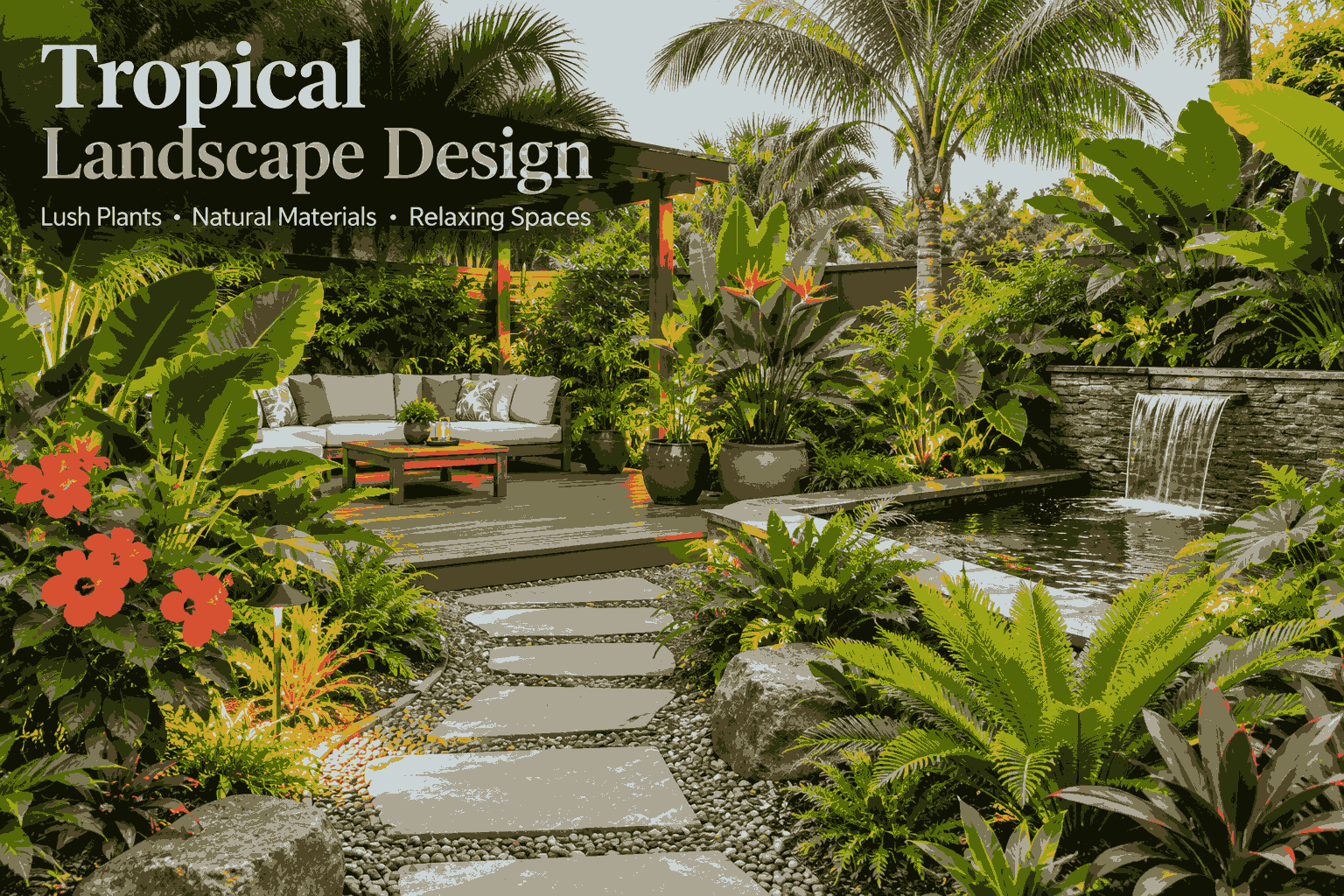
Tropical landscape design brings the lush beauty of tropical gardens into outdoor spaces through broad-leaved plants, layered greenery, colourful flowers, natural materials and calming water features. You do not need a huge garden to create this look. Even a small patio, courtyard or backyard can feel like a peaceful tropical retreat with the right combination of plants and thoughtful layout.
The secret is to create a garden that looks abundant without becoming difficult to maintain. That means choosing plants suited to your local climate, arranging them at different heights, and balancing dense planting with open areas for walking, relaxing and entertaining. In cooler parts of the UK and the USA, you can also create a tropical-inspired garden using hardy plants and containers that can be protected during winter.
This guide covers tropical garden styles, suitable plants, layout ideas, hardscaping, water features and practical ways to adapt the look to your space and climate.
What Is Tropical Landscape Design?
Tropical landscape design is a garden style inspired by the dense, layered vegetation and relaxed atmosphere of tropical and subtropical regions. It typically features large leaves, lush greenery, bold foliage, colourful flowers, natural textures and shaded outdoor areas.
Unlike a formal garden, which may rely on straight lines and carefully clipped shapes, a tropical garden often uses overlapping foliage and softer, more natural-looking arrangements. The aim is to create visual depth, privacy and a sense of being surrounded by nature.
Common elements include:
- Large-leaved plants: Banana plants, elephant ears and other bold foliage create a strong tropical appearance.
- Layered planting: Tall trees, medium-height shrubs and low-growing plants are arranged to create depth.
- Colourful flowers: Hibiscus, canna lilies and other flowering plants introduce vibrant colour.
- Natural materials: Timber, stone, bamboo and gravel add texture to pathways, seating areas and garden structures.
- Water features: Ponds, fountains and small waterfalls introduce movement and soothing sounds.
- Relaxed seating: Pergolas, garden benches and outdoor lounges provide comfortable places to enjoy the surroundings.
A successful tropical garden is not simply a collection of exotic-looking plants. It combines foliage, structure, space and suitable growing conditions into a cohesive outdoor environment.
12 Tropical Landscape Design Ideas for Your Garden
Tropical-inspired gardens can be adapted to different outdoor spaces, from large backyards to compact urban courtyards. The following ideas offer different ways to create a lush atmosphere while keeping the layout practical.
1. Create a Lush, Layered Garden

Layered planting is one of the defining features of tropical gardens. Rather than planting everything at the same height, combine taller plants with medium-sized shrubs and low-growing foliage.
For example, a garden bed could include a small palm or hardy banana plant at the back, medium-sized shrubs in the middle and ground-cover plants along the front. Large leaves provide a bold backdrop, while smaller foliage fills gaps and softens the edges.
For a balanced arrangement:
- Place taller plants where they will not block important views or windows.
- Use medium-height plants to connect the upper and lower layers.
- Add low-growing plants around the edges of beds.
- Leave enough room between plants for mature growth and maintenance.
In a small garden, use fewer varieties and repeat them throughout the space. Repetition helps create a cohesive appearance without making the planting feel cluttered.
2. Design a Tropical Garden Around a Water Feature

Water features can make a tropical garden feel calm and inviting. A small pond, bubbling fountain or compact waterfall can become a focal point without taking up the entire yard.
Choose a water feature that suits the scale of the garden. A large waterfall may overwhelm a narrow courtyard, while a small recirculating fountain can fit comfortably into a patio corner.
Surround the feature with moisture-tolerant plants suited to the local conditions. Ferns, certain sedges and suitable ornamental grasses can soften the edges and help integrate the feature into the landscape.
Consider practical details before installation:
- Provide safe access for cleaning and maintenance.
- Choose a suitable location for electrical connections and pumps.
- Account for children and pets when designing ponds.
- Check water loss from evaporation and any local restrictions that may apply.
- Avoid placing the feature where falling leaves will create excessive cleaning work.
A water feature should enhance the garden rather than become a maintenance burden.
3. Use Large-Leaved Plants as Focal Points

Large leaves can give a garden a tropical appearance even when flowers are limited. Plants such as elephant ears, hardy bananas and some ornamental gingers provide dramatic shapes and strong visual interest.
Use one or two large-leaved plants as focal points rather than placing them everywhere. A large specimen near a seating area or at the end of a pathway can draw the eye and make the garden feel more thoughtfully designed.
Remember that large foliage can cast considerable shade and may block smaller plants. Check the mature size of each variety before planting, especially in compact spaces.
In cooler climates, some large-leaved plants can be grown in containers and moved into a sheltered area during winter. Others may need protective measures or may be better replaced with hardy plants that offer a similar leaf shape.
4. Build a Tropical Courtyard Garden

A courtyard can become a private tropical retreat with a combination of container plants, textured paving and comfortable seating. The enclosed walls may also create a sheltered microclimate, although reflected heat and limited sunlight can affect plant selection.
Start with a simple layout. Place the largest containers at the back or in corners, then add smaller pots to soften the edges of the seating area. A narrow planting bed along one wall can create a continuous green backdrop.
Useful design features include:
- A compact bench or two-person outdoor sofa.
- Large planters with bold foliage.
- Warm-toned timber or textured paving.
- A small fountain or decorative water bowl.
- Outdoor lighting that highlights the foliage after sunset.
Choose containers with drainage holes and enough room for the plants’ root systems. If the courtyard receives limited sunlight, use shade-tolerant plants rather than trying to force sun-loving tropical species to grow in unsuitable conditions.
5. Add a Tropical Pathway

A winding pathway can create a sense of discovery in a larger garden. Stone stepping stones, gravel paths and textured paving all work well with tropical-inspired planting.
The pathway should be wide and stable enough for everyday use. For frequently used routes, a firm, even surface is usually more practical than widely spaced stepping stones.
Planting beside the path can include a mixture of foliage shapes and heights. Keep larger leaves away from the walking surface so they do not obstruct movement or become damaged by passing feet.
In a small garden, a straight path with planting on either side may be more effective than a winding route that consumes valuable space.
6. Create a Tropical Poolside Landscape

Tropical planting can complement a swimming pool by creating privacy, shade and a relaxed resort-style atmosphere. The design should also account for pool maintenance, safety and the specific growing conditions around the water.
Choose plants that do not shed excessive leaves, fruit or other debris into the pool. Avoid species with invasive roots near the pool structure or paving. Keep sightlines clear around steps and pool edges.
Consider these elements:
- Palms or other suitable upright plants to frame the pool.
- Low-growing foliage to soften the edges of planting beds.
- Non-slip paving suitable for wet conditions.
- Shade from a pergola or appropriately positioned tree.
- A clear route between the house, seating area and pool.
Plant selection is particularly important around chlorinated or saltwater pools. Some plants tolerate occasional splashes better than others, so check their suitability and provide adequate separation from the water.
7. Combine Tropical Plants With Natural Stone

Natural stone can add structure and contrast to lush planting. A stone retaining wall, stepping-stone path or simple boulder arrangement gives the garden a grounded appearance.
Use stone to define different areas, such as a seating space, a raised planting bed or a route through the garden. The contrast between hard surfaces and soft foliage makes both elements more noticeable.
Choose materials that suit the house and the wider landscape. Pale stone creates a brighter appearance, while darker stone can provide a dramatic backdrop for green leaves.
For retaining walls, consider drainage and structural requirements. Larger walls may need professional design and installation to manage soil pressure and water movement safely.
8. Install a Pergola With Tropical Planting

A pergola can create a shaded place to relax while adding a strong architectural feature to the garden. Position it near the house or beside a garden path to create a natural transition between different outdoor areas.
Surround the structure with container palms, large-leaved plants and flowering shrubs suited to the local climate. If you want climbing plants, choose species that can tolerate the pergola’s exposure and will not overwhelm the structure.
In hot climates, a pergola with appropriate overhead shade can make a seating area more comfortable. In cooler climates, consider a retractable canopy or a design that allows winter sunlight to reach the space.
Before installation, check the structure’s anchoring, drainage around its supports and any local planning or building requirements.
9. Use Tropical Plants in Containers

Container planting is a flexible way to achieve a tropical look without changing the entire garden. It is particularly useful for renters, paved patios and gardens where the soil is unsuitable for certain plants.
Choose a few large containers as the main features, then use smaller pots to fill gaps. Grouping plants with different leaf shapes and heights can make a patio feel lush without requiring permanent planting beds.
Container gardens need more frequent attention than many established in-ground plantings. Soil dries out more quickly in pots, and nutrients can be depleted through regular watering.
For containers:
- Use pots with adequate drainage.
- Match the container size to the plant’s mature root system.
- Choose a potting mix appropriate for the plant.
- Check moisture regularly, especially during warm or windy weather.
- Protect vulnerable pots and plants from frost where necessary.
10. Add a Tropical Privacy Screen

Privacy planting can make an outdoor space feel more secluded. Depending on the climate and available space, suitable options may include clumping bamboo, evergreen shrubs, palms or tall ornamental grasses.
Avoid choosing plants solely for their height. Consider their mature width, root behaviour, maintenance needs and whether they will block sunlight from nearby rooms.
Bamboo requires particular care in selection. Running varieties can spread aggressively through underground stems, while clumping types generally grow in tighter groups. Even clumping bamboo needs enough space and routine management.
For narrow gardens, a combination of trellis panels and carefully selected climbers may provide privacy without using as much ground space as a dense hedge.
11. Introduce Tropical Colour With Flowering Plants

Bold flowers can provide a striking contrast against deep green foliage. Hibiscus, canna lilies and certain flowering gingers are popular choices for tropical-inspired gardens, although their suitability depends on local temperatures and growing conditions.
Rather than mixing too many flower colours, choose a limited palette. Red, orange and yellow can create a warm, vibrant effect, while pink, white and purple can produce a softer look.
Use flowering plants where they can be seen from seating areas, windows or pathways. This makes the colour feel intentional rather than scattered.
In regions with cold winters, some tender flowering plants can be grown in containers and moved indoors or into a frost-free shelter when temperatures fall.
12. Design a Tropical Garden With Lighting

Garden lighting can reveal the shapes and textures of tropical planting after dark. Instead of lighting every plant, focus on a few important features such as a palm, a large-leaved specimen, a stone wall or the edge of a pathway.
Use low-glare lighting around walkways and steps to support safe movement. Uplights can highlight tree trunks and large leaves, while soft lighting near seating areas creates a comfortable atmosphere.
Choose outdoor-rated fittings and ensure that electrical installations meet local safety requirements. Solar lights may be convenient in sunny locations, but their performance depends on available daylight, battery capacity and weather conditions.
Choosing Plants for a Tropical-Inspired Garden
The plants you choose will determine how your garden looks, how much care it needs and whether it thrives in your local climate. A tropical appearance can be created with genuine tropical species in warm regions or with hardy plants that have similar foliage in cooler areas.
Tropical Plants for Warm Climates

If you live in a warm, frost-free or nearly frost-free region, you may be able to grow a wider range of tropical plants outdoors.
| Plant | Main design feature | Growing consideration |
|---|---|---|
| Banana plant (Musa spp.) | Huge, dramatic leaves | Needs warmth, moisture and room to spread |
| Elephant ear (Colocasia spp.) | Oversized, heart-shaped foliage | Often prefers moist soil and protection from cold |
| Hibiscus (Hibiscus rosa-sinensis) | Large, colourful flowers | Requires warmth and plenty of light |
| Bird of paradise (Strelitzia reginae) | Upright leaves and distinctive flowers | Needs a bright position and protection from frost |
| Areca palm (Dypsis lutescens) | Feather-like fronds | Prefers warmth and sheltered growing conditions |
| Canna lily (Canna spp.) | Broad leaves and bold flowers | Needs sunlight and adequate moisture |
| Ginger lily (Hedychium spp.) | Tall stems and fragrant flowers in some species | Needs a suitable variety and growing conditions |
These plants have different needs, even when they share a tropical appearance. Check each species’ mature dimensions, light requirements and cold tolerance before purchasing.
Tropical-Looking Plants for Cooler Climates

In much of the UK and cooler parts of the USA, frost limits the range of tropical plants that can survive outdoors throughout the year. However, several hardy or relatively cold-tolerant plants can help create a similar effect.
Options to consider include:
- Fatsia japonica: Large, glossy, deeply divided leaves and a preference for sheltered, partly shaded positions.
- Tree ferns: Architectural fronds that provide a tropical appearance, although some species need winter protection.
- Hardy bananas: Certain varieties, such as Musa basjoo, can survive in suitable temperate gardens with protection, although their leaves are vulnerable to frost.
- Hardy ferns: Useful for creating a lush understory in shady areas.
- Phormium: Sword-shaped foliage in green, bronze or variegated forms, depending on the cultivar.
- Ornamental grasses: Add height, movement and texture, particularly in sunny areas.
A garden can still look tropical with a mixture of hardy foliage plants, rather than relying on tender species that need to be replaced or overwintered every year.
How to Plan a Tropical Landscape Layout
A tropical garden works best when its planting, pathways and seating areas are planned together. Before buying plants, consider how you want to use the space and what growing conditions you have.

1. Measure and assess the garden
Measure the available space and mark existing structures, boundaries, doors, windows, drains and established trees. Note where the sun falls throughout the day, which areas are shaded and where water collects after rain.

2. Decide how the space will be used
Identify the main activities: relaxing, dining, entertaining, gardening or playing. Give each activity a suitable area, and make sure there is enough space to move between them comfortably.

3. Arrange plants by height
Place tall plants where they will create a backdrop or provide useful shade. Add medium-height plants in front and low-growing plants around the edges. Allow enough room for mature growth.

4. Add paths and hardscaping
Plan the walking routes, patio, retaining walls and any water feature. Keep frequently used routes direct and accessible. Avoid making the garden so densely planted that it becomes difficult to maintain.

5. Finish with lighting and details
Once the main structure is in place, add lighting, decorative containers and smaller plants. Keep the finishing touches consistent with the overall style instead of filling every empty space.
Tropical Landscaping for the UK and USA
The same design ideas can work in different regions, but climate, soil and winter temperatures will influence which plants are suitable. A tropical garden in Florida will have different growing conditions from a courtyard in London or a backyard in the northern United States.
Designing for the UK
Much of the UK has a temperate maritime climate, with relatively mild winters in many coastal and southern areas and colder conditions inland and farther north. Rainfall, wind exposure and winter temperatures vary considerably by location.
For a tropical-inspired garden in the UK:
- Use hardy foliage plants such as fatsia, hardy ferns and suitable ornamental grasses.
- Consider a sheltered position for less cold-tolerant specimens.
- Use containers for tender plants that need to be moved during winter.
- Improve drainage where the soil remains waterlogged.
- Protect vulnerable plants from cold winds and prolonged frost.
In a small urban garden, walls and fences can create sheltered planting areas, but reflected heat and reduced sunlight may also affect plant growth. Test the conditions before committing to a large planting scheme.
Designing for the USA
The USA contains a wide range of climates, from tropical southern Florida and Hawaii to dry desert regions and areas with freezing winters. Plant selection should be based on the local climate and site conditions rather than the country’s overall climate.
In warm, humid parts of the country, genuine tropical species may be suitable for permanent outdoor planting. In colder regions, use hardy plants with tropical-looking foliage or grow tender species in pots.
In dry or drought-prone regions, consider the amount of water required by lush tropical planting. Choose plants suited to the local water supply and use efficient irrigation where appropriate. A tropical-inspired design does not have to rely on water-intensive species.
Hardscaping Materials That Complement Tropical Gardens
Hardscaping refers to the non-living features of a landscape, including patios, pathways, walls, steps and structures. These features provide the framework for planting and help make a garden practical.


8
Timber and decking
Timber decking creates a warm surface for seating and outdoor dining. It pairs naturally with large foliage plants and can provide a transition between indoor and outdoor spaces.
Choose timber or composite materials suitable for outdoor exposure in your region. Consider drainage, slip resistance, maintenance and how the material will age.
Natural stone
Stone paving, boulders and low walls can give a tropical garden a grounded, natural appearance. Rough-textured stone can also provide visual contrast against smooth leaves.
The stone should be suitable for the local weather and intended use. In areas that experience freezing temperatures, select materials and installation methods appropriate for freeze-thaw conditions.
Gravel and stepping stones
Gravel can create informal pathways and planting-bed borders. Stepping stones can be used in less frequently travelled areas, particularly where a soft garden appearance is preferred.
For accessible routes or heavily used paths, use a stable surface that will not shift underfoot. Consider edging to keep gravel from spreading into planted areas.
Bamboo and natural screening
Bamboo screens, timber slats and trellis panels can help create privacy and a sense of enclosure. Natural materials are often visually compatible with lush planting, but untreated materials may deteriorate when exposed to moisture and sunlight.
Use suitable outdoor finishes and check whether the screening structure needs additional support in windy conditions.
How to Maintain a Tropical Landscape
A lush garden needs ongoing care, but the amount of work depends on the climate, plant selection, soil and garden layout. Choosing suitable plants at the planning stage can reduce many common maintenance problems.
Watering
Watering needs vary between plants and seasons. Newly planted specimens generally need more attention while their roots become established. Established plants may need less frequent watering, depending on the soil and weather.
Check soil moisture before watering rather than relying on a fixed schedule. Water deeply enough to reach the root zone when needed, and avoid keeping plants in persistently waterlogged soil unless they are adapted to those conditions.
Containers often dry out faster than garden beds, particularly in hot weather. Check them regularly and make sure excess water can drain away.
Pruning and removing dead foliage
Remove dead, damaged or diseased leaves when necessary. Trim plants to maintain clear pathways, access to seating and safe visibility around steps and entrances.
Some tropical plants naturally shed older leaves as they grow. This is not necessarily a sign of poor health, but widespread yellowing or wilting may indicate problems with watering, light, nutrients or pests.
Feeding and soil care
Use a suitable growing medium and provide nutrients according to the needs of each plant. Some tropical plants are heavy feeders, while others grow well with modest fertilisation.
Avoid applying excessive fertiliser. Too much can damage roots, encourage weak growth or contribute to nutrient runoff. Follow the product instructions and take account of existing soil conditions.
Organic mulch can help reduce moisture loss and suppress weeds. Keep mulch away from direct contact with plant stems and trunks to reduce the risk of rot.
Winter protection
Tender tropical plants may need protection when temperatures fall. Depending on the plant, options include:
- Moving pots to a bright, sheltered or frost-free location.
- Wrapping suitable plants with horticultural fleece during cold periods.
- Applying an appropriate protective mulch around the base of certain hardy plants.
- Reducing watering for plants that enter a cooler-season resting period.
- Removing or protecting vulnerable outdoor containers before severe frost.
The correct approach depends on the species. Check specific care instructions rather than assuming all tropical plants require the same winter treatment.
Common Tropical Landscape Design Mistakes to Avoid
A tropical garden can become difficult to manage if the planting and layout are not suited to the available space or climate. A few planning decisions can prevent many problems.
Choosing plants for appearance alone
A plant may look ideal in a photograph but struggle in your garden because it needs more warmth, light, moisture or space than the site can provide.
What to do instead: Check the plant’s mature size, climate tolerance and growing requirements before purchasing it. Match the plant to the actual conditions of the garden.
Planting too densely
Closely spaced plants may look lush when first installed, but they can compete for light, water and nutrients as they mature. Overcrowding can also make pruning and pest monitoring more difficult.
What to do instead: Plan for mature dimensions, and leave enough room to reach plants for maintenance. Use temporary smaller plants to fill gaps while larger specimens establish, if appropriate.
Ignoring drainage
Some tropical plants enjoy consistently moist soil, but many cannot tolerate waterlogged roots. Poor drainage can cause root problems, particularly in cooler weather.
What to do instead: Assess the soil before planting. Improve the planting area where appropriate, use raised beds if suitable and select plants that tolerate the existing conditions.
Using too many decorative features
A garden filled with multiple statues, pots, ornaments, contrasting paving materials and water features can feel visually crowded.
What to do instead: Choose one or two main focal points and let the plants provide much of the visual interest. Repeat materials and colours to create a more cohesive appearance.
Forgetting how the garden will be maintained
Dense planting, complicated water features and inaccessible beds can turn a relaxing garden into a demanding chore.
What to do instead: Include practical access for watering, pruning and cleaning. Consider the time you can realistically devote to garden care before selecting plants and features.
Frequently Asked Questions
Can I create a tropical garden in a small backyard?
Yes. A small backyard can accommodate a tropical-inspired garden using large-leaved plants, layered containers, a compact seating area and a few carefully selected focal points. Choose plants that fit the available space at maturity, and keep pathways clear.
What are the easiest tropical-looking plants to grow?
The easiest choices depend on your climate, soil and sunlight. In many temperate gardens, fatsia, hardy ferns and suitable ornamental grasses can provide a tropical appearance without needing the warmth required by tender tropical species. In warmer regions, certain bananas, cannas and hibiscus may be suitable.
Do tropical gardens need a lot of water?
Not necessarily. Water requirements depend on the plants, soil, weather and whether the garden uses containers or in-ground beds. Some tropical species prefer consistently moist soil, while others tolerate short dry periods. Choose plants suited to your local rainfall and water availability.
Can I grow tropical plants outdoors in the UK?
Some tropical plants can grow outdoors in suitable parts of the UK, but many tender varieties need winter protection or indoor storage. Hardy foliage plants can create a tropical appearance in colder areas. Check the winter hardiness of individual varieties and account for local frost and wind exposure.
How can I make a tropical garden look lush all year?
Use a combination of evergreen foliage, plants with different leaf shapes and suitable seasonal interest. In cooler climates, choose hardy evergreen plants for the garden’s permanent structure and use tender tropical plants in containers that can be brought under protection during winter.
What colours work well in tropical garden design?
Deep greens provide a strong foundation, while red, orange, yellow, pink and white flowers can introduce brighter accents. Natural timber, stone and earthy container colours can balance the foliage. A limited colour palette often helps the overall garden feel coordinated.
Conclusion
Tropical landscape design is about combining lush foliage, layered planting, natural materials and comfortable outdoor spaces into a garden that feels relaxing and inviting. The most successful designs begin with the conditions of the site rather than a fixed list of exotic plants.
Start by measuring your space, checking sunlight and drainage, and deciding how you want to use the garden. Then select plants that suit your climate, arrange them at different heights and add practical features such as pathways, seating and suitable lighting. With thoughtful planning, you can create a tropical-inspired retreat that looks beautiful and remains manageable throughout the year.



















