

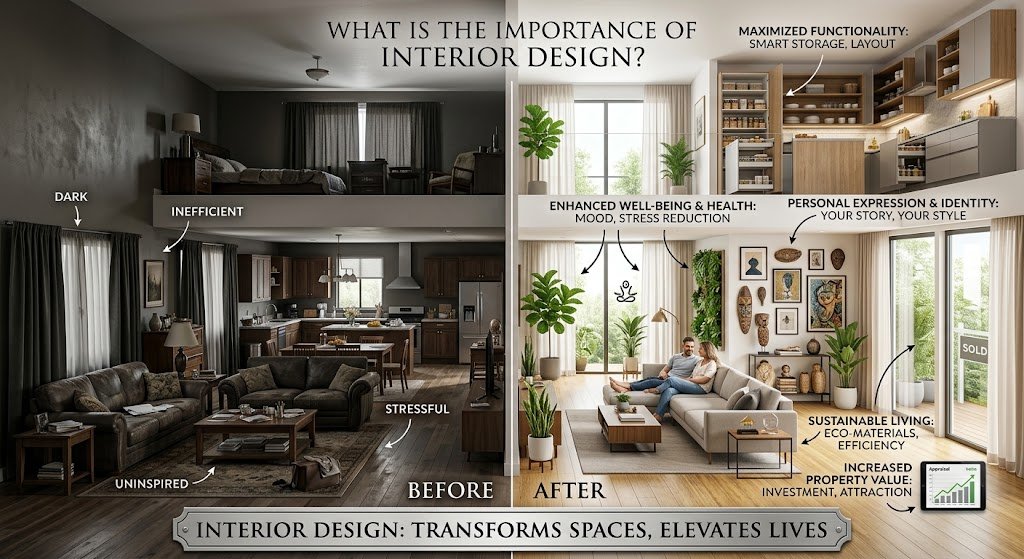
Interior design affects much more than how a room looks. It influences how easily you move through a space, how comfortable you feel, how well the room serves its purpose, and how enjoyable it is to spend time there.
So, what is the importance of interior design? In simple terms, good interior design brings function, comfort, safety, visual appeal, and personal needs together in one space. It helps turn an empty room into an environment that works for the people who use it.
This matters whether you are furnishing a small apartment, renovating a family home, creating a home office, or simply trying to make one room feel more practical. Good design does not always require expensive furniture or a major renovation. Often, better planning makes the biggest difference.
What Is Interior Design?
Interior design is the planning and arrangement of an indoor space to make it functional, comfortable, safe, and visually suitable for its users.
It can involve decisions about:
- Space planning and furniture placement
- Lighting
- Colour schemes
- Flooring and wall finishes
- Storage
- Materials and textures
- Room layout
- Furniture and fixtures
- Circulation and accessibility
- Decorative elements
Interior design is broader than simply decorating a room. Decorating mainly focuses on the appearance of a finished space, while interior design considers how the entire space works.
For example, choosing a sofa because you like its colour is decorating. Deciding where that sofa should sit so people can walk around it comfortably, see the television without awkward angles, access a table, and maintain a useful conversation area involves interior design.
Why Is Interior Design Important?
Interior design is important because the spaces around us affect how we use them and experience everyday life. A well-planned interior can make a small room feel more usable, reduce clutter, improve movement, and create a stronger connection between different areas of a home.
Here are the main reasons it matters.
1. It Makes a Space More Functional
One of the biggest purposes of interior design is to make a room work properly.
A beautiful room can still be frustrating if:
- Furniture blocks walkways.
- There is not enough storage.
- Lighting is poorly positioned.
- Doors or drawers cannot open properly.
- The room does not support the activities that take place there.
- Frequently used items are difficult to reach.
Good space planning starts with the question: What needs to happen in this room?
A kitchen needs efficient preparation and storage areas. A bedroom needs comfortable sleeping space and convenient storage. A home office needs an appropriate work surface, lighting, and enough room to move.
The design should follow those needs rather than forcing people to adapt to an impractical layout.
2. It Improves Comfort
Comfort is not just about having soft furniture.
A comfortable interior considers the relationship between furniture, temperature, lighting, noise, privacy, movement, and personal preferences.
For instance, a living room may become more comfortable when seating is arranged around conversation rather than pushed against every wall. A bedroom may feel more relaxing when harsh lighting is replaced with layered, controllable illumination.
Small design choices can make a room feel easier to live in without changing its basic structure.
3. It Helps Use Space Efficiently
Good interior design becomes especially valuable when space is limited.
A small room has fewer square metres to work with, so every decision matters. Oversized furniture can make circulation difficult, while insufficient storage can quickly create visual clutter.
Thoughtful planning can help a smaller space accommodate several purposes.
A spare bedroom, for example, might serve as:
- A guest room
- A home office
- A reading area
- Occasional storage
The solution could involve a compact desk, flexible furniture, built-in storage, and a layout that allows the room to change purpose without feeling crowded.
The goal is not necessarily to make a small room appear huge. It is to make the available space useful.
4. It Creates a Stronger Sense of Personal Style
A home should reflect the people who live in it.
Interior design provides a way to express preferences through colour, furniture, materials, artwork, lighting, patterns, and accessories.
Personal style might be:
- Minimalist
- Traditional
- Contemporary
- Rustic
- Industrial
- Scandinavian-inspired
- Eclectic
- Transitional
- Coastal
- Modern
There is no requirement to follow one style perfectly. Many successful interiors combine influences in a way that feels natural to the homeowner.
The important point is that design choices should support the way you want the space to feel and function.
5. It Can Reduce Clutter and Improve Organization
Poor organization can make even a large home feel difficult to manage.
Interior design considers where belongings will be stored and how frequently they are used. That can lead to practical solutions such as:
- Built-in cabinets
- Under-bed storage
- Entryway storage
- Open shelving
- Bathroom vanities
- Kitchen pantry systems
- Multi-purpose furniture
- Closed storage for visually distracting items
Storage should not be treated as an afterthought.
When storage is considered during the planning stage, everyday objects can have logical places to go. This can make cleaning and maintaining the room easier as well.
6. It Influences Lighting and the Atmosphere of a Room
Lighting can dramatically change the experience of an interior.
A room used for several purposes may need more than one type of lighting. For example, a living room could use:
- General ceiling lighting
- Floor or table lamps
- Task lighting for reading
- Accent lighting for artwork or architectural features
Natural light also matters. Window placement, curtains, blinds, mirrors, and furniture positioning can affect how daylight is experienced inside a room.
Rather than relying on a single bright light, layered lighting gives occupants more control over the atmosphere and function of the space.
7. It Helps Create Safer Spaces
Interior design also has a practical safety role.
Furniture placement, flooring, stairs, lighting, electrical planning, and circulation can all affect how safely people use a room.
For example, a well-planned layout can reduce unnecessary obstacles in a busy walkway. Adequate lighting can make movement through stairs, hallways, and entrances easier. Suitable flooring can also be selected according to the conditions of a particular room.
Safety requirements can become especially important in homes used by children, older adults, or people with mobility limitations.
Good design should therefore consider not only how a space looks, but also how people move through it.
8. It Can Improve the Way Rooms Connect
A home rarely consists of completely separate rooms. People move between the entrance, kitchen, dining area, living room, bedrooms, bathrooms, and outdoor spaces.
Interior design can help these areas feel connected.
This does not mean every room needs to look identical. Instead, designers can create visual relationships through repeated materials, complementary colours, consistent flooring, similar hardware, or related furniture styles.
For example, a neutral colour used in a hallway might appear again in the living room through cushions or artwork. The result can feel more intentional than a collection of unrelated rooms.
9. It Helps Rooms Support Different Activities
Modern homes often need to perform several jobs.
A dining table may become a homework station. A living room may also serve as a reading area. A bedroom may include a small workspace.
Interior design helps organize these different activities without making the room feel chaotic.
One useful approach is zoning. Instead of building walls, you can define areas through furniture placement, rugs, lighting, shelving, or changes in colour.
For example, a large living room could contain:
- A conversation zone
- A reading corner
- A television area
- A small work zone
The spaces remain connected while each has a clear purpose.
10. It Can Help a Home Feel More Cohesive
A cohesive home does not mean every room must match.
Instead, there should be enough visual connection between spaces that the home feels deliberately designed.
Consistency can come from:
- A limited colour palette
- Repeated wood tones
- Similar metal finishes
- Consistent flooring
- Related lighting styles
- Complementary fabrics
- Repeated architectural details
This is particularly useful in open-plan homes, where several functions share one visual field.
11. It Can Support Well-Being Through Better Environmental Choices
The design of a room can influence everyday experiences such as privacy, noise, daylight, order, and access to comfortable spaces.
That does not mean interior design can solve every problem or guarantee a particular emotional or health outcome. However, thoughtful environmental choices can make a space easier and more pleasant to use.
For example, a homeowner may prioritize:
- A quiet reading area
- Better control over bedroom lighting
- Comfortable seating
- Reduced visual clutter
- Access to natural light
- Plants or natural materials
- A dedicated place for work and a separate place for relaxation
The most useful approach is to design around actual needs rather than assuming one style works for everyone.
Interior Design vs. Interior Decorating
The two terms are often used interchangeably, but they are not exactly the same.
| Interior Design | Interior Decorating |
|---|---|
| Focuses on how a space works | Focuses mainly on appearance |
| May involve space planning | Usually works with an existing layout |
| Considers circulation and functionality | Concentrates on furnishings and accessories |
| Can involve materials, fixtures, and finishes | Often involves colour, fabrics, artwork, and décor |
| May be part of a renovation or new build | Can often be done without structural changes |
There is plenty of overlap between the two. A homeowner may handle decorating decisions while also applying basic interior-design principles to improve the room’s function.
What Are the Main Elements of Interior Design?
Good interiors usually involve several elements working together rather than one isolated feature.
Space
Space refers to the physical area available and how it is organized.
The designer considers both the areas occupied by furniture and the empty areas needed for movement.
Line
Lines can be created by walls, furniture, architectural details, flooring patterns, and other features. Horizontal, vertical, and diagonal lines can influence the visual character of a room.
Form
Form describes the shape and three-dimensional appearance of objects within the room.
A combination of curved and angular furniture, for example, can create a different visual effect from a room dominated by straight lines.
Colour
Colour affects the visual identity of a room and can influence how different surfaces and objects relate to one another.
The best colour scheme depends on the room, available light, existing finishes, and personal preference.
Texture
Texture adds visual and physical interest.
Wood, stone, glass, metal, wool, linen, leather, and other materials can create contrast and depth when used thoughtfully.
Light
Natural and artificial lighting help reveal colours, surfaces, furniture, and architectural features.
Lighting should also respond to the activities performed in the room.
Pattern
Patterns can add personality and visual movement through rugs, curtains, wallpaper, upholstery, artwork, and accessories.
The key is balance. Too many competing patterns can make a space feel visually busy.
How Does Interior Design Affect Different Rooms?
The importance of interior design becomes easier to understand when you look at individual rooms.
Living Room
A living room often needs to support conversation, relaxation, entertainment, and sometimes work.
Furniture should allow comfortable movement while keeping the room’s main activities clear.
Kitchen
Kitchen design is heavily influenced by workflow and storage.
The position of work surfaces, appliances, cabinets, lighting, and circulation can affect how easily the kitchen is used every day.
Bedroom
Bedrooms generally benefit from a calm, uncluttered arrangement.
Bed placement, bedside storage, lighting, clothing storage, window treatments, and colour choices all contribute to how practical the room feels.
Bathroom
Bathrooms require careful attention to storage, lighting, ventilation, moisture-resistant materials, and safe movement.
Here, attractive design and practical requirements need to work together.
Home Office
A home office needs to support focused work.
Desk position, lighting, storage, seating, background distractions, and access to power can all influence how well the room serves its purpose.
Does Good Interior Design Have to Be Expensive?
No.
Interior design and luxury are not the same thing.
A carefully planned low-cost room can work better than an expensive room filled with furniture that does not suit its size or purpose.
If your budget is limited, prioritize decisions that affect daily use first:
- Improve the layout.
- Remove unnecessary furniture.
- Address storage problems.
- Improve lighting.
- Choose durable, suitable materials.
- Add colour and accessories selectively.
- Upgrade statement pieces when the budget allows.
This approach puts money where it can make a practical difference.
What Should You Consider Before Designing a Room?
Before buying furniture or choosing paint, consider how the room will actually be used.
Ask yourself:
- Who uses the room?
- What activities happen there?
- How many people normally use it?
- What furniture must remain?
- Where are the doors and windows?
- How much natural light is available?
- What storage is required?
- Which items need easy access?
- Are there safety or accessibility concerns?
- What style and atmosphere do you prefer?
- What is the realistic budget?
Taking measurements before shopping is also essential. A piece of furniture that looks appropriately sized online can be surprisingly large once it enters a real room.
Common Interior Design Mistakes to Avoid
Even attractive rooms can become impractical when basic planning is skipped.
Buying Furniture Before Measuring
Always measure the room, doorways, stairways, and other access points before purchasing large furniture.
Ignoring Circulation
Leave enough usable space for people to move naturally between important areas.
Using Only One Light Source
A single overhead fixture may not provide suitable light for every activity. Consider how the room will be used at different times of day.
Choosing Appearance Over Function
A beautiful chair that is uncomfortable or a stylish storage unit that holds almost nothing may not be a good long-term choice.
Filling Every Empty Area
Empty space is not automatically wasted space. It can provide breathing room and improve circulation.
Following Trends Too Closely
Trends can provide inspiration, but permanent finishes and expensive furniture should also suit your lifestyle and preferences.
Forgetting the Rest of the Home
A room should work on its own while still making sense alongside adjacent spaces.
How to Make Interior Design Decisions More Practical
You do not need to redesign an entire house at once.
Start with the room causing the biggest everyday problem.
If the living room feels crowded, address the layout. If the bedroom lacks storage, solve that issue first. If the kitchen feels dark, examine the lighting and surfaces before replacing everything.
A simple priority system can help:
Function first → comfort second → durability third → appearance fourth.
That does not mean appearance is unimportant. It means an attractive room is more useful when the underlying space works well.
When Should You Hire an Interior Designer?
Professional help can be useful when a project involves complex planning, major renovation work, unusual spaces, accessibility requirements, or many decisions that need to work together.
An interior designer may help with areas such as:
- Space planning
- Furniture layouts
- Material selection
- Lighting concepts
- Colour schemes
- Custom storage
- Finish coordination
- Renovation planning
- Communication with other professionals
For a simple room refresh, professional design services may not be necessary. For a major project, however, getting appropriate professional input early can help you think through decisions before work begins.
Frequently Asked Questions
What is the importance of interior design in a home?
Interior design helps a home become more functional, comfortable, safe, organized, and visually cohesive. It considers how people use each space rather than focusing only on decoration.
Why is interior design important for everyday life?
People interact with their indoor environments every day. Furniture placement, lighting, storage, circulation, materials, and room layout can affect how easily everyday activities are performed.
Is interior design only about making a room look beautiful?
No. Appearance is one part of interior design. Good design also considers function, comfort, movement, storage, lighting, safety, and the needs of the people using the space.
Can interior design make a small room more useful?
Yes. Careful space planning can improve circulation, storage, furniture placement, and the way different activities share the room. It cannot increase the physical size of a room, but it can make the available space work harder.
What is the difference between interior design and decorating?
Interior design considers how an interior functions and is organized, while decorating primarily focuses on its visual appearance through elements such as furniture, colour, fabrics, artwork, and accessories.
Do I need an interior designer for a small home project?
Not necessarily. Many small projects can be planned by homeowners. Professional assistance becomes more relevant when the project involves complicated layouts, structural changes, extensive renovations, accessibility concerns, or many interconnected decisions.
Conclusion
The importance of interior design goes far beyond creating attractive rooms. At its core, it is about making indoor spaces work better for the people who use them.
Good design can improve circulation, storage, lighting, comfort, organization, safety, and visual harmony. It can also help a home reflect the personality and routines of its occupants.
You do not need a huge budget or a perfectly styled house to apply these principles. Start by looking at how a room is used, identify what is not working, and make design decisions around those real needs. When function and appearance support each other, even relatively simple changes can make a space feel considerably better.



















