

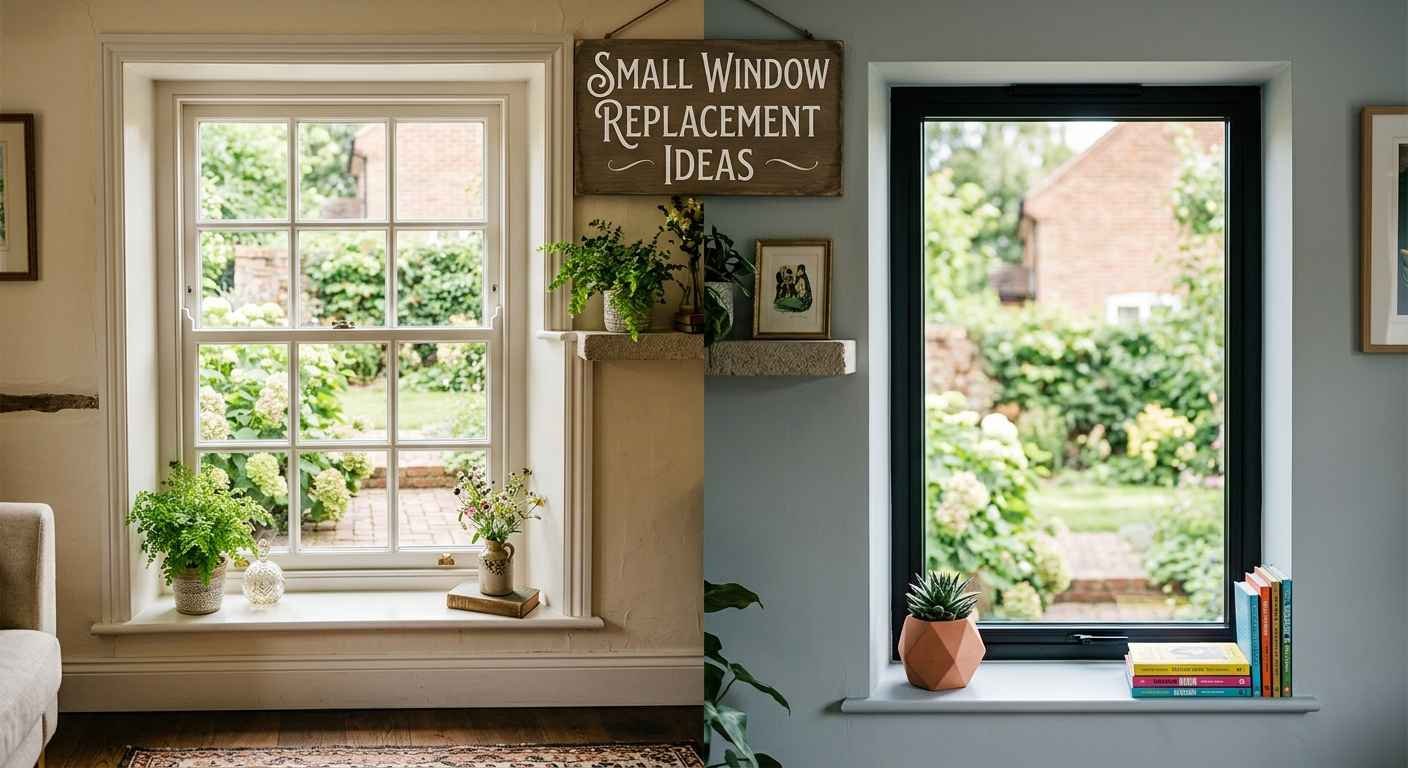
Small windows can be surprisingly tricky. They may sit above a kitchen sink, beside a front door, inside a bathroom, or in a narrow bedroom wall where a standard replacement window simply does not fit.
The good news is that a small opening does not mean you have to settle for a dull-looking window. The right replacement can bring in more daylight, improve ventilation, add privacy, and make the room feel more finished.
These small window replacement ideas cover practical choices for different rooms, budgets, privacy needs, and design styles. Some involve replacing the existing window with a similar-sized unit, while others make better use of the opening or slightly change the design.
What Should You Consider Before Replacing a Small Window?
Before choosing a new window, look beyond the glass itself. The size and condition of the existing opening, the room’s purpose, privacy needs, ventilation, and exterior appearance all matter.
Start by checking:
- Existing opening: Measure the rough opening carefully before ordering a replacement.
- Window condition: Rot, water damage, or structural problems may require more than a simple replacement.
- Ventilation: Bathrooms, kitchens, and bedrooms may benefit from an operable window.
- Privacy: Frosted, textured, or obscured glass can provide privacy without blocking daylight.
- Natural light: Consider how much visible glass the new frame will provide.
- Energy performance: Look for glazing and frame options appropriate for your climate.
- Exterior appearance: The replacement should work with the home’s existing architecture.
- Local requirements: Enlarging an opening or changing a window’s location may require permits or professional assessment depending on where you live.
A replacement window is easiest when the existing opening can remain largely unchanged. Enlarging the opening can create more design possibilities, but it is a bigger construction project.
1. Replace a Tiny Window With a Larger Picture Window
If the wall allows it, one of the most noticeable upgrades is replacing a very small window with a larger fixed window.
A picture window does not open, so it is primarily designed to provide an unobstructed view and more daylight. It can work particularly well in:
- Living rooms
- Dining areas
- Hallways
- Home offices
- Rooms with attractive outdoor views
The larger glass area can make a wall feel less closed in.
However, this option is not suitable if you need the window to provide ventilation. In that case, consider combining fixed glass with an operable section.
2. Install a Small Casement Window
A casement window is hinged on one side and opens outward. For a narrow opening, its design can provide useful ventilation without requiring a large window area.
Casement windows can be especially practical for:
- Kitchens
- Bathrooms
- Small bedrooms
- Laundry rooms
Because the sash opens outward, check that there is enough clearance outside the window.
A small casement can also have a clean, simple appearance that suits both traditional and contemporary homes.
3. Choose a Sliding Window for Easy Operation
Sliding windows move horizontally along a track. They can be useful where there is limited interior space because the sash does not swing into the room.
They may work well above:
- Kitchen counters
- Desks
- Bathroom fixtures
- Built-in furniture
The trade-off is that only part of the window typically opens, so ventilation may be more limited than with some other window styles.
For a small opening, choose a design that provides enough usable glass while keeping the frame visually simple.
4. Use a Hopper Window in a Bathroom or Basement
A hopper window is hinged at the bottom and opens inward from the top.
This style can be a useful choice for compact spaces where ventilation is important. It is commonly associated with basement and utility applications, but it can also suit other rooms when the opening and surrounding space allow it.
For bathrooms, privacy glass can make the combination even more practical.
Before choosing an inward-opening window, make sure the sash will not interfere with a sink, countertop, shelf, or other fixture.
5. Add Privacy Glass Instead of Covering the Window
If your small window faces a neighbor, walkway, or busy street, you may be tempted to cover it with curtains or blinds.
An alternative is privacy glass.
Options can include:
- Frosted glass
- Obscured glass
- Textured glass
- Patterned glass
This approach allows daylight into the room while reducing clear visibility.
Privacy glass can be particularly effective in bathrooms and entry areas. It also creates a cleaner look because you may not need a bulky window treatment.
6. Turn a Small Bathroom Window Into a Design Feature
Bathroom windows are often small because privacy and wall space are priorities. Instead of treating the window as an awkward necessity, make it part of the room’s design.
A compact window can become a focal point with:
- Frosted glass
- Black or dark frames
- Decorative trim
- Simple tile surrounding the opening
- Textured glass
- A slim Roman shade or café curtain
If the window is close to a shower or bathtub, select materials and finishes that can handle the room’s moisture levels.
Good ventilation is also important. If the existing window can be replaced with an operable model, that may be more useful than choosing a purely decorative fixed window.
7. Replace a Kitchen Window Above the Sink
A small kitchen window above the sink is a classic situation.
The replacement should be easy to operate, especially if you want to open it while cooking. A sliding or casement style can be convenient, depending on the available space.
For a more decorative look, consider:
- A contrasting frame
- Simple window casing
- A deeper sill
- Small herb planters nearby
- A patterned privacy treatment
Be careful with curtains or fabric shades directly beside cooking areas. They can collect grease and may require frequent cleaning.
8. Combine a Small Fixed Window With an Operable Window
If the wall permits a wider opening, combining fixed and operable sections can give you the benefits of both.
For example, a larger window arrangement could include a fixed center panel with a narrow casement on one side.
This can provide:
- More daylight
- A wider view
- Better ventilation
- A balanced appearance
The exact configuration depends on the opening, structural conditions, and window manufacturer’s available sizes.
This is a good option when a single small window feels too limiting but you still want ventilation.
9. Install a Transom Window
A transom is a window positioned above a door or another window.
If there is unused wall space above an existing opening, a transom can introduce additional daylight without dramatically changing the main window.
Small transom windows can work well in:
- Entryways
- Hallways
- Interior doors
- Bathrooms
- Home offices
A fixed transom is particularly simple because it adds light without requiring an opening mechanism.
For privacy-sensitive spaces, use obscured glass.
10. Try a Vertical Narrow Window
Sometimes the problem is not that the window is too small in every direction. It may simply be narrow.
A tall, slim window can make a room feel more vertically balanced while fitting into a restricted wall area.
This design can work beside:
- Staircases
- Entry doors
- Cabinets
- Built-in storage
- Narrow walls
A vertical window can also create an interesting architectural detail when several windows are arranged together.
11. Use Two Small Windows Instead of One
If there is enough wall space, replacing one awkward window with two smaller windows can completely change the appearance of the room.
For example, two matching vertical windows can create symmetry where one centered window looks undersized.
This approach works particularly well in:
- Bedrooms
- Dining rooms
- Living rooms
- Home offices
Keep the spacing between the windows intentional. Matching frames and consistent sill heights help the arrangement look like part of the original architecture.
12. Add a Decorative Window Grid
A small replacement window does not have to look plain.
Grilles or grids can add architectural character by dividing the glass into smaller sections.
Common patterns include:
- Colonial-style grids
- Prairie-style patterns
- Simple horizontal divisions
- Minimal vertical grids
The right pattern depends on the architectural style of the home.
For a modern house, fewer divisions usually create a cleaner appearance. Traditional homes may suit more detailed grid patterns.
13. Choose a Dark Window Frame for Contrast
A small window can sometimes disappear into a large wall.
A dark frame can give it more visual presence.
Black, charcoal, or another deep frame color can create contrast against light walls. This can work particularly well in modern, industrial, Scandinavian, and transitional interiors.
However, frame color should also coordinate with the exterior. A dramatic interior choice may look disconnected if it clashes with the home’s outside finishes.
14. Create a Deep Window Sill
If the wall construction allows it, a deeper sill can turn a basic small window into a useful feature.
A sill can provide space for:
- Small plants
- Decorative objects
- Books
- Kitchen herbs
- Seasonal decorations
In bathrooms, avoid materials that are easily damaged by repeated moisture.
A deeper sill can also add architectural interest even when the window itself remains relatively small.
15. Use a Bay or Bow Configuration Carefully
If you have enough exterior and interior space, a small bay-style configuration can extend the visual impact of a limited wall opening.
Bay and bow windows project outward from the exterior wall, creating additional interior space or a broader view.
They can be attractive, but they are much more involved than a standard replacement window. The project may require structural work, exterior finishing, roofing or weatherproofing considerations, and careful planning.
For that reason, this option makes the most sense when you want a significant architectural change rather than a simple window swap.
16. Keep a Small Window and Upgrade the Trim
You do not always need a larger window.
If the existing opening is in good condition and the size works for the room, replacing the window while improving the surrounding trim may be enough.
Consider:
- Wider casing
- A painted wood sill
- Simple modern trim
- Decorative molding
- A contrasting finish
Good trim can make a small window feel intentional instead of undersized.
This can also be a useful approach when structural changes would be too expensive or disruptive.
17. Consider Glass Blocks for Privacy
Glass blocks can provide daylight while limiting visibility.
They can be useful for privacy-focused areas such as:
- Bathrooms
- Basements
- Utility rooms
- Stairwells
Modern glass-block products come in different textures and patterns, allowing you to choose a look that fits the space.
Keep in mind that glass blocks are not the same as a conventional operable window. If ventilation is necessary, another solution may be needed.
18. Add a Small Awning Window
Awning windows are hinged at the top and open outward from the bottom.
This design can be useful when you want ventilation but have a relatively compact opening.
One advantage is that an awning window can sometimes remain slightly open during light rain, although weather conditions and installation details still matter.
They can be a practical choice for bathrooms, kitchens, and other areas where fresh air is useful.
19. Make a Small Window Feel Bigger With Surrounding Design
Sometimes the best solution is visual rather than structural.
You can make a small window appear more substantial by extending the surrounding design.
Try:
- Hanging curtains wider than the window
- Using a simple ceiling-height treatment
- Extending trim around the opening
- Painting the surrounding wall in a complementary shade
- Adding symmetrical décor
Curtains should be positioned so they do not unnecessarily block the available glass when they are open.
This approach is especially useful when enlarging the actual window would require major construction.
20. Match the Replacement to the Home’s Architecture
A replacement window should not be chosen in isolation.
A farmhouse-style home may look better with traditional proportions and divided-light details, while a contemporary home may benefit from larger uninterrupted panes.
Consider the home’s:
- Roof style
- Exterior materials
- Existing windows
- Door design
- Trim
- Interior style
A small window can look perfectly proportioned when it matches the architecture.
Which Small Window Replacement Idea Is Right for You?
The best choice depends on what you are trying to improve.
| Your main goal | Window idea to consider |
|---|---|
| More daylight | Larger fixed window |
| Better ventilation | Casement or awning window |
| Easy operation | Sliding window |
| Bathroom privacy | Obscured or frosted glass |
| Basement ventilation | Hopper window |
| More architectural character | Grilles or decorative trim |
| More daylight above a door | Transom window |
| Narrow wall | Tall vertical window |
| Modern appearance | Minimal-frame design |
| Keep construction simple | Same-size replacement |
There is no single window style that works for every opening. The room, wall construction, exterior conditions, and intended use should guide the decision.
Should You Make the Window Opening Bigger?
Making a window larger can provide more daylight and change the character of a room, but it is not simply a matter of removing the old frame and cutting a bigger hole.
Exterior walls can carry structural loads, contain wiring or plumbing, and form part of the home’s weather barrier.
Before enlarging an opening, determine whether the wall is structural and whether additional support is required. Building regulations and permit requirements can also vary by location.
For a significant opening change, getting advice from an appropriately qualified local professional is a sensible step.
How to Choose the Right Window Material
The frame material also affects the appearance, maintenance, durability, and cost of a replacement.
Vinyl
Vinyl windows are widely used and generally require relatively little maintenance. They are available in many common styles and sizes.
Fiberglass
Fiberglass frames can provide a durable option with a different appearance and construction profile from vinyl. They can work well in both traditional and modern homes.
Wood
Wood windows offer a classic appearance and can be painted or stained. They generally require more maintenance than many modern alternatives.
Aluminum
Aluminum frames can provide a slim, contemporary appearance. Their suitability depends on the product, climate, and desired energy performance.
The best material depends on the specific window, climate, installation quality, budget, and appearance you want.
Small Window Replacement Mistakes to Avoid
Even a small window project can go wrong when planning is rushed.
Ordering by glass size alone
Window measurements involve more than simply measuring the visible glass. The existing opening and replacement method matter.
Choosing appearance over function
A beautiful fixed window may not be useful in a bathroom where ventilation is important.
Ignoring privacy
A clear window may create an uncomfortable view into a bathroom or bedroom.
Forgetting exterior appearance
A window can look attractive indoors but still clash with the home’s exterior.
Blocking the opening with furniture
Check how the replacement operates before placing a countertop, cabinet, desk, or other object nearby.
Treating installation as an afterthought
A quality window can still perform poorly if it is incorrectly sized, installed, flashed, or sealed.
How to Make a Small Window Look More Stylish on a Budget
You do not always need an expensive window configuration to improve the appearance.
Try simple upgrades such as:
- Refresh the trim around the existing opening.
- Paint the frame or surrounding trim where the material and finish allow it.
- Add a simple curtain that extends beyond the window width.
- Use privacy film where appropriate.
- Add a decorative sill for more visual interest.
- Coordinate the window with nearby hardware, such as cabinet pulls or door handles.
- Keep the area around the window uncluttered so the available daylight has more impact.
Small details can make a surprisingly large difference.
When Is Full Window Replacement Worth It?
A new window may be worth considering when the existing unit has persistent problems such as difficult operation, damaged components, failed glazing, drafts, water intrusion, or deteriorated framing.
However, not every problem means the entire window must be replaced.
Depending on the condition, some issues may be addressed through repair, hardware replacement, weatherstripping, glazing work, or improved sealing.
If you are unsure, have the existing window assessed before committing to a larger project.
Frequently Asked Questions
What is the best window style for a small opening?
The best style depends on the room and your priorities. Casement, awning, sliding, hopper, and fixed windows can all work well in different situations. For ventilation, choose an operable design; for maximum uninterrupted glass, a fixed window may be more suitable.
Can I replace a small window with a larger one?
Sometimes. Enlarging a window opening can require structural modifications, weatherproofing work, and compliance with local building requirements. The wall should be evaluated before the opening is changed.
How can I make a small window look bigger?
You can use wider curtains, larger surrounding trim, a deeper sill, a contrasting frame, or a carefully designed window arrangement. These changes can make the window appear more substantial without necessarily enlarging the opening.
What type of small window is good for a bathroom?
A small awning, casement, hopper, or sliding window may work depending on the opening and available space. Privacy glass is also useful when the bathroom faces a neighboring property or public area.
Are small windows worth replacing?
They can be, especially when the existing window is damaged, difficult to operate, drafty, or no longer suits the room. If the window is in good condition, a trim or privacy upgrade may provide the improvement you need without a full replacement.
Should small windows have curtains?
They can, but curtains are not the only option. Roller shades, blinds, privacy film, frosted glass, and café curtains can all work depending on the room. Choose a treatment that provides the privacy and light control you actually need.
Conclusion
The best small window replacement ideas are not necessarily the most complicated ones. A well-chosen casement, awning, sliding, fixed, or privacy-glass window can make a small opening more useful without overwhelming the room.
If you want more daylight, consider increasing the glass area where practical. If ventilation is the priority, choose an operable style. And if construction needs to remain simple, a same-size replacement combined with better trim or glass can still produce a noticeable improvement.
Before ordering anything, measure carefully, consider how the window will function, and make sure the replacement works with both the home’s interior and exterior. A small opening may limit your options, but with thoughtful planning, it can become one of the more attractive details in the room.



















