

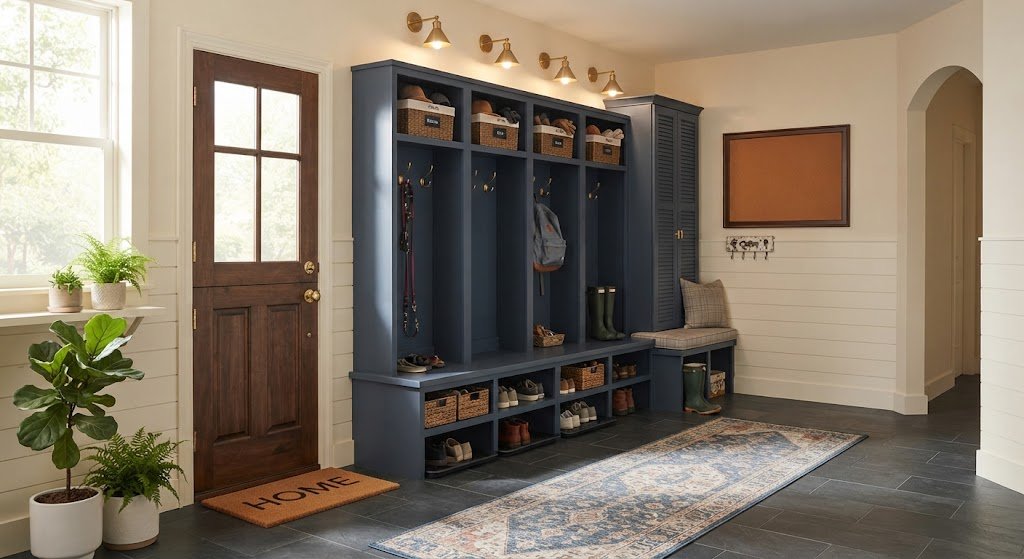
A well-designed mudroom can make a surprisingly big difference to how a home feels. It gives coats, shoes, bags, boots, sports gear, and everyday clutter a proper place to land instead of spreading through the hallway.
The best mudroom is not necessarily the biggest one. Even a small space can work beautifully when storage, seating, flooring, lighting, and traffic flow are planned around the way the household actually enters and leaves the home.
This guide explains how to design a practical mudroom, what features are worth including, how to handle small spaces, and which details can make the room easier to keep clean and organised.
What Is a Mudroom?
A mudroom is a transition space between the outdoors and the main living areas of a home. Its main purpose is to handle the mess and belongings that come with everyday arrivals and departures.
A typical space might include:
- Coat hooks or a rail
- Shoe storage
- A bench for sitting
- Shelving or cabinets
- Baskets for smaller belongings
- Durable flooring
- A place for bags and backpacks
- Storage for outdoor equipment
- A mirror
- Good lighting
It can be a separate room, part of a utility room, a section of a hallway, or even a compact area beside a back or side entrance.
The important thing is not the name of the room. It is the function. A successful entry zone should make it easy to come in, put things away, clean up, and move on.
Why Add a Mudroom to Your Home?
A thoughtfully planned entry area can solve several everyday problems at once.
It controls clutter
Without designated storage, coats tend to end up on chairs, shoes gather by the door, and bags migrate from one room to another.
Individual hooks, cubbies, baskets, and cupboards give each category of item a home.
It protects the rest of the house
Wet shoes, muddy boots, raincoats, and outdoor equipment can be dealt with before they reach carpets and other living spaces.
This is particularly useful in homes where the main entrance opens directly into a hallway or living area.
It makes busy mornings easier
A good layout reduces the amount of searching and moving around before leaving the house.
If shoes, coats, bags, and keys are stored close to the exit, the whole process becomes more straightforward.
It creates useful storage
A mudroom can hold much more than coats.
Depending on available space, it can accommodate:
- School bags
- Dog leads
- Umbrellas
- Hats and gloves
- Sports equipment
- Gardening items
- Cleaning supplies
- Seasonal clothing
- Outdoor toys
The trick is to organise storage according to how the items are actually used.
What Should a Mudroom Include?
You do not need every possible feature. Start with the things your household reaches for most often.
1. A place to sit
A bench is one of the most useful additions.
It provides somewhere to sit while putting on or removing shoes and can also create storage underneath.
A built-in bench with drawers or baskets works well when space is limited. A freestanding bench can be easier to change later.
2. Hooks for everyday items
Hooks are often more practical than a traditional hanging rail because they make frequently used items easy to grab.
Install enough hooks for the people who regularly use the entrance. If children use the space, lower hooks can make it easier for them to put away their own belongings.
3. Closed storage
Open hooks and shelves are convenient, but too much exposed storage can make the room look messy.
Cupboards are useful for items that are less attractive, used less often, or needed only during certain seasons.
A balanced arrangement might combine:
- Open hooks for daily coats
- Cubbies for bags
- Closed cabinets for seasonal items
- Baskets for small accessories
4. Shoe storage
Shoes are one of the first things to consider because they can quickly take over the floor.
Open shelves make everyday footwear easy to access, while drawers or cabinets create a cleaner appearance.
Avoid designing storage so tightly that shoes must be stacked awkwardly. A little breathing room makes the system much easier to use.
5. A durable floor
Flooring is particularly important here because this is one of the areas most likely to encounter water, dirt and grit.
Suitable options can include:
- Porcelain tile
- Ceramic tile
- Natural stone
- Vinyl
- Other durable, moisture-resistant flooring products
The exact choice should suit the home’s construction, climate, maintenance preferences, and installation requirements.
A floor that looks beautiful but is difficult to clean can become frustrating very quickly.
Mudroom Layout Ideas
The best layout depends on the shape of the room and the entrance people use.
One-wall layout
A single wall can accommodate hooks, a bench, shelving, and cabinets.
This arrangement works particularly well in a narrow room or along one side of a hallway.
Keep frequently used items within easy reach and place less frequently used storage higher or farther away.
Two-sided layout
If the room is wide enough, storage can be placed on opposite walls.
One side might hold coats and bags while the other contains shoes, cleaning supplies, or household storage.
Be careful not to make the passage too narrow. Storage is only helpful when people can still move comfortably through the space.
Bench-centred layout
A bench can become the visual and functional centre of the room.
Hooks or lockers can sit above it, while drawers, baskets, or shoe storage occupy the space below.
This creates a simple drop-zone arrangement: sit, remove shoes, hang the coat, and move on.
Entry-zone layout
You do not need a dedicated room to create a mudroom-style area.
A section near a back door can work with:
- A narrow bench
- Wall hooks
- A small shoe cabinet
- A washable mat
- One or two baskets
This is a useful approach for homes without spare rooms.
Small Mudroom Ideas That Save Space
A compact entry area can still be highly functional.
Use vertical space
When floor area is limited, look upward.
Tall cabinets, wall-mounted shelves, hooks, and overhead storage can provide useful capacity without taking over the walking area.
Choose shallow storage
Deep cupboards can make a narrow room feel cramped.
Shallower cabinets or shelving may provide enough room for everyday items while preserving circulation space.
Combine seating and storage
A storage bench performs two jobs in the footprint of one piece of furniture.
Use baskets underneath for shoes, accessories, pet items, or outdoor gear.
Use the back of the door
A door can provide additional storage for smaller items.
Hooks or suitable organisers can hold umbrellas, bags, cleaning cloths, or other lightweight belongings, provided the door and hardware can safely support the load.
Keep the floor clear
Floor space becomes especially valuable in a small room.
Wall-mounted storage can help keep shoes and bags organised without creating obstacles.
Mudroom Storage: Open or Closed?
There is no single right answer.
Open storage is convenient because you can see and reach everything quickly. It works particularly well for items used every day.
Closed storage hides visual clutter and is useful for seasonal clothing, cleaning products, spare shoes, and less attractive equipment.
For many homes, a combination works best.
Think about the frequency of use:
| Item | Useful storage |
|---|---|
| Everyday coats | Hooks |
| School or work bags | Cubbies or hooks |
| Shoes | Shelves or drawers |
| Gloves and small accessories | Baskets or drawers |
| Seasonal clothing | Closed cupboards |
| Cleaning supplies | Tall cabinet |
| Outdoor equipment | Larger cupboard or dedicated zone |
The goal is not to hide everything. It is to make the right things easy to reach while keeping the room visually calm.
Choosing Mudroom Colours and Materials
A mudroom does not have to look purely functional.
Colour, cabinetry, hardware, wall treatment, and lighting can make the room feel like a deliberate part of the home rather than a storage cupboard.
Light colours
Pale walls and cabinetry can help a small room feel more open.
They can also make it easier to spot dirt, which may be either a benefit or a drawback depending on your cleaning habits.
Darker colours
Deep colours can create a more dramatic look and may work particularly well with natural wood, metal hardware, or light flooring.
However, darker surfaces can show dust and marks in different ways, so think about maintenance as well as appearance.
Natural wood
Wood cabinetry or benches can add warmth to a practical space.
The finish should be appropriate for the room and compatible with the level of moisture and wear expected.
Durable surfaces
Mudrooms benefit from materials that can cope with everyday knocks.
Prioritise practicality for surfaces that receive heavy use, especially floors and lower cabinets.
Should a Mudroom Have a Sink?
A sink can be useful, but it is not essential.
If the space is also used for gardening, pet care, laundry, or cleaning outdoor items, a utility sink may make sense.
It can provide a place to rinse dirty footwear, clean small items, or deal with mess before it reaches the kitchen or bathroom.
However, adding plumbing can make a project considerably more involved than simply installing storage.
Before adding a sink, consider:
- Existing plumbing
- Drainage
- Waterproofing
- Available wall space
- Cleaning requirements
- Whether the sink will genuinely be used
A sink should solve a real household problem rather than being added simply because the room has enough space for one.
Mudroom Flooring: What Works Best?
Flooring has to cope with dirt, moisture and frequent foot traffic.
The right material depends on the home, climate, budget and style.
Porcelain or ceramic tile
Tile is a popular choice because many products are durable and easy to clean.
Pay attention to the product’s intended use and slip characteristics rather than choosing solely on appearance.
Natural stone
Stone can give the room a distinctive, substantial appearance.
It may require more maintenance depending on the type of stone and finish.
Vinyl
Modern vinyl flooring can provide a practical option for households looking for easy maintenance and a wide range of designs.
Always follow the manufacturer’s installation and care instructions.
Entry mats
Whatever flooring you choose, a properly positioned mat can help catch dirt and moisture before it spreads farther into the house.
A mat should be large enough to be useful rather than treated as a tiny decorative accessory.
How to Keep a Mudroom Organised
Good organisation is partly about storage and partly about habits.
The room becomes easier to maintain when everyone knows where things belong.
Try these simple rules:
- Give frequently used items a clearly defined home.
- Keep everyday belongings within easy reach.
- Store seasonal items separately.
- Avoid filling every shelf to capacity.
- Use baskets for small loose objects.
- Remove items that no longer belong in the entry area.
- Keep cleaning supplies accessible.
- Make children’s storage easy for children to use.
One useful principle is to store things where the action happens.
If bags are dropped beside the door every afternoon, place bag storage there. If wet boots always end up under the bench, make that location the designated boot zone.
The easier the system is to follow, the more likely it is to stay organised.
Mudroom Ideas for Families With Children
Children can quickly turn an entryway into a pile of coats, shoes and bags.
The solution is not necessarily more storage. It is storage that matches their height and routine.
Consider giving each child:
- A dedicated hook
- A small cubby
- A shoe space
- A basket for accessories
- A clearly defined place for school bags
Labels can help younger children understand where items belong.
Keep potentially hazardous cleaning products, tools, and other unsuitable items in secure storage away from children.
Mudroom Ideas for Pet Owners
Pets can make an entry area even more useful.
A dedicated zone can hold:
- Leads
- Towels
- Food containers
- Grooming supplies
- Outdoor accessories
If pets regularly come inside through this entrance, choose flooring and lower wall surfaces that are easy to clean.
A small washable mat or designated towel storage can also help keep wet paws from becoming a whole-house problem.
Mudroom Lighting Matters
Storage tends to receive most of the attention, but lighting deserves a place in the plan.
You need enough light to:
- Find belongings
- Check shoes and clothing
- Clean the floor
- Use drawers and cupboards safely
- See wet or dirty areas
If there is natural light, make the most of it.
For artificial lighting, consider a combination of general illumination and focused lighting where tasks happen. The exact fixtures should suit the room’s electrical setup and applicable local requirements.
How to Make a Mudroom Feel Less Like a Utility Space
Practicality does not mean the room has to feel cold.
A few design choices can make a functional entry area much more welcoming.
Add a mirror
A mirror is useful before leaving the house and can help reflect light around a smaller room.
Use attractive hardware
Cabinet handles and hooks are small details, but they can strongly influence the overall appearance.
Introduce a little colour
Paint, cabinetry, artwork, or accessories can give the room personality without compromising function.
Add one or two decorative elements
A plant, framed print, or carefully chosen basket can soften the space.
Just avoid filling a working entry area with objects that become obstacles.
What Should You Avoid in a Mudroom?
Some design mistakes can make even a beautiful space frustrating to use.
Too much storage
More cabinets do not automatically mean better organisation.
If the room becomes packed with furniture, there may be nowhere to stand, sit, or move comfortably.
No place for wet items
If wet coats and shoes have nowhere appropriate to go, they will end up wherever there is space.
Plan for moisture instead of pretending it will not happen.
Poor circulation
Doors, benches, cabinets and people all need room.
Map out how someone enters, removes a coat, sits down, takes off shoes, and leaves the area before committing to the final layout.
Storage that is difficult to reach
High shelves may look tidy but are not ideal for belongings used every day.
Keep the most frequently used items in the easiest locations.
Choosing materials based only on appearance
A delicate surface may not be suitable for a room exposed to dirt, water and heavy traffic.
Ask how the material will behave after months of real use, not just how it looks on installation day.
How Much Storage Do You Really Need?
Instead of starting with the size of the room, start with the number of people using it and what they bring through the door.
Make a simple list of everyday items:
- Coats
- Shoes
- Bags
- Hats
- Umbrellas
- Sports equipment
- Pet accessories
- Outdoor clothing
Then identify seasonal items that need storage but do not need to remain visible.
This approach prevents a common mistake: designing a large amount of storage for things the household rarely uses while leaving everyday items without a convenient home.
When a Mudroom Shares Space With a Utility Room
Combining the entry zone with a utility room can be an efficient use of space.
The two functions can complement each other because both benefit from durable flooring, practical storage and easy-to-clean surfaces.
However, separate the zones where possible.
For example:
- Keep coats and bags near the entrance.
- Place laundry equipment away from the main traffic path.
- Store cleaning products securely.
- Leave enough working space around appliances.
- Avoid allowing shoes and outdoor gear to block access to machines.
A shared room works best when each activity has a defined area.
Should You Build a Custom Mudroom?
Custom cabinetry can make excellent use of awkward walls, corners and narrow spaces.
It is particularly useful when you want:
- Floor-to-ceiling storage
- Integrated seating
- Individual cubbies
- Hidden storage
- A precise fit around doors or windows
But custom work is not always necessary.
A combination of ready-made cabinets, shelves, hooks, baskets and a bench can create a highly functional space at a lower level of complexity.
The decision should come down to the room’s dimensions, your storage needs, appearance preferences and budget.
A Simple Planning Checklist
Before starting your project, work through these questions:
- Where do people enter the house?
- What items are usually carried inside?
- How many people use the space?
- Where will wet shoes go?
- Where will coats hang?
- Is there enough seating?
- Which belongings need closed storage?
- What can be stored vertically?
- Can the floor handle moisture and dirt?
- Is the walking route clear?
- Does the lighting suit the space?
- Are cleaning products safely stored?
- Will children be able to use their storage?
- Does the room need plumbing?
- Which features are genuinely worth the extra cost?
If you can answer these questions before choosing finishes, the design process becomes much easier.
Frequently Asked Questions
What is the main purpose of a mudroom?
Its main purpose is to provide a practical transition between outdoor and indoor areas, giving coats, shoes, bags and other everyday belongings a designated place.
Does a mudroom need to be a separate room?
No. It can be a dedicated room, part of a utility room, a hallway zone, or a compact area beside an entrance.
What is the most important feature?
There is no single feature that suits every home, but accessible storage is usually fundamental. Hooks, shoe storage and a place to sit can make a small entry zone much more useful.
How do you organise a small mudroom?
Use vertical storage, shallow cabinetry, wall hooks, multifunctional furniture and storage under a bench. Keep the floor and main walking route as clear as possible.
What flooring is suitable?
Durable, easy-to-clean materials that suit the home’s conditions can work well. Tile and suitable resilient flooring are common choices, while natural stone can provide another option when its maintenance requirements are acceptable.
Can a mudroom increase home value?
A well-designed entry area can make a home more functional and appealing, but its effect on property value varies by property, location, market conditions and buyer preferences. It should be designed primarily around practical use rather than assuming a guaranteed financial return.
Conclusion
A good mudroom is less about creating an impressive room and more about making everyday life easier. The right combination of hooks, seating, shoe storage, cabinets and durable materials can prevent a busy entrance from becoming a permanent pile of clutter.
Start with the household’s real routine. Notice what comes through the door, where it currently ends up, and what causes the most frustration. Then build the storage and layout around those problems.
Even a small entryway can become a hardworking part of the home when every feature has a clear purpose.



















