

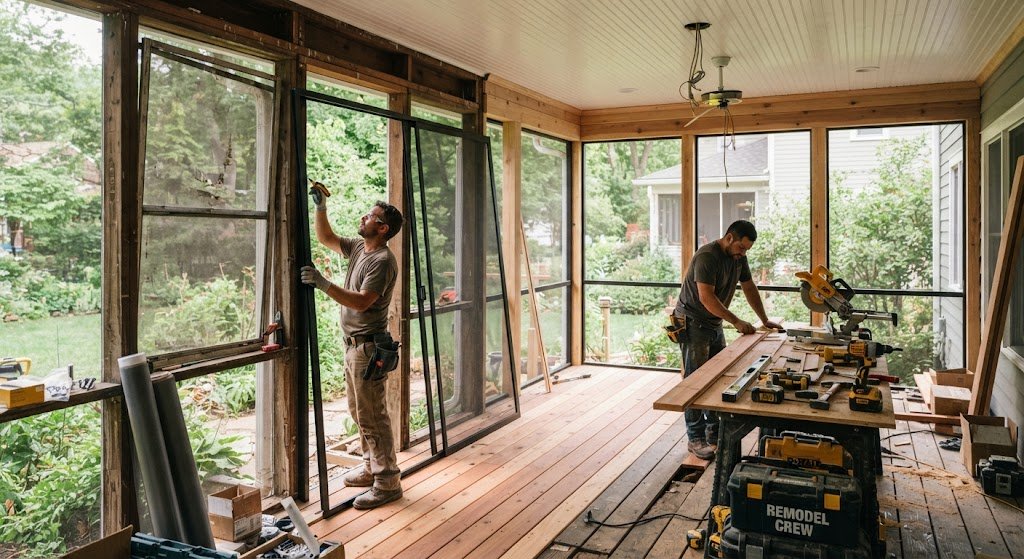
A screened porch can be one of the most enjoyable spaces in a home, but an older porch may feel dark, worn, cramped, or simply forgotten. Learning how to remodel a screened porch is less about making it look expensive and more about fixing the features that affect how you actually use the space.
A successful remodel can involve something as simple as replacing the screens and adding better furniture, or as substantial as upgrading the flooring, ceiling, lighting, electrical system, or enclosure. The right approach depends on the porch’s condition, your budget, and whether you want a seasonal sitting area or a more comfortable outdoor room.
The smartest place to start is with the structure. Once you know what needs repairing, you can choose finishes, furniture, lighting, and decor that make the porch feel like a natural extension of your home.
Start With a Thorough Porch Inspection
Before buying furniture or choosing paint colors, inspect the existing porch from top to bottom.
Look closely at:
- Posts and beams
- Roof and ceiling
- Floorboards or decking
- Screen frames
- Screen mesh
- Doors and hinges
- Railings
- Steps
- Gutters and drainage
- Electrical outlets and light fixtures
- Areas where water enters the porch
Pay particular attention to signs of rot, loose connections, damaged wood, rust, water stains, or movement in the structure. Cosmetic improvements are not a good substitute for structural repairs.
If the porch connects directly to the house, also inspect the transition between the porch and the main building. Water can collect around doors, thresholds, and wall connections when drainage has not been handled properly.
Decide What Needs Repair and What Needs Replacing
Not everything has to be rebuilt.
For example, a sturdy porch may only need:
- New screening
- Fresh paint or stain
- Better lighting
- New flooring treatment
- Updated furniture
- Privacy improvements
On the other hand, damaged framing, deteriorated flooring, or a failing roof may require more extensive work.
Make two lists before you begin:
Must fix: Structural, water, electrical, safety, and drainage problems.
Nice to improve: Paint, furniture, decor, lighting style, cushions, rugs, and accessories.
This simple separation helps keep a remodel from turning into an expensive project filled with unnecessary changes.
Choose the Right Remodeling Scope
There is no single way to remodel a screened porch. The best plan depends on what you want the room to become.
Light Refresh
A light refresh works well when the structure is already in good condition.
You might:
- Replace damaged screens
- Clean the porch thoroughly
- Paint the trim
- Refinish the floor
- Replace furniture
- Add outdoor rugs
- Install better lighting
- Add plants and decorative accessories
This approach can dramatically change the appearance without changing the basic construction.
Mid-Range Remodel
A more involved remodel could include:
- New flooring
- New screen panels
- Improved ceiling
- Additional electrical outlets
- Ceiling fans
- New lighting
- Built-in seating
- Privacy screens
- A better porch door
This option is useful when the porch is structurally sound but no longer works well for everyday use.
Major Remodel
A major project may involve changing the roof, rebuilding sections of the framing, altering openings, replacing the floor system, or converting part of the porch into a different type of enclosed living space.
Because structural alterations can affect the house, drainage, electrical work, fire safety, and local building requirements, check with the appropriate local authority or qualified professional before beginning major construction.
Improve the Screen System
The screens are one of the most important parts of a screened porch. They control airflow, insects, visibility, and the overall appearance of the room.
Old screens may become loose, torn, stained, or difficult to see through. Even when the rest of the porch looks good, damaged screening can make the entire space feel neglected.
When replacing screens, consider:
- Mesh durability
- Visibility
- Frame condition
- How the panels are attached
- The amount of ventilation you want
- The type of insects common in your area
If only a few panels are damaged, replacing individual sections may be enough. If the framing has become worn or the screening system is difficult to maintain, a larger replacement may make more sense.
Consider a More Durable Screen Material
Different screen materials offer different balances of visibility, durability, and cost. Fiberglass mesh is common for general screening, while stronger mesh options may be useful where pets, children, or frequent use could put additional stress on the screens.
Do not choose a material based only on price. A screen that repeatedly tears can become more expensive and frustrating over time.
Upgrade the Porch Flooring
Flooring has a major effect on how a screened porch looks and feels.
Common options include:
- Wood
- Composite decking
- Porcelain or exterior-rated tile
- Concrete
- Painted porch flooring
- Outdoor-rated floor coatings
The best choice depends on the existing floor structure and the amount of moisture the porch receives.
Wood Flooring
Wood creates a warm, traditional appearance and can work beautifully with classic porch furniture. It does require appropriate maintenance, particularly in areas exposed to moisture and changing weather.
Composite Decking
Composite decking can offer a lower-maintenance alternative to traditional wood. It is available in several colors and textures, making it possible to create either a traditional or contemporary look.
Tile
Tile can give a screened porch a polished, room-like appearance. However, the surface and installation method need to be suitable for the conditions. A porch floor can experience temperature changes and moisture, so ordinary indoor flooring products are not automatically appropriate.
Painted Floors
If the existing floor is sound, cleaning and repainting it can be one of the simplest visual upgrades. A painted floor can also make a small porch feel more intentional without replacing the entire surface.
Make the Ceiling Feel Finished
The ceiling is easy to overlook because most people focus on the floor and furniture. Yet a neglected ceiling can make the entire porch feel unfinished.
Depending on the existing construction, you could consider:
- Painting the ceiling
- Adding beadboard-style paneling
- Replacing damaged ceiling boards
- Installing a finished ceiling material appropriate for the space
- Adding a ceiling fan
- Improving recessed or surface-mounted lighting
A finished ceiling can visually connect the porch to the home’s interior style.
If you want the porch to feel calmer and more inviting, keep the ceiling relatively simple rather than filling it with decorative elements.
Add Better Lighting
Good lighting can turn a porch from a daytime-only space into an area you can comfortably use in the evening.
Think in layers rather than relying on one bright fixture.
Ambient Lighting
Ambient lighting provides general illumination. Ceiling fixtures, recessed lights, or appropriately rated surface lights can provide the basic layer.
Task Lighting
Task lighting is useful around specific activities. A reading chair, outdoor dining table, or serving area may benefit from its own light source.
Decorative Lighting
String lights, lantern-style fixtures, or other suitable decorative lighting can add atmosphere without needing to illuminate the entire room.
Make sure fixtures are appropriate for their intended location and exposure. Electrical work should be handled according to applicable local requirements, and a qualified electrician may be appropriate when new wiring or outlets are needed.
Install a Ceiling Fan for Better Airflow
A screened porch already benefits from natural ventilation, but a ceiling fan can make warm days much more comfortable.
Before installing one, consider:
- Ceiling height
- Fan size
- Mounting requirements
- Existing electrical wiring
- Moisture exposure
- The manufacturer’s location rating
A fan should improve airflow without making the space feel crowded. On a smaller porch, an oversized fixture can visually dominate the room.
Create More Privacy
Screens keep insects out, but they do not necessarily provide privacy.
If neighboring homes, streets, or nearby outdoor spaces overlook your porch, consider adding privacy without blocking all airflow.
Options include:
- Outdoor curtains
- Woven privacy shades
- Slatted panels
- Tall container plants
- Trellis panels
- Outdoor-rated shades
- Strategically placed furniture
Curtains are especially useful because they can be opened when you want a wider view and closed when you want a more private setting.
Avoid blocking every side of a porch unless you genuinely need a more enclosed environment. One or two privacy zones can be enough.
Choose Furniture Based on How You Use the Porch
One of the biggest mistakes in porch remodeling is buying furniture first and figuring out the layout afterward.
Start with the activities you want the porch to support.
Do you want to:
- Read?
- Eat meals?
- Drink coffee?
- Entertain guests?
- Relax with family?
- Work occasionally?
- Enjoy plants and gardening?
- Watch the garden or surrounding view?
Then choose furniture around those activities.
A small porch may only need two comfortable chairs and a compact table. A larger porch could accommodate a sofa, lounge chairs, dining table, or a combination of seating areas.
Leave Enough Walking Space
Measure the porch before purchasing furniture.
Mark the approximate footprint of each piece with tape or temporary objects. Then walk through the space.
If you have to squeeze between chairs or move furniture every time someone enters the porch, the layout is too crowded.
Comfortable circulation is more valuable than squeezing in one extra chair.
Use Outdoor Rugs to Define Zones
An outdoor rug can make a screened porch feel more like a finished room.
It can visually define a seating area, dining zone, or conversation space while adding color and texture.
Choose a rug designed for outdoor or semi-outdoor conditions and consider how easily it can be cleaned.
For a small porch, avoid an overly busy pattern. A simple design can make the area feel larger and less cluttered.
Add Comfortable, Practical Textiles
Cushions and pillows are an easy way to introduce color without committing to a permanent finish.
Choose materials suitable for the level of exposure your porch receives. Even a screened porch can experience humidity, dust, pollen, and occasional moisture.
Useful additions include:
- Seat cushions
- Outdoor pillows
- Lightweight throws
- Outdoor curtains
- Washable rugs
- Removable cushion covers
If the porch is exposed to strong sunlight, think about how quickly fabrics may fade before choosing colors.
Build Storage Into the Remodel
Storage is especially valuable on smaller screened porches.
Instead of leaving cushions, gardening tools, blankets, and small accessories scattered around, look for ways to hide them.
Possible solutions include:
- Storage benches
- Deck boxes
- Narrow cabinets
- Shelving
- Baskets
- Built-in seating with storage underneath
A storage bench can perform two jobs at once: provide seating and hide cushions or other porch accessories.
Keep frequently used items easy to reach. Reserve less accessible storage for seasonal items.
Add Plants Without Making the Porch Crowded
Plants can make a screened porch feel connected to the garden.
You can use:
- Hanging planters
- Large containers
- Small tabletop plants
- Vertical plant stands
- Window boxes where appropriate
- Climbing plants on suitable structures
Choose plants according to the actual light conditions. A porch that looks bright during the day may still have much less direct sunlight than an open garden.
Also consider watering. Plants that require frequent watering can become inconvenient if they are difficult to access.
Use a few larger plants rather than filling every available corner with small pots. Too many containers can reduce walking space and make the porch feel cluttered.
Improve the Porch Door
The entrance is another detail that can make an older porch feel dated.
Check the door for:
- Loose hinges
- Damaged screening
- Poor closing action
- Worn hardware
- Gaps around the frame
A replacement screen door or refreshed hardware can provide a noticeable improvement.
The door should close securely and operate smoothly. If it constantly sticks or slams, fix the underlying issue rather than treating it as merely a cosmetic problem.
Think About Weather Protection
A screened porch offers protection from insects and some weather, but it is not the same as a fully enclosed room.
If rain regularly blows into the space, consider where water enters and whether a design change can reduce the problem.
Possible improvements may include:
- Exterior-rated curtains or shades
- Better drainage
- Roof or gutter improvements
- Adjustments around openings
- Properly designed weather protection systems
Do not seal the porch simply to stop rain without considering ventilation and moisture. Trapped moisture can create a different set of problems.
Create a Simple Color Scheme
A screened porch does not need a complicated color palette.
A useful approach is to choose:
- One main neutral
- One secondary color
- One accent color
For example, a neutral floor and furniture can be paired with green plants and a muted accent color in cushions or curtains.
You can also take inspiration from the exterior of the home. Repeating a trim color, wood tone, or accent shade can make the porch feel like part of the house rather than a separate addition.
Make a Small Porch Feel Larger
If space is limited, the goal is not to fit more furniture. It is to make the existing space work harder.
Try:
- Furniture with slim profiles
- Benches instead of multiple chairs
- Folding furniture when appropriate
- Light visual colors
- Wall-mounted or vertical storage
- One large rug instead of several small ones
- Clear walking paths
- Fewer decorative objects
Avoid pushing every piece of furniture against the walls. Sometimes creating a compact central seating arrangement leaves the circulation path clearer.
Make a Large Porch Feel More Inviting
Large porches can have the opposite problem: they feel empty.
Instead of buying oversized furniture simply to fill the space, divide it into useful zones.
For example:
Zone 1: Two lounge chairs and a small table for morning coffee.
Zone 2: Sofa and chairs around a central table for conversation.
Zone 3: Small dining table for meals.
This approach makes a large porch feel purposeful without making it feel crowded.
Plan the Remodel in the Right Order
The order of work matters.
A practical sequence is:
- Inspect the structure.
- Identify water, drainage, and safety problems.
- Confirm whether permits or professional inspections are needed for the planned work.
- Repair structural problems.
- Address the roof and drainage.
- Complete electrical or other behind-the-surface work.
- Repair or replace the floor.
- Finish the ceiling and walls where applicable.
- Replace screens and doors.
- Install lighting and fans.
- Add furniture.
- Finish with rugs, plants, curtains, and decor.
This order reduces the chance of damaging new finishes while completing earlier construction work.
Common Screened Porch Remodeling Mistakes
A good remodel can go wrong when small decisions are made without considering the whole space.
Ignoring Water Problems
A beautiful floor will not solve a drainage problem. Find out where water is coming from before covering the evidence with new finishes.
Choosing Indoor Materials
A screened porch may be protected, but it still experiences conditions that differ from a fully enclosed interior room. Use materials rated for the environment.
Buying Too Much Furniture
An empty porch can tempt you to fill every corner. Resist that urge. Open space is part of the comfort of an outdoor room.
Forgetting Lighting
A porch that looks perfect during the day can become unusable after sunset if lighting was treated as an afterthought.
Blocking Airflow
Privacy screens and curtains are useful, but covering every opening can reduce the natural ventilation that makes a screened porch pleasant.
Mixing Too Many Styles
A porch can handle personality, but too many unrelated colors, patterns, and materials can make a small space feel chaotic.
Choose a consistent design direction and repeat a few materials or colors.
How Much Does It Cost to Remodel a Screened Porch?
There is no single reliable price for a screened porch remodel because the scope can range from a simple cosmetic refresh to substantial structural construction.
The biggest cost factors usually include:
- Porch size
- Existing structural condition
- Flooring choice
- Screen system
- Roofing work
- Electrical work
- Lighting and fans
- Furniture
- Privacy features
- Labor
- Local permit requirements
- Material quality
For that reason, it is more useful to build your budget by project category than to rely on one generic remodeling number.
A simple refresh might focus on cleaning, paint, screens, furniture, and decor. A major remodel can involve construction, electrical, roofing, flooring, and professional labor.
Before purchasing materials, divide your budget into repairs, construction, finishes, furniture, and contingency money. Keeping those categories separate makes it easier to see where your money is going.
Should You Remodel or Rebuild the Porch?
Sometimes remodeling makes sense. Sometimes the existing structure has reached the point where rebuilding is more practical.
Remodeling may make sense when:
- The structure is sound.
- The roof is in good condition.
- The floor system is healthy.
- The layout works.
- Most problems are cosmetic or limited to individual components.
A more extensive rebuild may deserve consideration when:
- Major structural components are deteriorated.
- The roof needs substantial reconstruction.
- The floor system has widespread damage.
- You want to significantly change the size or layout.
- Multiple systems need replacement at the same time.
If you are unsure, have the existing structure evaluated before committing to a major design.
A Practical Screened Porch Remodel Checklist
Before calling the project finished, walk through this checklist:
- Structure inspected
- Water and drainage problems addressed
- Roof checked
- Flooring repaired or replaced
- Screens inspected or replaced
- Door operates correctly
- Lighting planned
- Electrical work completed appropriately
- Fan installed if needed
- Furniture fits the space
- Walking paths remain clear
- Privacy needs addressed
- Outdoor rugs selected
- Storage added where necessary
- Plants placed according to available light
- Materials are suitable for the porch environment
- Local permit requirements checked where applicable
Frequently Asked Questions
Can I remodel a screened porch myself?
Some projects are well suited to DIY work, including cleaning, painting, replacing simple screen panels, arranging furniture, and adding decor. Structural changes, new electrical work, roofing alterations, and other specialized work may require qualified professionals or local approvals.
What should I remodel first on a screened porch?
Start with structural condition, water management, and safety. Once those issues are handled, move to flooring, screens, ceiling, lighting, furniture, and decor.
How can I make an old screened porch look better?
Start with the features that occupy the most visual space. Clean or refinish the floor, repair the screens, refresh the ceiling and trim, improve lighting, and choose coordinated furniture and textiles.
What is the best flooring for a screened porch?
There is no universal best option. Wood, composite decking, tile, concrete, and suitable porch coatings can all work depending on the existing structure, moisture conditions, maintenance expectations, and appearance you want.
How do I make a screened porch more private?
Outdoor curtains, shades, slatted panels, and strategically placed plants can improve privacy while allowing you to preserve airflow. Choose the solution based on how much privacy and ventilation you need.
Can a screened porch become a year-round room?
It may be possible to substantially enclose and improve a porch, but that is a larger construction project rather than a simple remodel. Changing walls, windows, insulation, heating, cooling, electrical systems, or other structural elements can introduce additional design, code, and permit considerations.
Conclusion
The best screened porch remodel starts with what the space needs, not what happens to be trending. Repair structural and water-related problems first, then improve the surfaces and features that affect everyday comfort.
From new screens and flooring to better lighting, privacy, storage, furniture, and plants, even a modest update can make an old porch feel like a useful part of the home again.
If the existing structure is sound, you may not need to rebuild anything. A thoughtful combination of repairs and carefully chosen upgrades can create a porch that is comfortable, practical, and attractive for years to come.



















