

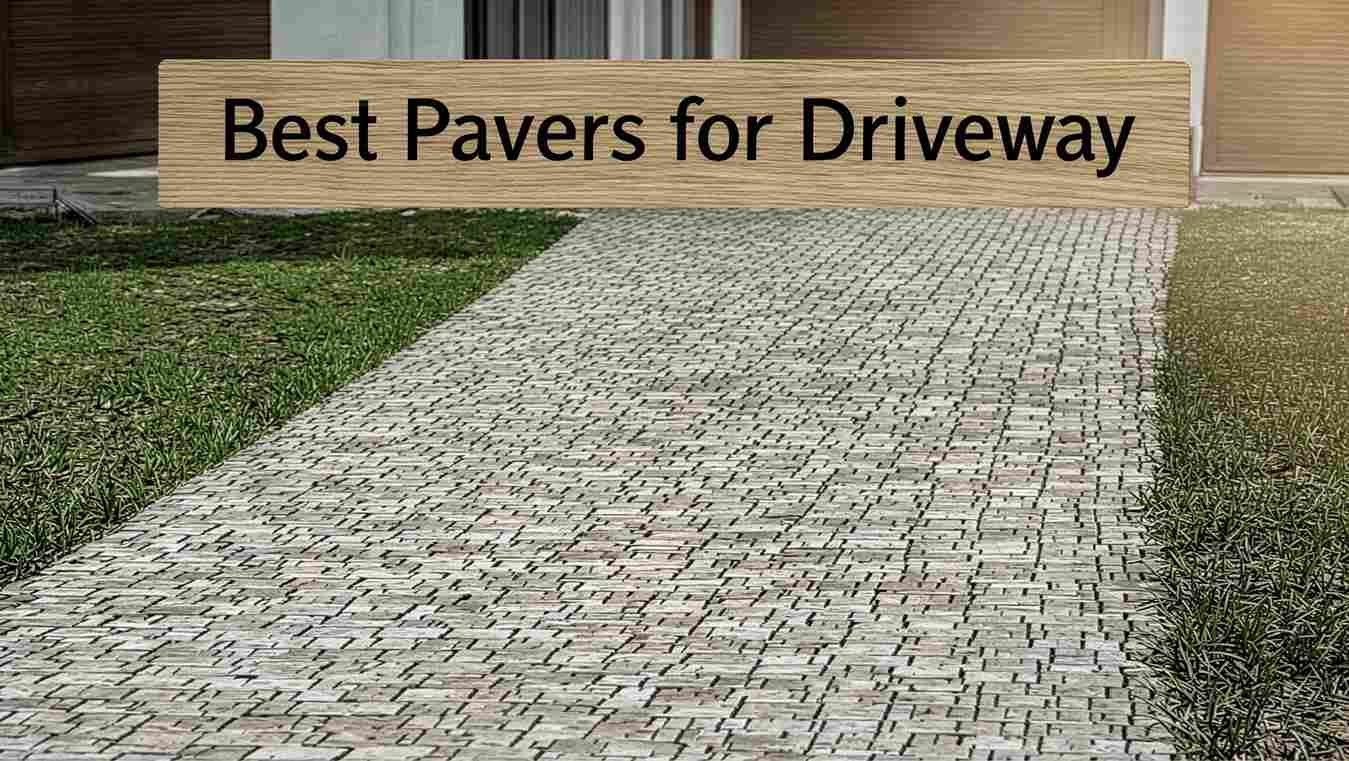
Choosing the right driveway pavers is about more than picking a color you like. A driveway needs to handle vehicle weight, tire turning, rain, temperature changes, oil spills, dirt, and years of everyday use.
The best pavers for driveway projects depend on your climate, budget, driveway style, maintenance expectations, and how much traffic the surface will receive. Concrete pavers are a popular all-around choice, while brick offers classic character, natural stone provides a premium appearance, and porcelain can work well when the right exterior-rated product and installation system are used.
The good news is that you do not have to choose based on appearance alone. This guide explains the main driveway paver options, where each works best, what to watch out for, and how to make a practical choice.
What Are the Best Pavers for a Driveway?
For many homeowners, concrete pavers are one of the most practical driveway choices because they offer a combination of strength, design flexibility, availability, and relatively straightforward repair.
However, there is no single paver that is automatically best for every driveway.
| Paver type | Best suited for | Main advantage | Main drawback |
|---|---|---|---|
| Concrete | Most residential driveways | Versatile and durable | Can show color variation or stains |
| Brick | Traditional and historic homes | Timeless appearance | More limited colors and can cost more |
| Natural stone | High-end designs | Unique natural appearance | Usually more expensive |
| Porcelain | Modern designs and selected applications | Stylish and low-maintenance surface | Requires suitable exterior product and installation |
| Permeable pavers | Driveways needing better stormwater management | Allows water to pass through joints | Requires careful base preparation |
The most important point is that the paver itself is only part of the driveway system. A strong base, proper drainage, suitable edge restraints, correct joint material, and good installation are just as important.
What Should You Look for in Driveway Pavers?
Before comparing materials, think about what your driveway actually needs to withstand.
Strength and Load Capacity
Driveways experience much greater loads than patios or garden paths. Cars, SUVs, trucks, and delivery vehicles can place substantial pressure on the surface.
Choose pavers specifically intended for vehicular applications rather than simply selecting an attractive paver designed for foot traffic.
The manufacturer’s application recommendations matter because two pavers can look almost identical while having very different intended uses.
Proper Thickness
Paver thickness should match the application and installation system.
A driveway paver needs enough structural capacity for the expected vehicle load. However, simply choosing the thickest product available does not guarantee a better driveway.
The complete pavement structure matters:
- Soil conditions
- Base depth
- Drainage
- Compaction
- Bedding material
- Paver type
- Joint material
- Expected traffic
For this reason, follow the installation requirements provided for the specific paver rather than choosing thickness based only on appearance.
Slip Resistance
A driveway can become slippery when wet, particularly on smooth surfaces.
Look for a product suitable for outdoor vehicle areas and consider the surface texture. A slightly textured finish can provide useful traction without making the driveway difficult to clean.
Resistance to Stains
Oil, grease, mud, leaves, and other substances can land on a driveway.
Light-colored pavers may make some stains more visible. Very dark surfaces can also show dust and pale mineral deposits.
A mixed or varied color pattern can sometimes hide everyday marks better than a completely uniform surface.
Drainage
Water should not sit on the driveway after rainfall.
Poor drainage can contribute to:
- Paver movement
- Joint erosion
- Base deterioration
- Weed growth
- Frost-related problems in cold climates
- Water pooling near the garage or house
The driveway should be designed so water is directed appropriately rather than allowed to collect against the building.
Concrete Pavers: The Practical All-Rounder
Concrete pavers are often a strong starting point for homeowners comparing driveway materials.
They are manufactured in many shapes, sizes, colors, textures, and patterns. That makes it possible to create anything from a simple gray driveway to a more decorative design with borders and contrasting sections.
Advantages of Concrete Driveway Pavers
Concrete pavers offer several useful benefits:
- Wide selection of designs
- Suitable options for vehicle applications
- Easy to combine with borders
- Individual units can be replaced
- Many installation patterns are possible
- Generally easier to source than some specialty materials
One major advantage is repairability.
If a section becomes damaged or needs access to an underground utility, individual pavers can potentially be removed and reinstalled rather than replacing the entire driveway surface.
Disadvantages of Concrete Pavers
Concrete is not maintenance-free.
Color can change over time because of sunlight, weather, dirt, and normal aging. Some surfaces can also develop stains from automotive fluids.
The quality of the installation makes a major difference. A high-quality paver installed over a poorly prepared base can still develop settlement or movement.
Best Design Styles
Concrete pavers work particularly well with:
- Contemporary homes
- Ranch-style houses
- Craftsman homes
- Suburban properties
- Modern farmhouse designs
- Traditional homes
Gray, charcoal, tan, brown, and blended tones are common choices because they can complement a wide range of exterior materials.
Brick Pavers: Classic and Timeless
Brick pavers give a driveway a completely different personality.
Their warm colors and traditional appearance work especially well with older homes, colonial-style architecture, cottages, and properties where a timeless landscape is the goal.
Why Choose Brick?
Brick has a distinctive appearance that is difficult to reproduce convincingly with other materials.
A brick driveway can also be installed in patterns such as:
- Running bond
- Basket weave
- Herringbone
- Soldier-course borders
Herringbone patterns are particularly popular for areas that need a visually strong, structured appearance.
Benefits of Brick Driveways
Brick pavers can provide:
- Classic curb appeal
- Natural-looking color variation
- Strong architectural character
- Multiple pattern options
- Individual paver replacement when necessary
Potential Drawbacks
Brick generally provides fewer color and shape choices than manufactured concrete pavers.
Its traditional appearance may also clash with some ultra-modern homes.
Another consideration is the surface texture. Older or heavily weathered brick can become uneven, so the driveway needs proper installation and maintenance.
Natural Stone Pavers: A Premium Look
Natural stone is an excellent choice when appearance is a major priority.
Depending on the stone, you may see colors, textures, and patterns that are naturally unique. Granite, for example, can provide a particularly substantial appearance for high-end driveway designs.
Why Homeowners Choose Natural Stone
Natural stone can complement:
- Luxury homes
- Traditional architecture
- Large landscaped properties
- Natural landscaping
- High-end exterior materials
Unlike manufactured pavers, every piece can have some variation in color and texture.
That variation can make the finished driveway feel less uniform and more natural.
What Are the Downsides?
The main concern is cost.
Natural stone can require a larger material and installation budget than standard concrete pavers. Availability also varies by location and stone type.
Not every natural stone product is suitable for a driveway. The specific stone, finish, thickness, and installation method must be appropriate for vehicle traffic.
Porcelain Pavers: Modern but More Specialized
Porcelain pavers are increasingly associated with clean, modern outdoor designs.
They can imitate the appearance of stone, concrete, or other materials while providing a highly finished surface.
However, porcelain deserves a little more caution when used on a driveway.
Not every outdoor porcelain tile or paver is designed for vehicle traffic. A product intended for a patio is not automatically suitable for a driveway.
When Porcelain Can Make Sense
Consider porcelain when:
- The manufacturer specifically approves the product for vehicular use.
- The installation system is designed for driveway traffic.
- The base and drainage requirements can be properly met.
- You want a modern, highly finished appearance.
When to Choose Something Else
If you want a simple, conventional driveway installation with widely available repair materials, concrete pavers may be easier to work with.
Always check the product’s technical documentation before using porcelain in a vehicle area.
Permeable Pavers for Better Stormwater Management
Permeable pavers are different from ordinary pavers because the driveway system is designed to allow rainfall to pass through the joints and into the underlying layers.
They can be useful where managing stormwater is an important part of the property’s design.
How Do Permeable Pavers Work?
Instead of trying to make the entire surface watertight, the system uses specially designed joints and a suitable aggregate-filled base.
Rainwater can move through the surface and into the underlying system.
This is different from simply installing ordinary pavers with wider gaps. A true permeable pavement system depends on the correct paver, joint material, base design, and site conditions.
Important Considerations
Permeable driveways need appropriate installation.
Fine sediment and debris can eventually reduce infiltration if the system is not maintained. Local soil conditions and drainage requirements also need to be considered.
If stormwater management is one of your main reasons for choosing this option, discuss the complete system with a qualified installer rather than focusing only on the paver appearance.
Concrete vs. Brick vs. Stone vs. Porcelain
The easiest way to narrow down your options is to compare them according to your priorities.
Choose Concrete If You Want Flexibility
Concrete is a sensible choice when you want plenty of colors, patterns, shapes, and price points.
It is particularly useful when the driveway needs to coordinate with a home’s siding, brickwork, roof, landscaping, or walkway.
Choose Brick If Appearance Is Traditional
Brick is a natural fit for classic architecture.
If you like warm red, brown, or earthy tones and want the driveway to look established rather than ultra-modern, brick deserves consideration.
Choose Natural Stone If Appearance Comes First
Natural stone makes sense for homeowners who want distinctive material character and are prepared for a higher investment.
The stone should still be selected for the actual conditions of a driveway.
Choose Porcelain for a Modern Design
Porcelain can create a sleek appearance, but the specific product and installation system need to be approved for vehicle use.
Do not choose it solely because you like the appearance of porcelain used on a patio.
Which Paver Color Is Best for a Driveway?
There is no universally best color.
Instead, choose a color that works with the home’s exterior and practical maintenance needs.
Gray
Gray is one of the easiest colors to coordinate.
It works well with:
- White siding
- Black trim
- Contemporary homes
- Natural stone
- Modern landscaping
Tan and Beige
Warm neutral pavers can make a driveway feel softer and work well with brick, stucco, cream siding, and warm landscaping.
Brown and Earth Tones
Brown tones can create a more natural transition between the driveway and garden areas.
They also work nicely with traditional homes and natural stone.
Charcoal and Dark Gray
Dark pavers can produce a dramatic modern appearance.
However, think about your climate and surroundings before selecting an extremely dark surface. Dark materials can absorb more solar energy and may become hotter in strong sunlight.
Mixed Colors
Blended pavers can be particularly practical because natural variation can make dust and everyday marks less obvious.
Instead of choosing a completely uniform color, consider a combination of closely related tones.
What Paver Pattern Is Best for a Driveway?
The pattern affects both appearance and the visual strength of the installation.
Herringbone
Herringbone uses angled pavers to create a zigzag pattern.
It is a popular choice for driveways because it creates a strong, structured appearance and can work well with appropriately designed interlocking systems.
Running Bond
Running bond creates rows with staggered joints.
It has a clean, simple appearance and can make a driveway feel longer or more spacious.
Basket Weave
Basket weave creates a traditional appearance and can work particularly well with brick-style pavers.
Border and Field Combination
Another option is to use a simple main pattern with a contrasting border.
For example:
- Gray field
- Charcoal border
- Matching walkway
- Small accent area near the garage
This can make a standard driveway look more intentional without covering the entire surface in a complicated pattern.
Why the Driveway Base Matters So Much
It is tempting to focus entirely on the visible pavers, but the hidden layers underneath are critical.
A typical paver driveway includes several components, although the exact construction varies by site and paving system:
- Compacted subgrade
- Suitable aggregate base
- Bedding layer where required
- Pavers
- Joint material
- Edge restraints
The soil beneath the driveway affects how the system should be built.
Soft, poorly drained, expansive, or unstable soils can require additional preparation.
What Happens When the Base Is Poor?
Common problems include:
- Low spots
- Sunken pavers
- Uneven surfaces
- Paver movement
- Standing water
- Joint loss
- Edge spreading
A premium paver cannot compensate for a fundamentally poor foundation.
This is one of the most important things to remember when comparing driveway materials.
How to Choose Pavers for a Cold Climate
Cold climates create additional concerns because water can enter the pavement system and freeze.
Repeated freezing and thawing can contribute to movement when drainage and base construction are inadequate.
If you live in an area with regular freeze-thaw cycles, choose a driveway system and paver product appropriate for those conditions.
Pay particular attention to:
- Drainage
- Base preparation
- Soil conditions
- Joint material
- Edge restraints
- Manufacturer installation requirements
Snow removal is another practical consideration. If you regularly use a snowplow, ask whether the chosen paver and installation are appropriate for that equipment.
How to Choose Pavers for Hot Climates
Hot, sunny climates present a different set of concerns.
Dark surfaces can become very hot in direct sunlight. Lighter colors generally absorb less solar energy than very dark surfaces.
Color stability can also matter. Ask the manufacturer about expected performance in strong sun, particularly if the driveway receives direct sunlight for much of the day.
A lighter neutral palette can sometimes be a practical choice for homes in very sunny locations.
How Much Maintenance Do Paver Driveways Need?
Paver driveways are relatively manageable, but they still require care.
Regular maintenance may include:
- Sweeping loose dirt
- Removing leaves and organic debris
- Cleaning spills promptly
- Controlling weeds
- Checking joints
- Watching for drainage problems
- Replacing damaged or displaced units
One advantage of pavers is that maintenance can often be localized.
If a small section settles, the affected area may be lifted, the base corrected, and the pavers reinstalled.
That can be more convenient than repairing a large continuous slab.
How to Handle Oil Stains on Driveway Pavers
Oil should be addressed as soon as reasonably possible.
Fresh spills are generally easier to deal with than old stains that have penetrated deeply.
Start by following the cleaning recommendations for the specific paver. Avoid harsh chemicals simply because they appear to work quickly; an aggressive cleaner can affect some surfaces or surrounding landscaping.
For persistent stains, a product specifically intended for the paving material may be appropriate.
Always test a cleaning method in an inconspicuous area when possible.
Do Driveway Pavers Crack?
Pavers can crack, chip, settle, or move, but their modular construction offers an advantage over many continuous surfaces.
With individual units, a damaged paver can potentially be removed and replaced.
The bigger issue is determining why the damage occurred.
If the same area repeatedly settles or moves, replacing the paver alone may only hide the underlying problem.
Possible causes can include:
- Poor base preparation
- Water problems
- Soil movement
- Heavy loads
- Edge failure
- Improper installation
Repair the cause rather than repeatedly treating the symptom.
Pavers vs. Poured Concrete for a Driveway
Pavers and poured concrete are both common driveway surfaces, but they behave differently.
| Feature | Paver driveway | Poured concrete |
|---|---|---|
| Appearance | Many patterns and styles | Wide range of finishes |
| Local repair | Individual units can be replaced | Cracks may require patching or slab repair |
| Design flexibility | High | High, depending on finish |
| Installation | More individual components | Continuous slab |
| Settlement repair | Sections can potentially be lifted | Often more involved |
| Drainage options | Permeable systems available | Requires separate drainage design |
Pavers can be especially appealing if repairability and design flexibility are important.
Poured concrete may appeal to homeowners who prefer a continuous, clean surface.
Neither option is automatically superior for every property.
Common Mistakes to Avoid
Even a good paver can perform poorly when the driveway is badly designed or installed.
Choosing Patio Pavers for Vehicle Traffic
A paver intended for pedestrian areas should not automatically be used for cars.
Check the manufacturer’s intended application.
Ignoring Drainage
A beautiful driveway that collects water is not a successful driveway.
Plan where rainwater will go before installation begins.
Focusing Only on the Paver Price
The visible paver is only one part of the project.
The complete cost can also involve:
- Excavation
- Base materials
- Bedding materials
- Edge restraints
- Joint material
- Drainage
- Labor
- Removal of existing paving
- Site preparation
A cheaper paver does not necessarily mean a cheaper finished driveway.
Using Too Many Colors
Multiple colors can look attractive, but too many competing tones can make a driveway appear busy.
Two or three coordinated tones are often easier to work with than a collection of unrelated colors.
Skipping Edge Restraints
Pavers can spread sideways when their edges are not properly restrained.
The appropriate restraint system depends on the installation and site conditions.
How to Pick the Right Pavers for Your Home
A simple decision process can make the choice much easier.
Step 1: Determine the Traffic
Will the driveway primarily serve:
- One family car?
- Multiple SUVs?
- A pickup truck?
- Occasional delivery vehicles?
- Heavy vehicles?
Choose a system designed for the expected loads.
Step 2: Study the Site
Look at:
- Soil
- Slope
- Drainage
- Existing driveway
- Trees and roots
- Garage elevation
- Property boundaries
These factors can affect the installation more than the paver’s color.
Step 3: Choose Your Style
Look at the home’s:
- Roof
- Siding
- Brick
- Windows
- Front door
- Walkways
- Landscaping
The driveway should feel like part of the property rather than a separate decoration.
Step 4: Set a Realistic Budget
Compare complete installed systems rather than material prices alone.
Ask contractors what is included in their quote.
Step 5: Check Product Suitability
Before purchasing, confirm that the exact paver is intended for driveway or vehicular use.
Do not assume that every product from the same manufacturer has the same application.
Step 6: Plan Maintenance
Think about how much time you are willing to spend cleaning, resealing, replacing joint material, or dealing with weeds.
A driveway that looks beautiful but requires more maintenance than you want may not be the right choice.
Questions to Ask a Driveway Paver Installer
Before hiring an installer, ask practical questions rather than focusing only on the finished design.
Consider asking:
- What base system will you use?
- How will drainage be handled?
- What paver is being specified?
- Is the paver rated or recommended for vehicular use?
- How will the edges be restrained?
- How will the existing surface be removed?
- How will soft or unstable soil be handled?
- What joint material will be used?
- What maintenance will the finished driveway require?
- What warranty applies to the installation?
A good contractor should be able to explain the proposed driveway structure in terms you can understand.
Can You Mix Different Paver Materials?
Yes, but it should be done carefully.
For example, a concrete paver field can be combined with a contrasting border to create definition.
Natural stone accents can also work with manufactured pavers when their colors and proportions are coordinated.
The important thing is to avoid making the driveway look like a collection of unrelated materials.
Keep a consistent design relationship between:
- Color
- Scale
- Pattern
- Texture
- House architecture
- Landscaping
Should You Seal Driveway Pavers?
Sealing is not automatically required for every driveway.
Whether it makes sense depends on the paver material, finish, climate, appearance goals, and manufacturer’s recommendations.
A sealer may change the appearance of some materials and can affect how the surface handles stains or moisture.
Before sealing, check the paver manufacturer’s guidance and understand exactly what the product will do.
Do not assume that sealing is necessary simply because another driveway has been sealed.
The Best Paver Choice for Different Homeowners
Your priorities can make the decision much simpler.
For the best all-around flexibility: consider concrete pavers designed for driveways.
For traditional curb appeal: brick pavers are a strong candidate.
For a luxury natural appearance: investigate suitable natural stone.
For a sleek contemporary look: consider exterior porcelain only when the exact product and installation system are approved for vehicle use.
For stormwater management: investigate a properly designed permeable paver system.
The right answer depends less on finding a universally “best” material and more on matching the paving system to the property.
Frequently Asked Questions
What is the most durable type of driveway paver?
A properly selected and installed concrete, brick, or natural stone paver can provide a durable driveway. The installation system, base, drainage, soil, and expected traffic are just as important as the material itself.
Are concrete pavers good for driveways?
Yes. Concrete pavers designed for vehicular applications are a practical choice for many residential driveways because they offer a wide range of designs and can be repaired by replacing individual units.
Are brick pavers good for a driveway?
Brick pavers can work very well for driveways when the specific product is suitable for vehicle traffic and the pavement is properly installed. They are particularly attractive for traditional homes.
What color pavers are easiest to maintain?
Medium and blended neutral colors can help disguise everyday dirt and minor marks better than extremely light or uniformly dark surfaces. The best choice also depends on the home’s exterior and local climate.
Are porcelain pavers suitable for driveways?
Some porcelain pavers are designed for vehicular applications, but not all outdoor porcelain products are suitable for driveways. Always verify the exact product’s specifications and installation requirements.
Do paver driveways require a concrete base?
Not necessarily. Many paver driveway systems are constructed over properly prepared aggregate bases rather than a concrete slab. The appropriate structure depends on soil, drainage, traffic, climate, and the paving system being installed.
Conclusion
The best pavers for driveway projects are the ones that match the property’s traffic, climate, drainage, design, budget, and maintenance needs.
For many homeowners, concrete pavers provide a useful balance of durability, flexibility, and design options. Brick is appealing for traditional properties, natural stone can create a distinctive high-end appearance, and properly specified porcelain or permeable systems can serve more specialized goals.
Before choosing a color or pattern, look underneath the surface of the project—literally. A well-prepared base, proper drainage, suitable edge restraints, and correct installation can have a major effect on how the finished driveway performs.



















