

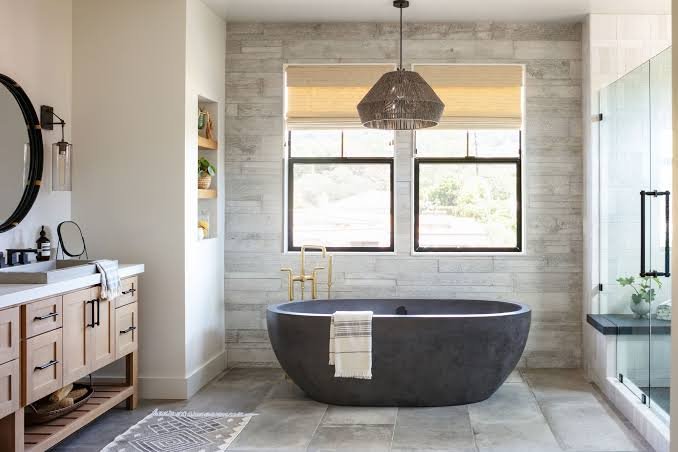
A bathroom wall accent can completely change the look and feel of a bathroom without requiring a full renovation. The right accent wall adds colour, texture, pattern, or contrast while giving the room a clear focal point.
You do not need an enormous bathroom or an expensive remodel to make it work. A single wall behind a vanity, bathtub, or shower can be enough to create visual interest.
The key is choosing a material, colour, and placement that work with the rest of the bathroom. From bold patterned tile to soft paint colours and natural stone, there are plenty of ways to create an accent wall that feels intentional rather than overwhelming.
What Is a Bathroom Wall Accent?
A bathroom wall accent is a wall or section of wall designed to stand out from the surrounding surfaces. It can be highlighted with a different colour, tile, texture, material, pattern, or finish.
Instead of treating every wall the same way, an accent wall gives the eye a place to land.
Common choices include:
- Decorative ceramic or porcelain tile
- Natural stone
- Mosaic tile
- Waterproof wall panels
- Paint in a contrasting colour
- Wood-look materials
- Wallpaper designed for suitable bathroom conditions
- Slat or textured wall treatments
- Large-format tile
- Bold geometric patterns
An accent wall does not have to be dramatic. Even a subtle change in texture or tone can make a noticeable difference.
Where Should You Put a Bathroom Accent Wall?
The best location depends on the layout and the feature you want to highlight.
Behind the Vanity
The wall behind the vanity is one of the easiest places to create an accent. It naturally draws attention because the vanity is already a major visual feature.
Consider:
- Patterned tile behind a floating vanity
- A darker paint colour
- Marble-look porcelain
- Vertical tile
- Textured wall panels
- A decorative backsplash extending higher than usual
A large mirror can then sit over the accent, creating a layered look.
Behind the Bathtub
If your bathroom has a freestanding tub, the wall behind it can become a natural focal point.
Large-format stone-look tile works especially well here. You could also use a subtle geometric pattern or a darker shade that contrasts with a light bathtub.
The goal is to make the bathtub area feel intentional rather than leaving a large empty wall behind it.
Inside the Shower
The shower is another popular location for an accent.
You could use a contrasting tile on the back wall while keeping the remaining shower walls simpler. A vertical strip or recessed niche can also use the accent material.
However, shower walls require materials and installation methods appropriate for wet areas. A beautiful material is not automatically suitable just because it looks good in a bathroom.
On a Small Feature Wall
You do not need to cover an entire wall.
A small section around a mirror, niche, toilet area, or architectural feature can provide enough contrast to make the design interesting.
This approach can also be useful if you want the appearance of a high-end material without using it throughout the entire bathroom.
15 Bathroom Wall Accent Ideas to Try
1. Create a Dramatic Dark Tile Wall
Dark tile can give a bathroom a sophisticated, modern appearance.
Charcoal, deep green, navy, brown, and black can all work as accent colours. Pairing a dark wall with lighter flooring, fixtures, and cabinetry prevents the room from feeling too heavy.
Matte finishes can create a softer appearance, while glossy tile reflects more light.
For a small bathroom, consider using the darker colour on one clearly defined wall instead of covering every surface.
2. Use Marble-Look Porcelain Tile
Marble has long been associated with elegant bathroom design, but natural marble is not the only option.
Marble-look porcelain tile can provide the visual character of veining while offering a practical surface for many bathroom applications.
A wall with subtle grey or warm veining can work particularly well behind a vanity or bathtub.
If the rest of the bathroom is simple, dramatic veining can become the main decorative feature.
3. Add a Vertical Tile Pattern
Vertical lines can change the visual rhythm of a bathroom.
Try vertically installed rectangular tile behind the vanity or in the shower. The direction of the pattern draws the eye upward and can give the wall a taller appearance.
You can keep the colour relatively simple and let the installation pattern provide the visual interest.
This is a useful option when you want something more distinctive than standard horizontal subway tile without introducing a very busy pattern.
4. Try a Geometric Accent
Geometric tiles can bring personality to a bathroom.
Hexagons, diamonds, chevrons, triangles, and other shapes can create a strong focal wall.
Because geometric patterns naturally attract attention, balance them with quieter surfaces elsewhere.
For example, a patterned wall can work with:
- Plain white fixtures
- Simple cabinetry
- Neutral flooring
- Minimal accessories
- Uncomplicated lighting
This keeps the pattern from competing with everything else in the room.
5. Use Green for a Natural Feel
Green can be a beautiful choice for a bathroom wall accent, particularly when paired with natural-looking materials.
Sage, olive, muted forest green, and softer earthy greens can create a relaxed atmosphere.
Green tile works nicely with:
- Warm white
- Natural wood tones
- Brass finishes
- Stone-look surfaces
- Cream cabinetry
If you prefer a quieter bathroom, choose a muted green rather than an extremely bright shade.
6. Make a Statement With Blue Tile
Blue is another versatile bathroom colour.
Light blue can create a fresh, airy feeling, while navy and deep blue can give the room more contrast.
A blue accent wall can work especially well with white fixtures because the two create a clean colour relationship.
For a coastal-inspired bathroom, consider softer blue and sandy neutral tones. For a more contemporary design, deeper blue combined with simple hardware can feel more dramatic.
7. Choose Natural Stone
Natural stone can bring texture and variation to a bathroom.
Depending on the stone, you may get distinctive veining, layered colours, or a more organic appearance.
Stone can be particularly effective behind a freestanding bathtub or vanity because it gives the feature wall a substantial visual presence.
Keep in mind that natural stone varies in appearance and may require specific care. Always choose a stone and finish suitable for the intended application.
8. Install Large-Format Tile
Large-format tile can create a clean, contemporary accent wall with fewer visible grout lines.
A large slab-style surface can make the wall feel more continuous, which can be particularly attractive in minimalist bathrooms.
Try a stone-look tile with subtle movement instead of a heavily patterned design if you want the wall to feel luxurious without becoming visually busy.
9. Add Texture With Fluted or Ribbed Surfaces
Textured surfaces can add depth without relying on a strong colour.
Fluted, ribbed, or three-dimensional wall treatments can create shadows that change throughout the day as lighting moves across the surface.
These materials can look particularly effective behind a vanity.
For bathrooms, make sure any product you select is specifically appropriate for the location and moisture conditions. Decorative wall products are not automatically suitable for wet environments.
10. Use a Mosaic Accent
Mosaic tile works well when you want a smaller-scale pattern.
It can be used across an entire feature wall or in a defined area such as:
- Shower niches
- Vanity backsplashes
- Tub surrounds
- Decorative bands
- Small feature sections
Mosaics come in many colours, shapes, and finishes, making them easy to adapt to different design styles.
The downside is that more grout lines can mean more visual detail and potentially more cleaning.
11. Create a Warm Wood-Look Accent
Wood can make a bathroom feel warmer and less clinical.
Actual wood needs careful consideration in a moisture-prone environment, so wood-look porcelain tile and bathroom-rated wall products can be useful alternatives where appropriate.
A warm wood tone can soften bathrooms dominated by white, grey, or stone surfaces.
It also pairs naturally with:
- Cream
- Beige
- Black
- Green
- Brass
- Warm white
12. Paint One Wall a Different Colour
You do not always need tile to create an accent.
A carefully chosen paint colour can transform a bathroom quickly and affordably.
Consider painting the wall behind the vanity or bathtub in a colour that is noticeably different from the surrounding walls.
Soft options include:
- Warm beige
- Greige
- Dusty blue
- Sage
- Muted terracotta
- Soft charcoal
In areas exposed to significant moisture, use a coating appropriate for bathroom conditions and follow the manufacturer’s preparation and application instructions.
13. Use Black-and-White Contrast
Black and white create an unmistakable contrast.
A black accent wall can look striking with white tile, a white vanity, or a freestanding white bathtub.
You can introduce the contrast through:
- Black subway tile
- Black marble-look surfaces
- Black-and-white patterns
- Dark paint
- Graphic geometric tile
If the room is small, balance the dark wall with adequate lighting and lighter surrounding surfaces.
14. Highlight a Shower Niche
A full accent wall is not always necessary.
A shower niche can become a miniature feature area by using a different tile from the surrounding shower.
For example, neutral wall tile could be paired with a small mosaic inside the niche.
This creates a deliberate detail without introducing another major colour across the room.
It is also a good way to experiment with a bold material in a relatively small area.
15. Use a Bold Pattern Sparingly
If you love colourful or highly patterned tile, you do not necessarily have to cover the whole bathroom.
Use it on one wall and let the rest of the room provide visual breathing space.
A bold accent can include:
- Botanical patterns
- Mediterranean-inspired designs
- Art Deco-style geometry
- Handcrafted-looking tile
- Graphic black-and-white patterns
The stronger the pattern, the more useful restraint becomes elsewhere.
How to Choose the Right Accent Material
The appearance of a material is only one part of the decision.
Before buying anything, think about where the material will be installed and how the bathroom is used.
| Accent Material | Best For | Design Effect | Things to Consider |
|---|---|---|---|
| Porcelain tile | Walls and wet areas when properly specified | Versatile and durable-looking | Grout and installation |
| Ceramic tile | Many wall applications | Huge range of colours and patterns | Suitability for location |
| Natural stone | Feature walls and selected bathroom areas | Organic and luxurious | Maintenance and sealing |
| Mosaic tile | Niches and feature sections | Detailed and decorative | More grout lines |
| Paint | Dry bathroom walls | Affordable colour change | Moisture and ventilation |
| Large-format tile | Modern feature walls | Clean, continuous appearance | Handling and installation |
| Wood-look tile | Warm, natural styles | Softens hard surfaces | Pattern and grout layout |
| Wall panels | Selected bathroom applications | Low-joint appearance | Product-specific suitability |
Always check the manufacturer’s instructions for the exact product and installation area rather than assuming every wall covering is appropriate for every bathroom.
How to Match an Accent Wall With the Rest of the Bathroom
A successful accent wall should feel connected to the rest of the room.
One simple method is to choose one element already present in the bathroom and build the accent around it.
For example:
White bathroom + brass fixtures:
Try warm beige, cream, soft green, or marble-look surfaces.
Grey bathroom + black fixtures:
Consider charcoal, white-and-grey patterns, or a muted blue.
Natural wood vanity + white walls:
Consider green, warm stone, or wood-look tile.
Colourful floor tile:
Choose a quieter wall accent so the floor remains part of the visual focus.
You do not need every surface to match. The goal is coordination, not duplication.
Should a Bathroom Accent Wall Be Dark or Light?
Either can work.
A dark accent wall creates contrast and can make a feature such as a bathtub or vanity stand out.
A light accent wall can add texture and interest while keeping the bathroom bright and visually open.
Think about the existing lighting before choosing.
A dark material with limited natural or artificial light can feel considerably heavier than it appears in a showroom. Meanwhile, a light wall with strong texture or veining can still make a powerful statement.
Bathroom Wall Accent Ideas for Small Bathrooms
Small bathrooms benefit from carefully controlled contrast.
Instead of adding several competing features, choose one focal point.
Good options include:
- A patterned vanity wall
- Vertical tile behind the sink
- A narrow mosaic section
- A large-format stone-look wall
- A darker wall behind the toilet and vanity
- A small shower accent
Mirrors can also help balance a feature wall by reflecting light and making the room feel more open.
A common mistake is assuming a small bathroom must use only white. Light colours can help, but a carefully positioned darker accent can add depth and character.
Bathroom Accent Wall Mistakes to Avoid
Using Too Many Accent Materials
A bathroom can quickly become visually crowded if the floor, shower, vanity wall, backsplash, and accessories all use different patterns.
Choose a primary feature and let supporting elements remain quieter.
Ignoring Lighting
Always consider how the material will look under the bathroom’s actual lighting.
Glossy tile can reflect light dramatically. Textured tile can create shadows. Dark surfaces can absorb visual light.
If possible, look at samples under both daylight and artificial lighting before making the final choice.
Choosing a Material Based Only on Appearance
A material that looks beautiful in a photograph may not be appropriate for your particular wall or moisture exposure.
Check:
- Installation requirements
- Moisture suitability
- Cleaning instructions
- Maintenance
- Manufacturer recommendations
- Required substrate or preparation
Making Every Wall a Feature Wall
If everything is designed to grab attention, nothing feels like the focal point.
One strong accent is often more effective than several competing ones.
Forgetting Grout Colour
Grout can change the appearance of tiled walls significantly.
A contrasting grout makes individual tiles stand out more. A closely matched grout creates a quieter, more continuous appearance.
Think about the grout when evaluating tile samples, not as an afterthought.
How to Plan Your Accent Wall Before Installation
A little planning can prevent expensive mistakes.
Step 1: Choose the Focal Point
Decide what you want people to notice first.
It might be:
- The vanity
- The bathtub
- The shower
- A beautiful mirror
- An architectural feature
Place the accent where it supports that feature.
Step 2: Take Samples Home
Do not judge a tile or paint colour solely in a showroom.
Look at samples in your bathroom at different times of day.
Pay attention to how the colour changes under your existing lights.
Step 3: Check the Wall Dimensions
Measure the wall carefully.
This helps you understand how a repeating pattern, large-format tile, or mosaic will actually look at full scale.
It can also help identify awkward cuts before installation begins.
Step 4: Coordinate Fixtures and Finishes
Look at the vanity, taps, mirror, lighting, flooring, and hardware together.
Your accent does not have to match everything, but it should make sense alongside those finishes.
Step 5: Confirm Product Suitability
Before installation, check the manufacturer’s requirements for the product and location.
This is particularly important in showers and other areas exposed to regular water.
How Much of the Wall Should You Accent?
There is no universal rule.
You can accent:
- One entire wall
- The area behind a vanity
- The bathtub wall
- The shower’s back wall
- A niche
- A vertical strip
- A partial-height section
The best choice depends on the architecture and the visual impact you want.
A full feature wall is bold. A smaller section can feel more subtle and may be easier to change later.
How to Make a Bathroom Accent Wall Look Expensive
You do not necessarily need an expensive material.
What often makes an accent wall look considered is consistency and restraint.
Try these principles:
- Keep the colour palette controlled.
- Align tile carefully.
- Choose grout deliberately.
- Repeat one accent colour elsewhere.
- Use good lighting.
- Avoid unnecessary decorative clutter.
- Let the feature wall have enough visual space around it.
A relatively simple tile can look sophisticated when it is installed thoughtfully and supported by a well-planned bathroom design.
Is Wallpaper a Good Bathroom Accent Wall?
Bathroom wallpaper can create a striking feature, especially in a powder room or another area with lower direct water exposure.
However, wallpaper suitability depends heavily on the product, location, ventilation, humidity, and installation requirements.
Do not assume ordinary wallpaper is appropriate for a shower or consistently wet surface.
If you want a wallpaper-inspired look in a high-moisture area, consider bathroom-rated wall products designed specifically for that environment.
What Accent Wall Works Best With White Bathrooms?
White gives you plenty of flexibility.
For a warm look, consider beige, cream, natural stone, or wood tones.
For contrast, try charcoal, black, navy, or deep green.
For something more playful, patterned tile can turn a simple white bathroom into a more distinctive space.
The right choice depends on whether you want the bathroom to feel calm, dramatic, natural, modern, or decorative.
FAQ
What is the best wall to use as a bathroom accent?
The best wall is usually one that already attracts attention, such as the wall behind a vanity, freestanding bathtub, or shower. The layout should determine the location rather than choosing a wall simply because it is empty.
What is the easiest way to create a bathroom accent wall?
Paint is generally one of the simplest ways to change a suitable dry bathroom wall. Tile and other materials can create more texture and durability but require more preparation and installation.
Can a small bathroom have an accent wall?
Yes. A small bathroom can benefit from a single focal wall. The key is to avoid overwhelming the space with too many competing colours and patterns.
Should the accent wall be darker than the other walls?
It can be, but it does not have to be. Dark colours create contrast, while lighter colours can add interest through texture, pattern, or subtle changes in tone.
What tile is best for a bathroom accent wall?
There is no single best tile for every bathroom. Porcelain, ceramic, mosaic, and suitable natural stone can all work in appropriate applications. Choose based on the wall’s moisture exposure, maintenance requirements, design, and installation needs.
Should bathroom accent tile match the floor?
It does not need to match. However, the wall and floor should share some visual connection through colour, undertone, pattern, texture, or material appearance.
Conclusion
A well-planned bathroom wall accent can give an ordinary bathroom a clear focal point and a stronger sense of style. The most successful designs do not necessarily use the boldest material. They use contrast thoughtfully and make the accent work with the room around it.
Start by choosing the feature you want to highlight. Then consider the wall’s moisture exposure, available lighting, existing colours, fixtures, and maintenance needs.
Whether you choose patterned tile, natural stone, a deep paint colour, a subtle texture, or a simple mosaic, keep the rest of the bathroom balanced. One carefully chosen feature can have far more impact than a room filled with competing design elements.



















