

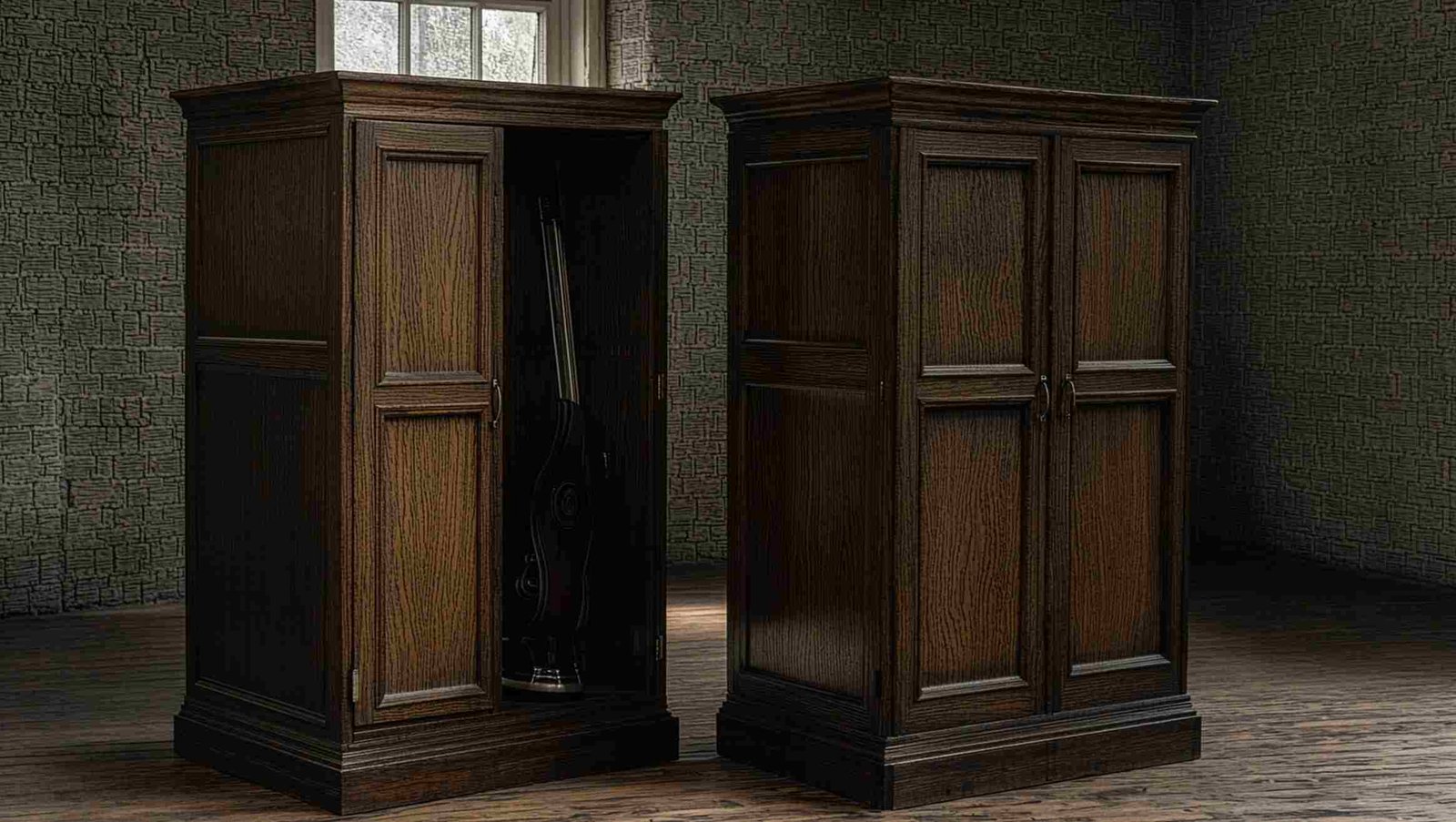
An antique Hoover cabinet can be an intriguing piece for anyone interested in early household appliances, vintage furniture, or historic home décor. Hoover became closely associated with the development and marketing of electric vacuum cleaners in the early 20th century, and its products became part of everyday household life. The Smithsonian notes that H. W. Hoover began promoting electric suction sweepers to consumers in 1908.
The phrase “Hoover cabinet” can refer to more than one type of historical object, so identification matters. There are also historical photographs specifically catalogued as “Hoover Cabinet” from March 8, 1929, held by the Library of Congress.
If you have found an old Hoover cabinet at an estate sale, antique shop, auction, or in your family home, its age, construction, markings, condition, and original purpose can help determine exactly what you have.
What Is an Antique Hoover Cabinet?
An antique Hoover cabinet is generally associated with vintage Hoover household equipment or historical Hoover-related storage and display furniture. The term should not automatically be used for every old cabinet containing a vacuum cleaner.
That distinction is important because old Hoover vacuum cleaners came in many forms. Some were upright machines, while others were canister-style cleaners with separate accessories. Historical examples of Hoover equipment can be found in museum collections, including a Hoover vacuum dating from the 1920s.
Some cabinets may have been designed for storage, while others may simply have been used by previous owners to keep a vacuum and its accessories together.
Why the Terminology Can Be Confusing
Searches for “Hoover cabinet” can produce unrelated results because “Hoover” may refer to:
- Hoover vacuum cleaners
- Historical Hoover household equipment
- Cabinets used to store appliances
- Furniture associated with a particular period
- Other objects carrying the Hoover name
There is even a Library of Congress image titled “Hoover Cabinet” from 1929, demonstrating that the phrase has a historical meaning beyond a modern storage cabinet.
For that reason, don’t rely on the name alone when identifying your piece.
How to Identify an Antique Hoover Cabinet
If you’re trying to determine whether your cabinet is genuinely old and connected to Hoover equipment, start with the physical evidence.
Look for Hoover Markings
Check carefully for:
- Hoover logos
- Manufacturer labels
- Metal badges
- Paper labels
- Model numbers
- Patent information
- Serial numbers
- Printed instructions
- Old advertising material
Labels can sometimes be found inside doors, on the rear panel, underneath the cabinet, or near the original appliance compartment.
Don’t remove an old label simply because it looks worn. Original labels can provide useful evidence of age and history.
Examine the Construction
The cabinet’s construction can tell you more than its appearance alone.
Look at:
- Wood species
- Joinery
- Screws and nails
- Hinges
- Handles
- Drawer construction
- Finish
- Back panels
- Feet
- Interior compartments
A cabinet that looks old isn’t necessarily antique. Some reproduction furniture is deliberately distressed to imitate age.
Check the Dimensions
Measure the complete cabinet:
- Height
- Width
- Depth
- Interior compartment dimensions
- Door openings
- Shelf spacing
Dimensions can sometimes help you compare your cabinet with documented historical examples.
The History Behind Hoover’s Early Vacuum Cleaners
Understanding Hoover’s vacuum history can make an old cabinet or appliance much easier to appreciate.
The Smithsonian’s National Museum of American History explains that H. W. Hoover promoted electric suction sweepers beginning in 1908. By the 1920s, electric household appliances were increasingly marketed as modern conveniences that could reduce domestic work.
Hoover’s advertising became particularly recognizable. A 1924 advertisement used the famous phrase “It Beats…as it Sweeps…as it Cleans,” presenting the vacuum cleaner as a household labor-saving device.
That historical context matters because early vacuum equipment wasn’t simply treated as an appliance hidden away in a utility room. It represented modern technology entering the home.
What Makes an Antique Hoover Cabinet Interesting to Collectors?
Collectors usually look beyond age.
Several characteristics can make an old Hoover-related cabinet particularly interesting.
Originality
Original components are valuable for identification. A cabinet that retains its original hardware, labels, finish, or fittings can provide more historical information than one that has been heavily altered.
Condition
Condition should be assessed carefully rather than simply described as “good” or “bad.”
Look for:
- Wood splits
- Water damage
- Missing hardware
- Veneer loss
- Insect damage
- Rust
- Refinished surfaces
- Replacement parts
- Structural repairs
A small scratch may have little significance, while extensive structural damage can substantially affect usability and collectibility.
Provenance
Provenance means the documented history of an object.
For example, useful evidence might include:
- Old receipts
- Family photographs
- Original manuals
- Auction records
- Manufacturer documentation
- Estate records
- Written family history
A credible history can make an otherwise ordinary-looking object much more interesting.
How to Tell If a Hoover Cabinet Is Truly Antique
There is no single feature that proves an object is antique.
Instead, consider several pieces of evidence together.
| Feature | What to Examine |
|---|---|
| Label | Original Hoover branding or manufacturer information |
| Hardware | Age, style and construction |
| Woodwork | Joinery, veneer and finishing |
| Fasteners | Older or replacement screws and nails |
| Interior | Original compartments or alterations |
| Wear | Consistent natural wear versus artificial distressing |
| Documentation | Manuals, photographs or receipts |
| Repairs | Original versus modern replacement components |
The strongest identification usually comes from several matching clues rather than one feature.
Should You Restore an Antique Hoover Cabinet?
Restoration is a personal decision, especially if the object has historical or collector interest.
Before doing anything permanent, photograph the cabinet from every side.
Record:
- Existing labels
- Serial numbers
- Hardware
- Damage
- Interior compartments
- Original finish
- Any unusual markings
Then decide whether you want conservation or restoration.
Conservation
Conservation focuses on stabilizing and protecting the existing object while retaining as much original material as possible.
This is generally the safer approach when historical authenticity is important.
Restoration
Restoration can involve repairing or replacing damaged elements to return an object closer to an earlier appearance.
The problem is that aggressive restoration can remove evidence of the object’s history.
For a potentially valuable antique, it’s sensible to identify the piece before sanding, stripping, repainting, drilling, or replacing original hardware.
Common Mistakes When Cleaning an Antique Cabinet
Old furniture can be surprisingly easy to damage.
Avoid immediately using:
- Strong chemical cleaners
- Abrasive pads
- Sandpaper
- Modern furniture polish
- Bleach
- Harsh degreasers
Instead, begin with gentle cleaning and inspect the surface carefully.
If the finish is original, preserving it may be preferable to making the cabinet look “new.”
Can You Use an Antique Hoover Cabinet as Home Décor?
Absolutely, provided the cabinet is structurally sound and you’re comfortable using it that way.
An old cabinet can work particularly well in:
- A vintage-inspired living room
- A utility or laundry room
- A home office
- A hallway
- A mudroom
- A workshop
- A collector’s display area
You can also use the interior for lightweight storage while keeping historically important components protected.
Vintage Display Idea
Place the cabinet against a simple wall and surround it with a few period-inspired objects rather than filling every available surface.
For example:
- A vintage-style lamp
- Old cleaning advertisements
- A framed historical photograph
- A small collection of household objects
- A period-inspired rug
This keeps the cabinet as the focal point.
Is an Antique Hoover Cabinet Valuable?
There isn’t a reliable universal price for an item described simply as an “antique Hoover cabinet.”
Value depends on exactly what the object is, its age, rarity, authenticity, condition, completeness, provenance, and demand.
Online auction listings demonstrate that old Hoover vacuum cleaners still appear in estate and auction sales, but a generic listing for an older Hoover vacuum does not establish the value of a particular cabinet.
If you want a meaningful valuation, identify the exact model and cabinet first.
What to Record Before Seeking a Valuation
Take clear photographs of:
- The entire cabinet
- Front and back
- Interior
- Manufacturer labels
- Model numbers
- Serial numbers
- Hardware
- Any damage
- Original accessories
Measurements are useful too.
This information gives an antique dealer, specialist auctioneer, or experienced collector something concrete to work with.
Antique Hoover Cabinet vs. Ordinary Vintage Cabinet
The difference is mainly evidence and history.
A cabinet may look old but have no connection to Hoover. Conversely, an unassuming cabinet with original Hoover markings or documented history may be considerably more interesting.
Don’t judge authenticity solely from:
- Dark wood
- Worn paint
- Old-looking handles
- Scratches
- Dust
- A vintage appearance
Age and authenticity require stronger evidence.
Where to Research Your Cabinet
Start with authoritative historical collections and manufacturer documentation where available.
Museum collections can help establish how Hoover equipment looked during different periods. The Smithsonian, for example, documents Hoover’s early electric vacuum history and includes historical Hoover equipment in its household technology collection.
The Library of Congress also provides historical photographic records, including Hoover-related material from 1929.
Auction archives can then provide useful examples of how similar objects have been described, although an auction listing should not automatically be treated as proof of market value.
Frequently Asked Questions
What is an antique Hoover cabinet?
The term can describe a historical cabinet associated with Hoover household equipment, but it can also be used inconsistently. The exact object should be identified from its markings, construction and historical context.
How old does a Hoover cabinet have to be to be antique?
Age alone isn’t enough to establish authenticity or collectibility. The cabinet’s construction, labels, model information and documented history should also be considered.
How can I identify an old Hoover cabinet?
Look for Hoover branding, model or serial numbers, labels, original hardware, construction details and evidence of its original purpose. Photographs and measurements can make identification easier.
Should I repaint an antique Hoover cabinet?
If the cabinet may be historically significant, avoid repainting it until you’ve established what it is. Original finishes and markings can provide important evidence.
Is an old Hoover cabinet worth money?
Possibly, but value varies considerably. The exact model, age, condition, originality, rarity and provenance all matter.
Where can I get an antique Hoover cabinet valued?
An experienced antique dealer, specialist auction house, or appraiser familiar with vintage household appliances and furniture can provide a more meaningful assessment than a generic online price guide.
Conclusion
An antique Hoover cabinet is worth investigating before you clean, restore, sell, or modify it. Hoover’s early vacuum technology has an established place in household history, with documented examples dating back to the early 20th century.
The best way to understand your particular piece is to combine physical inspection with manufacturer markings, historical references, measurements, photographs, and provenance. If those clues line up, an old cabinet can be much more than an attractive piece of vintage furniture—it can be a small piece of household technology history.



















