

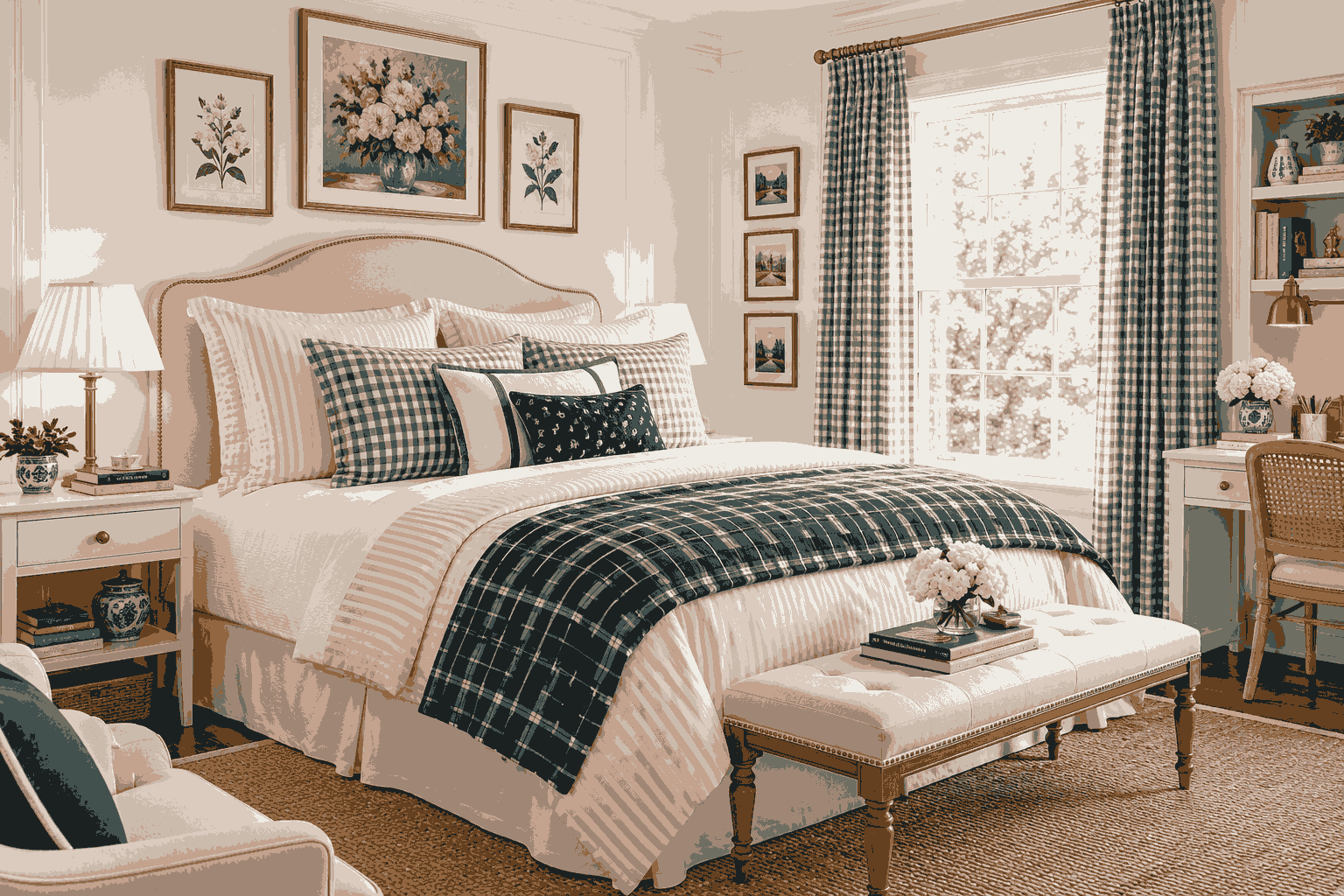
A preppy bedroom combines classic style with a fresh, playful feel. Think crisp bedding, tailored patterns, balanced colors, polished furniture, and personal touches that make the room feel collected rather than overly formal.
The style can be adapted to almost any bedroom, from a small guest room to a teenager’s space or a larger primary bedroom. The key is to balance traditional details with enough texture, color, and personality to keep the room comfortable.
What Is a Preppy Bedroom?
A preppy bedroom is a decorating style built around classic patterns, clean lines, coordinated colors, and polished details. It often draws inspiration from traditional interiors, collegiate style, coastal homes, and tailored clothing.
Common characteristics include:
- Stripes, checks, plaids, and geometric patterns
- Navy, white, cream, green, blue, or soft pink
- Upholstered or traditional-style furniture
- Layered bedding
- Decorative pillows and throws
- Brass or polished metal accents
- Framed artwork and mirrors
- Books, lamps, and personal accessories
- A mixture of solid colors and patterns
The style does not have to look formal. A simple room can become preppy with a striped duvet, a traditional bedside lamp, framed artwork, and a few carefully chosen accessories.
Choose a Classic Color Palette
Color is one of the easiest ways to establish the look.
Navy and White
Navy and white create a crisp, timeless combination. Use white or cream as the main background and introduce navy through bedding, curtains, rugs, artwork, or an accent chair.
Green and Cream
Deep green, sage, or softer botanical greens can make the room feel more relaxed while retaining the classic character associated with preppy interiors.
Pink and Navy
For a more playful bedroom, combine navy with blush, dusty pink, or a richer pink accent. Keeping the larger surfaces neutral prevents the combination from becoming overwhelming.
Blue and Green
Blue and green work particularly well when you want a traditional room with a slightly coastal or garden-inspired feeling.
A useful approach is to choose one dominant color, one supporting color, and one neutral rather than introducing too many competing shades.
Layer the Bed for a Polished Look
The bed is usually the visual centerpiece, so bedding deserves attention.
Start with a simple base such as white, cream, or a subtle solid color. Add a patterned duvet, quilt, or coverlet, then layer pillows in different but related patterns.
For example:
- Solid sheets
- Striped or checked duvet
- Folded quilt or blanket
- Two standard pillows
- Decorative shams
- One or two smaller accent pillows
The patterns do not need to match perfectly. In fact, using slightly different patterns can make the room feel more natural.
The trick is to keep something consistent—such as color, scale, or background tone—so the combination looks intentional.
Use Stripes, Checks, and Plaids
Patterns are a major part of the aesthetic, but more is not always better.
Stripes
Stripes are an easy starting point because they work with both traditional and contemporary furniture. A striped duvet or Roman shade can establish the style without dominating the room.
Checks
Small checks can add a relaxed country-club or cottage-inspired quality. They work particularly well on pillows, blankets, curtains, and occasional upholstery.
Plaid
Plaid brings stronger visual interest. Use it as an accent rather than covering every surface with it.
Mixing Patterns
If you want to combine patterns, vary their scale. A large stripe can work with a smaller check and a subtle geometric pattern.
Try to repeat at least one color across the patterns so the room feels connected.
Pick Furniture With Traditional Details
Preppy interiors generally benefit from furniture that has some visual structure.
Consider:
- A wooden bed frame
- Upholstered headboard
- Classic bedside tables
- A writing desk
- Chest of drawers
- Small upholstered bench
- Traditional-style armchair
You do not need a complete matching bedroom set. Mixing furniture finishes can make the space feel more collected.
For a modern interpretation, combine traditional furniture with cleaner contemporary pieces. For example, a classic wooden bed can be paired with simple modern lamps and minimal artwork.
Add Personality With Wall Decor
Blank walls can make a preppy room feel unfinished.
Instead of covering every wall, create a few deliberate focal points.
Good choices include:
- Botanical prints
- Landscape artwork
- Architectural drawings
- Framed photographs
- Sports-inspired artwork
- Simple typography
- Traditional portraits
- Decorative mirrors
- Gallery walls
A gallery wall can be especially effective because it allows different frames and images to work together while adding character.
For a teenager’s bedroom, framed posters, school-inspired artwork, favorite photographs, and personal collections can make the room feel individual rather than staged.
Choose Lighting That Feels Decorative
Lighting should provide practical illumination while contributing to the room’s style.
A table lamp with a fabric shade works well on a nightstand. For a stronger focal point, consider a pendant or chandelier with a traditional silhouette.
Brass, chrome, black, or painted finishes can all work depending on the color scheme.
For a softer atmosphere, use multiple light sources instead of relying entirely on a single ceiling fixture. Bedside lamps, a desk lamp, and an additional floor lamp can create more flexible lighting.
Don’t Forget the Windows
Window treatments can have a surprisingly large effect on the overall design.
For a classic appearance, consider:
- Roman shades
- Simple curtains
- Patterned drapes
- Woven shades
- White or cream fabric panels
If your bedding already has a strong pattern, simpler window treatments can prevent visual overload. If the bed is mostly solid, patterned curtains can provide an opportunity to introduce more character.
Add Small Preppy Details
The style often comes together through smaller objects rather than expensive furniture.
Try adding:
- A decorative tray
- Hardcover books
- A ceramic vase
- Framed photographs
- A small desk clock
- Decorative boxes
- A woven basket
- A patterned throw
- A classic alarm clock
- A small plant
These details should reflect the person using the room. A bedroom feels much more convincing when the accessories look like things someone actually enjoys rather than a collection of generic decorations.
Preppy Bedroom Ideas for Teens
A teenage bedroom can use the same design principles while leaving plenty of room for personality.
Start with practical foundations such as a comfortable bed, useful storage, and a desk. Then introduce the aesthetic through bedding, wall art, curtains, and accessories.
Popular combinations can include:
- Navy and white with brass accents
- Pink and green with floral details
- Blue and cream with stripes
- Sage green with checked textiles
- Red, navy, and white for a sporty influence
A pinboard or gallery wall can provide a flexible place for photographs, artwork, notes, and changing interests.
For a smaller room, use vertical storage and keep larger furniture pieces relatively simple. This leaves more visual space for patterned textiles and decorative details.
How to Make a Preppy Bedroom Feel Modern
Traditional style can sometimes become too formal. To keep the room fresh, introduce a few contemporary elements.
Keep the Base Simple
White walls, light neutrals, or restrained colors give patterned accessories room to stand out.
Mix Old and New
Pair a traditional dresser with a modern lamp, or combine a classic upholstered headboard with streamlined bedside tables.
Limit the Patterns
Choose two or three complementary patterns rather than covering every surface.
Use Natural Texture
Wood, cotton, linen-look fabrics, woven baskets, and textured throws can soften the room and keep it from feeling overly coordinated.
Leave Some Empty Space
A room does not need decoration on every available surface. Negative space helps patterned furniture and accessories stand out.
Small Preppy Bedroom Ideas
You do not need a large bedroom to achieve the look.
For a compact space:
- Choose a bed with built-in or under-bed storage.
- Use a narrow bedside table.
- Hang mirrors to add visual depth.
- Keep the main color light.
- Use one noticeable pattern instead of several large ones.
- Choose wall-mounted lighting where appropriate.
- Use a small upholstered bench only if there is enough floor space.
- Keep decorative accessories selective.
A small room can actually benefit from the preppy style because a few strong details can create a finished look without requiring lots of furniture.
Common Mistakes to Avoid
Using Too Many Patterns
Pattern mixing can be attractive, but too many competing prints make the room feel busy. Start with one prominent pattern and add smaller-scale designs gradually.
Matching Everything Too Closely
A perfectly matched bedroom set can feel flat. Introduce small differences in texture, finish, and shape.
Making the Room Too Formal
Traditional furniture and polished accessories can quickly become stiff. Add soft bedding, casual textiles, books, plants, or personal artwork to make the space more comfortable.
Choosing Decoration Over Function
A bedroom still needs to work as a bedroom. Make sure there is adequate storage, useful lighting, comfortable bedding, and enough space to move around before adding decorative pieces.
Overusing One Color
Even a strong color scheme benefits from contrast. Use neutrals and natural materials to give the dominant color somewhere to breathe.
A Simple Formula for Creating the Look
If you are starting from scratch, this formula can help:
1. Choose a base color.
White, cream, light blue, or another soft neutral works well.
2. Pick one main accent color.
Navy, green, pink, or another classic shade can provide structure.
3. Add one strong pattern.
Use it on bedding, curtains, or an accent chair.
4. Introduce a second subtle pattern.
A small check or stripe can complement the main print.
5. Add traditional furniture.
Choose pieces with enough character but practical proportions for the room.
6. Finish with personal accessories.
Artwork, books, photographs, plants, and decorative objects give the room its identity.
Frequently Asked Questions
What colors work best in a preppy bedroom?
Navy, white, cream, blue, green, pink, and red can all work well. The most successful palette usually combines a strong accent color with one or more quieter neutrals.
Can a preppy bedroom be minimalist?
Yes. Use a restrained palette, simple furniture, one or two classic patterns, and fewer decorative accessories. The preppy character can come from details rather than quantity.
Is preppy bedroom style suitable for adults?
Absolutely. For an adult bedroom, use more sophisticated fabrics, restrained patterns, traditional furniture, and fewer novelty accessories. Navy, cream, green, and natural wood can create a polished result.
How do I mix patterns without making the room look messy?
Keep the colors related and vary the pattern scale. For example, pair a larger stripe with a small check and a subtle geometric print rather than using three equally bold patterns.
Can I create this style on a budget?
Yes. Focus on high-impact changes such as bedding, lamps, framed artwork, curtains, and decorative pillows. Existing furniture can often be refreshed with new hardware, paint, or carefully chosen accessories.
Conclusion
A successful preppy bedroom is less about buying a matching collection and more about creating a thoughtful mix of classic color, tailored patterns, comfortable textiles, and personal details.
Start with the bed and color palette, add one or two recognizable patterns, then bring in furniture and accessories that suit the person who uses the room. Keep the arrangement practical and leave enough visual breathing room.



















