

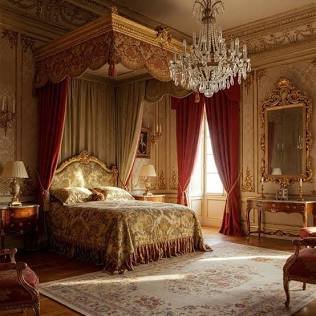
A royal luxury bedroom combines elegance, comfort, and visual richness without making the room feel like a showroom. Think upholstered furniture, sophisticated colours, layered lighting, quality fabrics, decorative details, and carefully chosen finishes that work together rather than compete for attention.
The most successful royal-inspired bedrooms are not necessarily the largest or most expensive. Proportion, colour balance, lighting, texture, and consistency often have a greater impact than simply adding more decorative pieces. This guide explains how to create that refined look while keeping the bedroom comfortable enough for everyday life.
What Makes a Bedroom Look Royal and Luxurious?
A royal bedroom usually has a sense of grandeur created through several design elements working together. Common features include a substantial bed, upholstered surfaces, rich textiles, decorative lighting, elegant furniture, and a restrained but sophisticated colour palette.
The key is balance. Too many ornate details can make a bedroom feel crowded, while too little decoration may make the space look ordinary.
A refined bedroom often combines:
- A visually strong bed as the focal point
- Coordinated bedside tables
- Soft, layered bedding
- Curtains with generous fullness
- Decorative wall treatments or architectural details
- Warm, layered lighting
- Metallic or reflective accents
- Rich textures such as velvet, linen, wool, or satin
- A limited selection of decorative accessories
Luxury comes from how these elements relate to one another rather than from using every available decorative feature.
Choose a Sophisticated Colour Palette
Colour establishes the mood before furniture or accessories are even noticed.
Traditional royal-inspired bedrooms often use deep, sophisticated shades, while contemporary interpretations may use softer neutrals with carefully placed accents.
Classic Navy and Gold
Navy creates a deep, dramatic background, while restrained gold details introduce warmth. Gold does not need to dominate the room. A lamp base, picture frame, cabinet hardware, or small decorative object may be enough.
Emerald Green and Cream
Emerald can give a bedroom a rich, jewel-like character. Pairing it with cream or warm off-white prevents the darker colour from overwhelming the room.
Burgundy and Warm Neutrals
Burgundy can create a traditional, intimate atmosphere. Use it selectively through an accent wall, cushions, throw, or upholstered chair rather than covering every surface.
Cream, Beige, and Champagne
For a lighter interpretation, combine warm neutrals with subtle metallic finishes. This approach can make a smaller bedroom feel more spacious while retaining an elegant character.
Charcoal and Soft Gold
Charcoal walls or furniture can provide a sophisticated backdrop. Small amounts of warm metallic detailing can then add contrast without making the room excessively ornate.
A useful rule: choose one dominant colour, one supporting neutral, and one accent finish. This creates cohesion and makes decorative decisions easier.
Make the Bed the Main Focal Point
The bed usually occupies the largest visual area in a bedroom, so it deserves the most attention.
An upholstered headboard is one of the easiest ways to create a luxurious appearance. A tall headboard can introduce height, while a wide design can make the bed appear more substantial.
Upholstered Headboards
Velvet can create a dramatic, traditional appearance, while linen and textured fabrics offer a softer contemporary feel.
Popular shapes include:
- Tall rectangular headboards
- Channel-tufted designs
- Button-tufted upholstery
- Curved or arched headboards
- Panelled upholstered designs
The shape should suit the room. An elaborate headboard can work beautifully in a large bedroom but may visually overwhelm a compact space.
Layer the Bedding
Luxury bedding is more about layering than piling on unnecessary cushions.
A practical arrangement might include:
- Fitted sheet
- Flat sheet or duvet
- Sleeping pillows
- Decorative shams
- A folded throw or blanket
- A small number of accent cushions
Mixing textures can create depth. For example, smooth bedding can be paired with a knitted throw and subtly textured cushions.
The goal is a bed that looks inviting rather than carefully staged to the point that it becomes inconvenient to use.
Use Wall Treatments to Add Architectural Character
Walls provide a large opportunity to introduce a royal feel without filling the bedroom with furniture.
Wall Panelling
Decorative moulding or panelling can add structure to plain walls. Traditional panel moulding works well with classic furniture, while simpler geometric panels suit contemporary interiors.
If the room already has architectural features, work with them rather than covering every wall.
Wallpaper
A subtle patterned wallpaper can create an elegant backdrop behind the bed. Damask-inspired patterns, botanical designs, textured finishes, and restrained geometric motifs can all work depending on the overall style.
For a stronger statement, use wallpaper on one feature wall and keep the remaining walls comparatively quiet.
Painted Accent Walls
Paint is often the simplest approach. Deep green, navy, charcoal, muted plum, or warm taupe can create a sophisticated background for lighter furniture and bedding.
Add Luxury Through Texture
A room can have expensive-looking furniture and still feel flat if every surface has the same texture.
Texture creates visual depth.
Consider combining:
- Velvet upholstery
- Crisp cotton bedding
- Linen curtains
- Wool or textured rugs
- Quilted blankets
- Smooth wood furniture
- Brushed or polished metal accents
- Glass or mirrored surfaces
You do not need all of these. Two or three contrasting textures can make a noticeable difference.
For example, a velvet headboard against a matte painted wall creates more visual interest than a velvet headboard surrounded by multiple glossy surfaces.
Select Furniture With the Right Proportions
Royal styling often involves substantial furniture, but large pieces should still fit the room.
A spacious bedroom might accommodate:
- A large upholstered bed
- Two matching bedside tables
- A dresser
- A comfortable armchair
- A dressing table
- A storage cabinet
- A bench at the foot of the bed
A smaller bedroom needs greater restraint.
Choose furniture that leaves enough walking space around the bed and allows doors, drawers, and wardrobes to open comfortably.
Matching Furniture vs Coordinated Furniture
A perfectly matching bedroom set can create a formal appearance, but coordinated pieces often produce a more collected look.
For example, you might pair:
- A wood bed with upholstered bedside tables
- A traditional dresser with modern lamps
- A neutral headboard with darker wood furniture
- Contemporary furniture with classic wall moulding
The finishes should relate to one another without needing to be identical.
Use Lighting to Create the Atmosphere
Lighting can completely change how colours, fabrics, and finishes appear.
Instead of relying on a single ceiling fixture, create several layers.
Ambient Lighting
This provides general illumination throughout the room. A central pendant or chandelier can also act as a decorative focal point.
Bedside Lighting
Table lamps or wall-mounted sconces provide practical light for reading while creating symmetry around the bed.
Accent Lighting
Small decorative lights can highlight artwork, architectural features, shelving, or other focal points.
A dimmer is particularly useful because the bedroom may need bright light in the morning but a much softer atmosphere at night.
Choose a Statement Chandelier Carefully
A chandelier can reinforce a traditional royal aesthetic, but scale matters.
A fixture that is too large can dominate the room. One that is too small may disappear visually.
Consider the ceiling height, bed size, room dimensions, and overall furniture style before choosing a chandelier.
Crystal-style fixtures can create a traditional appearance, while simple metal or sculptural fixtures can give the same sense of importance with a more contemporary character.
Add Curtains With Generous Fabric
Window treatments can make a bedroom feel more finished.
For an elegant appearance, curtains generally look better when they have enough fabric to create soft folds rather than appearing stretched across the window.
Consider:
- Full-length curtains
- Blackout lining where useful
- Layered sheers and heavier curtains
- Decorative curtain rods
- Simple or tailored tiebacks
- Colours that complement the walls and bedding
In a classic bedroom, curtains can become part of the room’s decorative composition rather than simply serving a functional purpose.
Bring in a Large Area Rug
A rug can visually connect the bed and surrounding furniture while making the room feel softer underfoot.
For a large bedroom, a generously sized rug can sit beneath the bed and extend beyond its sides. In smaller rooms, a smaller rug or strategically placed runners may be more practical.
Choose a design that supports the room rather than competing with a patterned wall, elaborate headboard, or decorative bedding.
If several elements already have strong patterns, a simpler rug can provide visual breathing space.
Introduce Metallic Details With Restraint
Gold, brass, bronze, and silver finishes can all contribute to a luxurious appearance.
However, using one metallic finish consistently is often easier than mixing several unrelated finishes.
Metallic details can appear through:
- Lamp bases
- Drawer handles
- Mirror frames
- Curtain hardware
- Decorative trays
- Picture frames
- Furniture legs
- Small accessories
The finish does not need to be bright or highly reflective. A muted brass or aged bronze can feel more understated than polished gold.
Use Mirrors to Increase Light and Visual Space
A well-positioned mirror can reflect natural or artificial light and make a room feel more open.
Large framed mirrors can also function as decorative features. Place them where they reflect something visually appealing rather than a cluttered corner.
For example, a mirror positioned opposite a window may reflect daylight, while one near a lamp can amplify its glow.
Avoid covering the room with mirrors simply to make it appear luxurious. One thoughtfully positioned piece can have more impact.
Create a Royal Look in a Small Bedroom
You do not need a mansion-sized room to create an elegant bedroom.
In a compact space, focus on a few high-impact elements:
- A tall upholstered headboard
- One sophisticated wall colour
- Slim bedside tables
- Wall-mounted lighting
- A large mirror
- Coordinated bedding
- Curtains hung high and wide where practical
- Furniture with concealed storage
Keeping the floor relatively clear can make the room feel more spacious.
Instead of adding five decorative objects, choose one substantial artwork or a carefully styled bedside arrangement.
Modern Royal Bedroom vs Traditional Royal Bedroom
The word “royal” does not have to mean heavily ornamented. There are several ways to interpret the style.
| Feature | Traditional Royal Style | Modern Royal Style |
|---|---|---|
| Colour | Burgundy, navy, emerald, cream | Neutrals, charcoal, muted jewel tones |
| Bed | Button tufting, carved details | Tall upholstered or sculptural headboard |
| Furniture | Ornate or classic | Clean-lined with refined finishes |
| Lighting | Crystal chandelier, ornate lamps | Statement pendant, contemporary sconces |
| Fabrics | Velvet, satin, heavy textiles | Linen, textured cotton, selective velvet |
| Decorative details | Moulding, carved frames | Minimal artwork and metallic accents |
| Overall mood | Formal and dramatic | Elegant and restrained |
The modern version keeps the sense of luxury but removes some of the visual heaviness.
Decorate the Bedside Tables Without Creating Clutter
Bedside tables are small areas, so every item is noticeable.
A practical arrangement could include:
- One lamp
- A small decorative object
- A book
- A compact tray
- A clock if needed
If you have drawers, use them for everyday items that would otherwise make the surface look messy.
Symmetry works especially well in formal bedrooms, but it is not mandatory. Slightly different accessories can create a more relaxed, collected appearance.
Add a Comfortable Seating Area
If space allows, create a small place to sit away from the bed.
A bedroom chair, upholstered bench, or small pair of chairs can make the room feel more complete.
A bench at the foot of the bed is particularly useful because it can provide seating without requiring a separate seating zone.
For larger bedrooms, a small reading corner with a comfortable chair and floor lamp can add function as well as visual interest.
Keep Storage Elegant and Practical
Luxury disappears quickly when clothing, cables, toiletries, and miscellaneous objects are left in view.
Plan storage before adding decorative accessories.
Useful options include:
- Built-in wardrobes
- Bedside drawers
- A chest of drawers
- Under-bed storage
- Decorative storage boxes
- A dressing table with drawers
- Closed shelving
Open shelving can work, but it requires regular styling to remain visually calm.
The most elegant bedroom is usually one where everyday clutter has somewhere to go.
Common Mistakes to Avoid
Using Too Many Metallic Finishes
Gold hardware, silver lamps, chrome furniture, bronze accessories, and mirrored surfaces can compete with each other.
Choose a primary metal and introduce other finishes only when they genuinely complement the scheme.
Making Everything the Same Colour
A room covered entirely in one dark shade can feel heavy. Introduce contrast through bedding, curtains, flooring, artwork, and lighter furniture.
Choosing Furniture That Is Too Large
Grand furniture needs breathing room. Measure the room and create a simple floor plan before buying major pieces.
Overloading the Bed With Cushions
Decorative cushions can make a bed attractive, but too many become impractical. Use enough to create layers without making bedtime a furniture-moving exercise.
Ignoring Lighting Temperature
Cool, harsh lighting can make warm fabrics and sophisticated colours look less inviting. Use lighting appropriate to the mood and function of each part of the bedroom.
Mixing Too Many Styles
A classic headboard, industrial bedside tables, tropical wallpaper, ultra-modern lighting, and ornate accessories can make the room feel disconnected.
Mix styles intentionally and give them a common colour or material connection.
How to Make a Bedroom Look Luxurious on a Smaller Budget
Luxury is not limited to expensive furniture.
Start with the elements that have the greatest visual effect:
- Improve the bedding.
- Add a substantial headboard if the existing bed feels plain.
- Replace mismatched lighting.
- Use coordinated curtains.
- Introduce one large mirror or artwork.
- Remove unnecessary clutter.
- Add one or two quality-looking textures.
- Repaint the walls if the existing colour does not support the design.
- Upgrade small hardware such as drawer pulls where appropriate.
- Style surfaces selectively rather than filling them with accessories.
A simple room with good proportions and coordinated finishes can look more sophisticated than an expensive room filled with unrelated decorations.
A Simple Formula for Planning the Room
If you are starting from scratch, build the design in this order:
1. Decide the mood
Choose traditional, contemporary, glamorous, understated, or somewhere between.
2. Select the main colour
Start with the wall or major furniture colour.
3. Choose the bed
Treat it as the main visual anchor.
4. Add window treatments
Coordinate curtains with the wall and bedding rather than matching everything exactly.
5. Plan lighting
Include general, bedside, and accent lighting where practical.
6. Add supporting furniture
Choose pieces according to the room’s actual dimensions.
7. Introduce texture
Use rugs, bedding, upholstery, throws, and curtains to create depth.
8. Finish with accessories
Add artwork, mirrors, lamps, trays, and decorative objects only after the main elements are in place.
This approach helps prevent impulse purchases that do not fit the final design.
What Is the Secret to a Luxurious-Looking Bedroom?
The biggest difference usually comes from coordination rather than quantity. A sophisticated bedroom has a clear visual hierarchy: the bed attracts attention first, supporting furniture frames it, lighting creates atmosphere, and accessories provide smaller points of interest.
Choose fewer pieces, but make each one work with the others. A restrained palette, good proportions, layered lighting, tactile fabrics, and an uncluttered layout can create a luxurious impression without turning the room into a collection of decorative objects.
Conclusion
A royal luxury bedroom should feel elegant when you first enter it and comfortable once you actually use it. Start with the bed, establish a controlled colour palette, build layers of texture, and use lighting to create depth. Then add architectural details, refined furniture, curtains, rugs, mirrors, and accessories according to the size and character of the room.
The most convincing result is rarely achieved by simply adding more decoration. Give each element a purpose, leave enough visual space around important pieces, and let a few carefully chosen details create the sense of richness.



















