

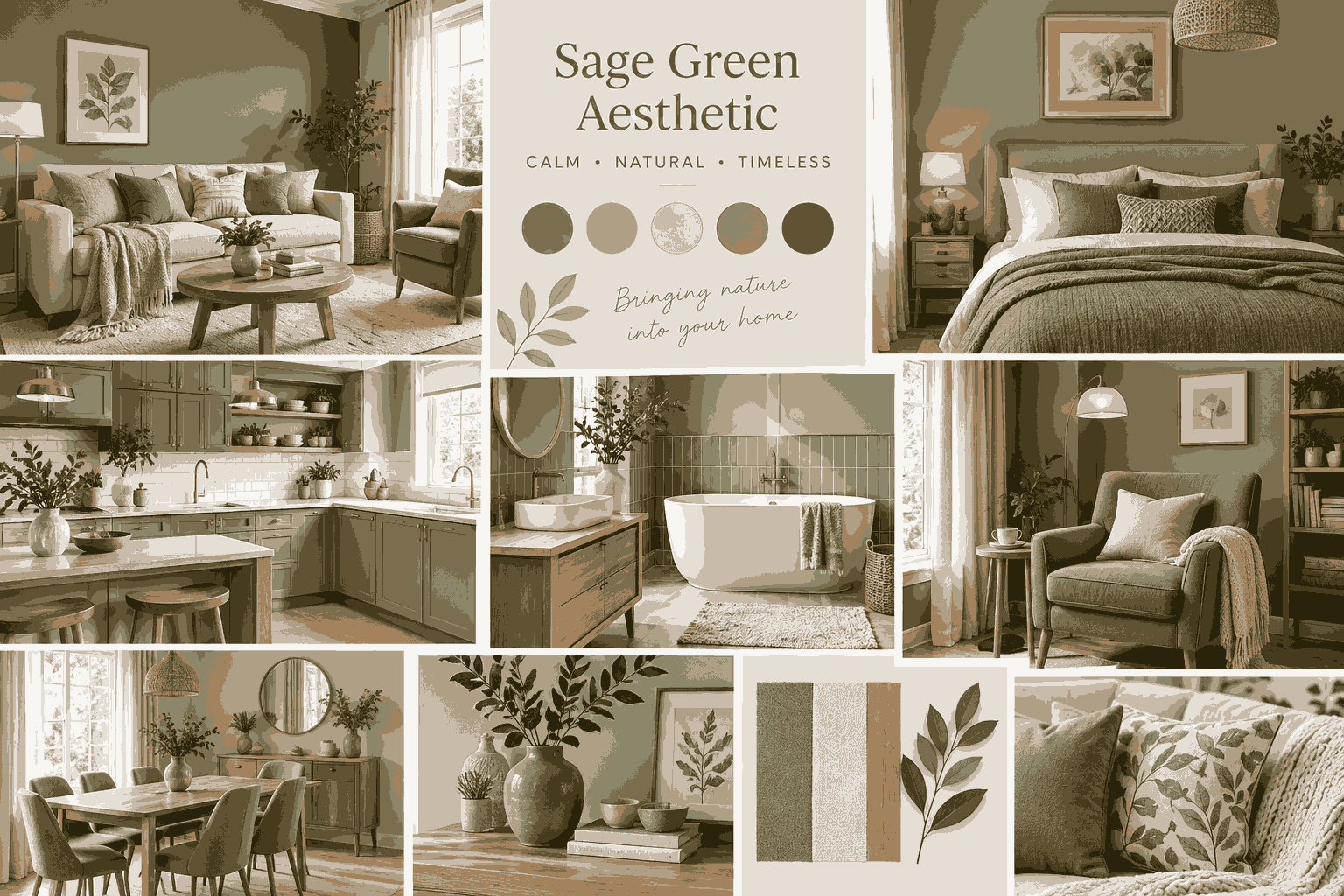
The sage green aesthetic brings a gentle, natural feeling into a home without making it look dull or overly traditional. With its soft, muted green tones, this versatile colour works beautifully in bedrooms, living rooms, kitchens and even small bathrooms. It pairs easily with warm neutrals, natural wood, cream fabrics and subtle metallic details, making it suitable for a range of interior styles.
Unlike brighter shades of green, sage has a relaxed appearance that can make a room feel comfortable and inviting. You can use it on walls, furniture, soft furnishings or decorative accessories, depending on how much colour you want in your space. The secret is to balance its cool, earthy character with the right lighting, textures and complementary colours.
Whether you love modern minimalism, cosy cottage interiors or a soft vintage look, these ideas will help you bring sage green into your home in a way that feels personal, practical and timeless.
What Is the Sage Green Aesthetic?
The sage green aesthetic is an interior and lifestyle style centred on muted, greyish-green shades inspired by the leaves of the sage plant. It combines natural colours, soft textures, understated decoration and a relaxed atmosphere.
Sage green can look slightly different depending on its undertones. Some shades lean towards grey, while others have warmer yellow or olive undertones. This variation makes it adaptable to different rooms and decorating preferences.

The aesthetic often includes:
- Muted green shades: Soft sage, dusty green, grey-green and pale olive.
- Natural materials: Oak, rattan, linen, cotton, stone and woven accessories.
- Gentle contrasts: Cream, warm white, beige, taupe and occasional dark accents.
- Simple decoration: A few carefully selected accessories rather than crowded surfaces.
- Soft lighting: Natural daylight, warm lamps and subtle ambient lighting.
The overall effect is calm and grounded. It can feel contemporary with clean furniture and simple shapes or more traditional with vintage accessories, floral patterns and antique-inspired details.
Why Sage Green Works So Well in Home Decor
Sage green is popular in interiors because it provides colour without overwhelming a room. Its muted appearance allows it to work as a background shade, a decorative accent or a more noticeable design feature.
It creates a relaxed atmosphere
Green is closely associated with nature, plants and outdoor landscapes. Bringing a soft version of the colour indoors can help create a visually restful environment. Pairing sage with comfortable fabrics and uncluttered furniture reinforces that feeling.
It complements different decorating styles
Sage green is not limited to one particular interior trend. It can be incorporated into several styles, including:
- Modern and contemporary interiors with clean lines and simple furnishings.
- Scandinavian-inspired rooms with pale wood, practical furniture and light colours.
- Cottage-style homes with floral patterns, natural fabrics and traditional details.
- Vintage interiors with aged brass, antique furniture and decorative ceramics.
- Organic modern spaces featuring curved furniture, textured finishes and earthy materials.
It works in both small and large rooms
Pale sage can be useful in smaller spaces because it provides colour without the visual weight of some darker shades. In larger rooms, deeper sage tones can add character and help create a more defined design scheme.
However, the result depends on the amount of natural light, the shade selected and the colours surrounding it. A darker sage may feel cosy in a bright room but heavy in a poorly lit space.
10 Sage Green Aesthetic Ideas for Every Room
You do not need to redecorate your entire home to achieve this look. A thoughtful combination of paint, furniture, fabrics and accessories can introduce sage green gradually.
1. Create a Sage Green Living Room

A sage green living room can feel fresh, welcoming and comfortable. The simplest approach is to use sage on the walls and balance it with cream upholstery, pale wood and soft neutral fabrics.
If you prefer not to repaint, introduce the colour through cushions, curtains, an accent chair or a rug. A sage sofa can also become the main feature in a neutral room.
For a balanced look:
- Choose a light sage shade for the walls.
- Add a cream or beige sofa to soften the colour.
- Use a natural wood coffee table for warmth.
- Layer cushions in different textures rather than using identical fabrics.
- Add a few indoor plants to complement the colour scheme.
Avoid using too many competing green shades in one space. A main sage colour, a lighter neutral and one deeper accent usually provide enough variation.
2. Design a Cosy Sage Green Bedroom

Bedrooms are particularly suited to soft sage tones because the colour works well with gentle lighting, natural fabrics and simple furniture.
A sage green feature wall behind the bed can provide a subtle focal point without making the entire room feel dark. If you prefer a more consistent look, paint all the walls in a pale shade and use white or warm cream bedding.
Consider these details:
- Layer cotton or linen bedding in cream, white and muted green.
- Add a textured throw at the foot of the bed.
- Choose light wood bedside tables to introduce warmth.
- Use warm bedside lamps instead of relying entirely on overhead lighting.
- Hang simple artwork featuring botanical shapes or soft natural colours.
For a more traditional bedroom, consider a floral cushion, a patterned duvet cover or vintage-inspired bedside accessories. Keep the larger surfaces relatively simple so the room remains restful.
3. Give Your Kitchen a Sage Green Makeover

Sage green kitchen cabinets provide colour while retaining a soft, understated appearance. The shade works particularly well with natural timber, cream surfaces, white tiles and brass or brushed metal hardware.
If replacing the cabinets is outside your budget, consider painting suitable existing cabinet doors after checking their material and preparing them correctly. You can also use sage green through a backsplash, dining chairs or smaller kitchen accessories.
Useful combinations include:
| Sage green feature | Complementary material or colour |
|---|---|
| Sage cabinets | Cream or warm white countertops |
| Sage island | Natural oak cabinets |
| Sage backsplash | Light timber shelving |
| Sage dining chairs | Beige walls and a wooden table |
| Sage accessories | White cabinets and stone surfaces |
Think carefully about the amount of natural light in your kitchen. A darker shade may look attractive in a sunlit room but could feel less inviting in a narrow kitchen with limited daylight.
4. Add a Sage Green Bathroom

A sage green bathroom can create a clean, spa-inspired atmosphere. It works particularly well with white sanitaryware, natural stone, pale wood and understated metal finishes.
For a subtle update, introduce sage through towels, a bath mat, a shower curtain or bathroom accessories. If you are renovating, consider sage green wall tiles, a painted vanity unit or a feature wall in a suitable bathroom paint.
A few practical ideas:
- Combine sage tiles with a simple white basin.
- Choose a timber-effect vanity for a warmer appearance.
- Use mirrors to help reflect available light.
- Add a small plant if the room has suitable light and ventilation.
- Keep storage organised to avoid visual clutter.
Bathrooms can have high moisture levels, so use products designed for the intended surface and environment. Proper ventilation and suitable installation matter just as much as the colour scheme.
5. Decorate with Sage Green Furniture

Sage green furniture is a useful option if you want to add colour without committing to painted walls. An upholstered armchair, a painted sideboard or a dining chair can become a subtle focal point.
In a neutral room, one sage green accent chair can add interest while keeping the rest of the space flexible. For a more coordinated look, repeat the colour in a small accessory such as a cushion or ceramic vase.
When selecting furniture, pay attention to fabric and finish. Velvet can make sage appear richer, while linen and cotton give it a softer, more casual look. Painted timber furniture can suit cottage and vintage interiors, particularly when paired with natural materials.
6. Combine Sage Green with Natural Wood
Natural wood is one of the easiest materials to pair with sage green. The warmth of timber can balance the cooler grey undertones found in some sage shades.
Light oak and ash suit airy, contemporary rooms, while walnut and darker timber create a richer contrast. Rattan and wicker add a more relaxed, textured appearance.
You can introduce wood through:
- Flooring and skirting boards.
- Coffee tables and bedside furniture.
- Open kitchen shelving.
- Wooden picture frames.
- Dining tables and chairs.
- Decorative trays and woven storage baskets.
For a cohesive room, repeat the same wood tone in a few places rather than introducing many unrelated finishes.
7. Use Sage Green Wallpaper and Patterns

Wallpaper can add visual interest and make a sage green scheme feel more individual. Botanical prints, delicate florals, subtle stripes and small geometric patterns are all options worth considering.
A botanical wallpaper can work well behind a bed or in a small reading corner. For a more contemporary room, look for a simple pattern with plenty of space between the design elements.
When using patterned wallpaper, keep nearby fabrics relatively understated. If the wallpaper has prominent leaves or flowers, plain bedding and simple curtains can help maintain a balanced appearance.
Before purchasing, check the wallpaper sample in the room at different times of day. A green shade that looks soft in a shop may appear more grey, yellow or dark under your home’s lighting.
8. Style a Sage Green Reading Nook

A reading nook is a natural place to experiment with this colour palette. You can create one with a comfortable chair, a small side table, soft lighting and a few carefully chosen accessories.
Start with a sage green armchair or a neutral chair with sage cushions. Add a cream throw, a timber side table and a floor lamp with warm light.
If you have a window with a pleasant view, position the chair nearby to make the most of daylight. In smaller homes, a corner of the living room or bedroom can work just as well.
The key is to keep the area comfortable and functional. Make sure there is enough space to move around the chair and a convenient place to set down a book or drink.
9. Bring Sage Green into Your Dining Room

Sage green can make a dining room feel warm and inviting without requiring elaborate decoration. Painted walls, upholstered chairs or a sideboard are simple ways to introduce the shade.
For a natural look, combine sage with a timber dining table, linen curtains and understated tableware. If you prefer a more formal style, introduce darker wood, a statement pendant light and subtle metallic accents.
A small dining area can benefit from a light sage shade and a simple furniture arrangement. In a larger dining room, a deeper sage wall colour can help create a more defined setting.
10. Use Sage Green in Small Decorative Details

If you are unsure about committing to a full colour scheme, start with accessories. Small decorative details can help you understand how sage looks in your space before you make larger changes.
Try adding:
- Ceramic vases in muted green shades.
- Sage green cushion covers.
- A soft throw blanket.
- Green picture frames.
- A patterned rug with subtle sage details.
- Tableware or decorative bowls.
- A small painted storage cabinet.
The benefit of accessories is flexibility. They are relatively easy to replace or rearrange if your tastes change.
Best Colours to Pair with Sage Green
Sage green is flexible, but the colours around it influence whether a room feels warm, cool, modern or traditional. Choosing a small palette before decorating can make the finished space feel more intentional.

1. Sage green and cream
Cream softens the muted green and creates a gentle, welcoming combination. Use it for curtains, bedding, sofas or painted woodwork. This pairing suits bedrooms and living rooms particularly well.

2. Sage green and natural wood
Oak, ash and other light timber finishes bring warmth and natural texture. This combination works well in Scandinavian-inspired rooms, kitchens and relaxed modern interiors.

3. Sage green and beige
Beige gives sage a warmer, earthier appearance. Use a beige rug, upholstered furniture or curtains to create a comfortable, understated space.

4. Sage green and dusty pink
Muted pink adds a gentle contrast without making the room feel overly bright. Try dusty pink cushions, flowers or artwork against sage walls.

5. Sage green and charcoal
Charcoal and black details create a more defined, contemporary look. Use them in small amounts through lighting, furniture legs, picture frames or cabinet hardware.
How to Choose the Right Sage Green Shade
Not every sage green will look the same on your walls. Some shades are pale and silvery, while others appear earthy, yellow-green or slightly darker.
Consider these factors before choosing paint or furnishings.
Check the room’s natural light
A room with large south-facing windows in the UK or a bright, sunny space in the USA may show sage differently from a north-facing room. Natural light, window size and nearby surfaces all affect how the colour appears.
In a darker room, a lighter sage with a soft, warm undertone may help the space feel more open. A brighter room can accommodate a deeper shade, depending on the atmosphere you want.
Look at the undertones
Sage green commonly has grey, yellow or earthy undertones. Grey-based shades can feel cooler and more contemporary, while warmer shades can look more natural alongside timber and cream.
Compare samples against your flooring, furniture and existing wall colours. A shade that looks attractive on its own may clash with the fixed finishes in your room.
Test paint before committing
Paint a sample on a piece of card or a suitable section of wall. Check it in daylight and under your usual evening lighting. Observe how it looks beside your furniture, curtains and flooring.
If you are painting a large room, test more than one shade. The difference between two similar-looking samples can become much more noticeable across an entire wall.
How to Create a Sage Green Aesthetic on a Budget
You can introduce this look without buying all-new furniture or replacing every surface. Start with the features that make the biggest difference to the room’s appearance.
- Choose one main feature. Start with a wall, a piece of furniture or a set of curtains rather than changing everything at once.
- Reuse existing furniture. A wooden table, neutral sofa or simple shelving unit may already suit the colour scheme.
- Change soft furnishings. Cushion covers, bedding and throws are easy ways to introduce sage green without making a permanent commitment.
- Add natural textures. A woven basket, linen curtains or a timber accessory can help the room feel more layered.
- Use existing accessories selectively. Keep the pieces that work with the new palette and move contrasting items to another room.
- Build the scheme gradually. Live with the first changes for a while before purchasing additional items.
For renters, removable accessories, suitable peel-and-stick products and freestanding furniture may be more practical than permanent alterations. Always check the terms of your tenancy and the suitability of any removable product for your surfaces.
Common Mistakes to Avoid
The sage green aesthetic can be subtle and beautiful, but a few decorating mistakes can make the result feel unbalanced.
- Choosing paint from a tiny colour sample: A shade can appear different across a large wall, especially under artificial lighting. Test samples in the actual room.
- Using too many competing greens: Combining several noticeably different greens can make the palette feel disconnected. Select one dominant shade and use other greens sparingly.
- Ignoring the existing flooring: Warm timber, cool grey flooring and patterned carpets can each change the way sage looks. Consider them before selecting paint.
- Making every surface green: Using sage on the walls, furniture, curtains and accessories can make the room feel visually flat. Introduce contrast through neutrals and natural materials.
- Forgetting practical needs: Delicate fabrics, light-coloured upholstery and certain painted surfaces may require more care in busy homes. Consider cleaning, durability and maintenance before choosing finishes.
- Relying on artificial lighting alone: A colour that looks soft in daylight may seem dull or overly yellow under some bulbs. Check the scheme in the evening too.
Frequently Asked Questions
Is sage green a warm or cool colour?
Sage green can be either warm or cool depending on its undertones. Grey-based sage shades often appear cooler, while yellow or olive-based versions can feel warmer. The surrounding colours and lighting also affect how the shade looks.
What colours look best with sage green?
Cream, warm white, beige and natural wood are versatile partners for sage green. Dusty pink can add a gentle contrast, while charcoal and black create a more modern appearance. The right combination depends on your preferred style and the light in your room.
Does sage green make a room look smaller?
Not necessarily. Pale sage can feel light and gentle, while darker sage may create a more enclosed, cosy atmosphere. Room size, lighting, furniture and the amount of contrast all influence the result.
Can I use sage green in a modern home?
Yes. Sage green works well in modern interiors when paired with simple furniture, clean lines, natural materials and restrained decoration. For a contemporary appearance, try a muted sage wall with cream upholstery, oak furniture and minimal accessories.
Is sage green suitable for a small bedroom?
Yes. A light sage shade can be a useful choice for a small bedroom, particularly when combined with light bedding, simple furniture and good lighting. Avoid overcrowding the room with bulky furniture or too many decorative patterns.
How can I decorate with sage green without painting my walls?
Use sage green cushions, bedding, curtains, rugs, artwork or furniture. You can also introduce the colour through ceramic accessories and small decorative items. These options allow you to experiment with the palette without making permanent changes.
Conclusion
The sage green aesthetic offers a flexible way to bring natural colour, warmth and a relaxed atmosphere into your home. Whether you choose sage green walls, kitchen cabinets, bedroom textiles or a few decorative accents, the most important part is creating a palette that works with your space.
Start with one feature, consider the natural light and existing materials, and introduce complementary colours gradually. With a thoughtful balance of muted green, warm neutrals and natural textures, you can create a home that feels comfortable and reflects your personal style.



















