
Most decorating advice starts in the wrong place. It hands you a list of fifty things to buy before it ever asks what’s actually wrong with your room. That’s backwards, and it’s why so many people end up with a house full of decor that still doesn’t feel finished — a nice rug here, a plant there, none of it adding up to a room that actually works.
This isn’t a photo dump. It’s a plan: how to figure out what your space actually needs, in what order, at whatever budget you’re working with — including zero dollars.
Why Some Rooms Feel “Decorated” and Others Don’t
Two rooms can have similar furniture and similar spending, and one will feel finished while the other feels like a waiting room. The difference almost never comes down to taste. It comes down to a handful of mechanics that most decorating advice skips entirely.
Scale and proportion. A single small painting over a large sofa reads as an afterthought, not because the painting is bad, but because it’s the wrong size for the wall it’s on. As a rough guide, wall art should cover roughly two-thirds to three-quarters of the furniture it hangs above. This is the single most common reason a wall “feels empty” even with something already on it.
A missing focal point. Every functional room has one thing your eye lands on first — a fireplace, a bed, a big window, a piece of art. Rooms that feel scattered usually don’t lack decor; they lack a clear answer to “where does my eye go first?” If nothing answers that question, the room reads as cluttered no matter how tidy it actually is.
Lighting temperature. A room lit entirely by cool-white bulbs (roughly 5000K and up) can make even beautifully decorated spaces feel clinical. Warmer bulbs, in the 2700K–3000K range, are what most living spaces read as “cozy” rather than “office.” This is a five-dollar fix that changes a room more than most furniture purchases do.
Negative space. Filling every surface — every shelf, every corner, every wall — is one of the fastest ways to make a room feel busy instead of intentional. Decorated rooms have breathing room. Cluttered ones don’t, even when the individual pieces are nice.
Once you know what’s actually causing the “something’s off” feeling, you can fix the real problem instead of buying more things and hoping one of them helps.
Start Here: Read the Room Before You Buy Anything
Before adding a single item, spend fifteen minutes actually looking at the room you’re decorating. This step gets skipped constantly, and it’s the reason people buy things that don’t end up working.
Walk the traffic path. Stand in the doorway and notice how you naturally move through the room. Furniture placed in that path will always feel wrong, no matter how nice it is — you’ll unconsciously avoid the space around it.
Check the light at two different times of day. A room that looks bright at noon can go dim and gray by 6 p.m. If you’re choosing wall colors or planning where to put a reading chair, look at the room in both morning and evening light before deciding.
Audit what you already own. Before buying anything, pull everything currently in the room into the middle of the floor. It sounds excessive, but seeing your existing furniture and objects outside their usual spots makes it obvious what’s actually worth keeping, what needs to move to another room, and what should go. Most people are decorating around furniture that’s simply in the wrong spot, not furniture that’s wrong for the house.
Name one goal. “Make this cozier,” “make this feel less like a dorm room,” “make this usable for guests” — pick one. Every purchase and change should serve that goal. Without it, it’s easy to end up with a room full of nice individual choices that don’t add up to anything coherent.
Decorating Ideas by Budget
Budget tier matters more than most advice admits. A $0 idea and a $500 idea solve different problems, and pretending otherwise is why so many “decorating ideas” lists feel disconnected from real life.
Free and Almost-Free Ideas
- Rearrange before you buy. Simply moving your sofa off the wall and floating it a few inches into the room, or swapping which wall holds the bed, can make a space feel new without spending anything.
- Edit down, don’t just add. Removing three mediocre objects from a shelf usually improves it more than adding a fourth good one. Decorating is often subtraction, not addition.
- Swap items between rooms. That vase that’s been ignored in the guest room might be exactly what the entryway table needs. Do a full-house swap before buying anything new.
- Reframe what you already own. A cheap picture frame with a $2 mat board can make an existing print look intentional instead of like a leftover dorm poster.
- Group, don’t scatter. Three small plants scattered around a room read as clutter. The same three plants grouped on one shelf read as a styled moment.
Under $50 Ideas
- A stack of real books, arranged by color or size, on a coffee table or shelf — this single trick does more for “lived-in but put-together” than almost any other cheap addition.
- One oversized item instead of several small ones. A single large-scale piece of art or one big plant almost always looks more intentional than five small trinkets, and it usually costs less in total.
- Warm-temperature LED bulbs (2700K–3000K) in every fixture in the room. This is the highest-impact five-dollar-per-bulb change available.
- A textured throw and two to three pillows in varied (not matching) patterns, tying back to one color already in the room.
- Removable wallpaper on a single accent surface — the back of a bookshelf, inside a closet, a small entryway wall — for color and pattern without a long-term commitment.
Where It’s Worth Spending More
Some purchases genuinely earn a bigger budget line because you touch or see them daily:
- An area rug sized correctly for the room. The single most common budget mistake is buying a rug too small — front legs of all major furniture pieces should sit on the rug, not just the center of the room.
- A well-made sofa or bed, since these anchor a room and get used constantly; cheap versions here show wear fast and are expensive to replace twice.
- Layered lighting — a floor lamp and table lamp in addition to overhead light — rather than relying on one central fixture, which almost always reads as flat and unfinished.
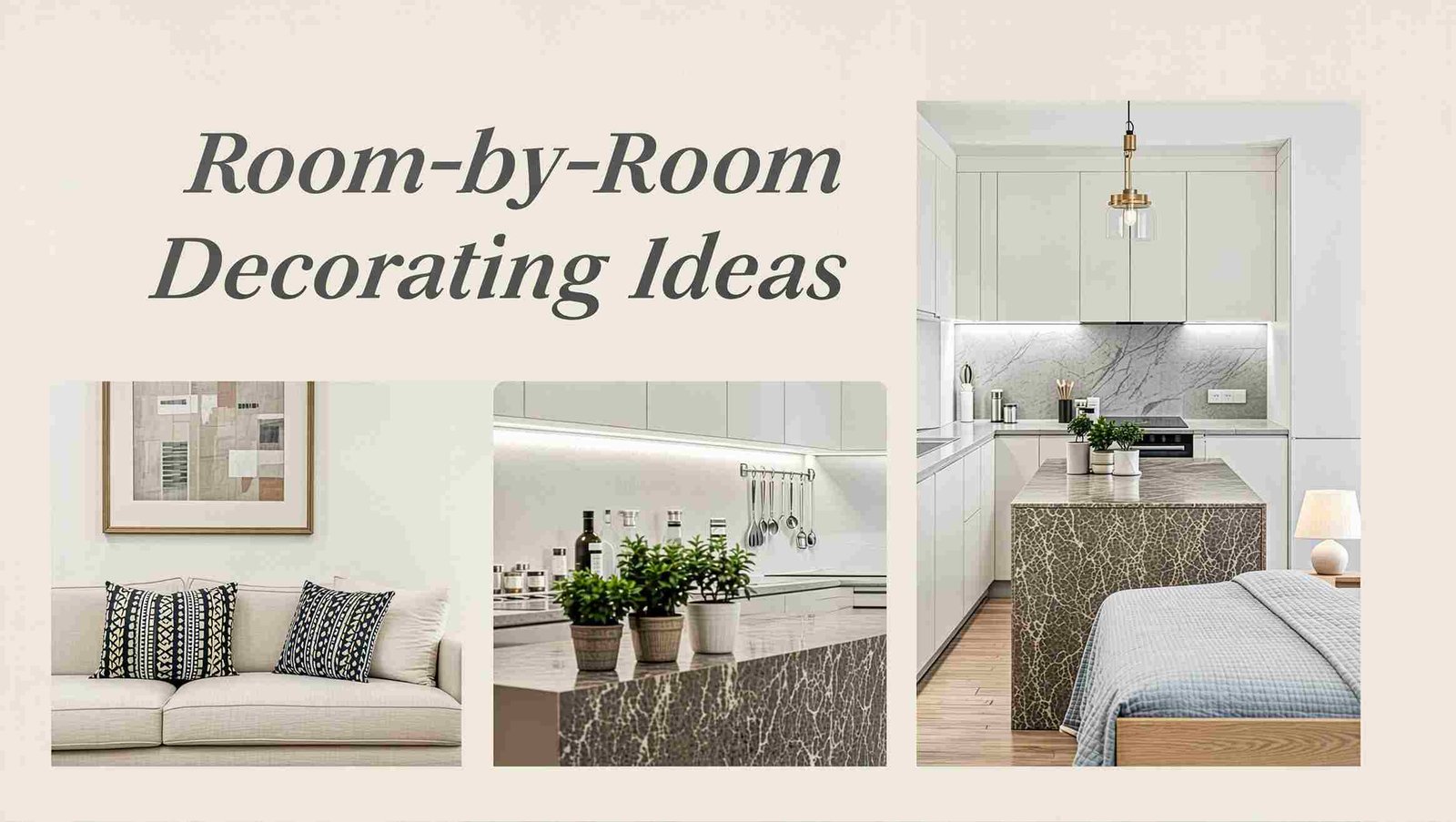
Room-by-Room Decorating Ideas
Generic advice (“add some plants!”) applies to every room equally, which is exactly why it doesn’t actually help with any of them. Each room has its own real constraints.
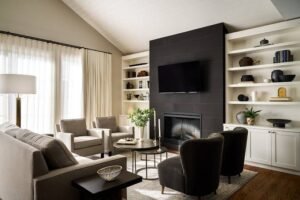
Living room. This room usually needs a clear focal point (often the sofa facing whatever the room’s natural anchor is — a window, fireplace, or TV) and a rug that’s large enough to unify the furniture instead of floating in the middle of empty floor. Floating the sofa a few inches from the wall, rather than pushing it flush against it, instantly makes the room feel more considered.
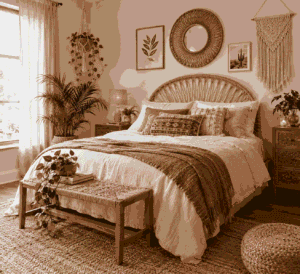
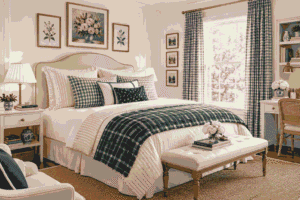
Bedroom. The bed is the focal point by default, so give it visual weight: a headboard (even a leaned, unattached one), layered bedding in at least two textures, and nightstands with a matched lamp height rather than mismatched heights that read as unfinished. Avoid overhead-only lighting here — it’s the room where warm, low lighting matters most.
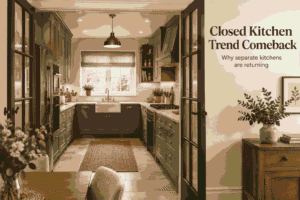
Kitchen. Decor here needs to survive grease, heat, and daily use, so it leans functional: open shelving styled with everyday dishware rather than decorative-only objects, a runner rug near the sink, and a single plant that tolerates low light and neglect (pothos, ZZ plant). Skip fragile decorative objects on open counters — they won’t survive real cooking.
Entryway. Often the most neglected room in the house despite being the first thing anyone sees. A small table or shelf, a mirror (which also helps a tight entry feel larger), and a spot for keys and mail solve the “why does this feel so unwelcoming” problem more effectively than any purely decorative object could.
Home office / work-from-home corner. Prioritize what’s visible on video calls and what actually helps focus: a plant or two, a warm-toned lamp instead of harsh overhead light, and a wall behind the desk that isn’t blank — even one framed piece changes how the space reads on camera and in person.
Decorating Ideas for Renters
Renters get the thinnest advice in most existing content, despite being a huge share of people searching for decorating ideas in the first place. Almost everything above still applies — the difference is in how you execute it without losing a security deposit.
- Removable wallpaper and peel-and-stick tile for kitchens and bathrooms give color and pattern without a repaint, and both come off cleanly when done correctly (test a small corner first).
- Museum putty instead of nails for lightweight art and mirrors, and command-style hooks rated for the item’s actual weight for anything heavier.
- Tension rods for curtains in place of drilled brackets — genuinely sturdy enough for most curtain weights and fully reversible.
- Rugs and furniture do the heavy lifting in a rental, since walls are the most restricted surface. Spend your decorating energy and budget there first.
- Photograph the space before you move anything, and check your lease for specifics on nail holes, paint, and adhesive — policies vary more than most generic advice acknowledges, and it’s worth five minutes to avoid a deposit dispute.
Common Decorating Mistakes to Avoid
Most of what makes a room look unfinished isn’t a missing item — it’s one of these:
- Undersized rugs. The single most common and most fixable mistake. A rug that only the coffee table sits on, with all the furniture legs on bare floor around it, makes the whole room look smaller and less intentional.
- Buying a matching furniture set. Matching sofa-loveseat-chair-ottoman sets from one collection tend to look like a showroom, not a home. Mixing pieces from different sources, tied together by color or material, reads as far more considered.
- Too much of one neutral. An all-beige or all-gray room isn’t calming, it’s flat. Even neutral-leaning rooms need at least one deeper or richer tone for contrast — in a rug, art, or a single piece of furniture.
- Hanging art too high. The center of a piece should generally land around eye level (roughly 57–60 inches from the floor to the center), not near the ceiling.
- Ignoring the ceiling and floor. Decorating that only addresses eye level, and skips lighting overhead or a rug underfoot, always feels partially done, because a third of the room’s visual field gets ignored.
How to Find Your Decorating Style
Most “find your style” content is a retailer quiz designed to point you at their catalog. A more useful method: look at your own life for evidence you already have.
- Screenshot ten rooms you’re genuinely drawn to — not aspirational ones you’d never actually live in, but ones that make you want to sit down in them.
- Look for repeats, not standouts. If seven of the ten have wood tones and soft, rounded furniture, that’s your style — even if you also saved three sleek, minimalist ones you liked in the moment.
- Check your closet, not just your Pinterest board. People’s clothing choices — color, texture, formality — are often a more honest signal of their real taste than a curated inspiration folder, because there’s no pressure to look aspirational.
- Name it in your own words, not a marketing term. “Warm and a little cluttered, but organized clutter” is more useful direction than “eclectic maximalism,” because it actually tells you what to do next.
Once you can describe your style in a sentence, every purchase gets easier to evaluate — it either fits the sentence or it doesn’t.
8. FAQs
How can I decorate my house for cheap? Start with what you already own: rearrange furniture, edit clutter down, and swap items between rooms before buying anything. When you do spend, prioritize warm-toned lighting, a stack of real books, and one oversized item over several small purchases.
What is the 60-30-10 rule in decorating? It’s a color-balancing guideline: 60% of a room in a dominant color (usually walls and large furniture), 30% in a secondary color (rugs, curtains, upholstery), and 10% as an accent color (pillows, art, small decor).
How do I decorate a rental without losing my deposit? Use removable wallpaper, museum putty, command-style hooks rated for the item’s weight, and tension rods instead of drilled fixtures. Photograph the space beforehand and check your lease’s specific policy on holes and adhesives.
Why does my room still feel unfinished even after decorating it? Usually one of four things: an undersized rug, no clear focal point, cool-toned lighting, or art hung out of scale with the furniture below it. Fixing these is often more effective than adding more decor.
How long does it take to fully decorate a room? There’s no fixed timeline, and rushing tends to produce mismatched purchases. A realistic pace is: assess and declutter in week one, handle lighting and rugs in the first month, and add art, textiles, and smaller decor over the following weeks as pieces feel right — rather than buying everything in one trip.
What’s the difference between decorating and interior design? Decorating is styling a space with what exists or with movable additions — furniture layout, color, textiles, art. Interior design can include structural and architectural changes — layout, built-ins, plumbing, and electrical — usually done by a licensed professional.